Guest Feature: Author, Joy Wood

I am very please today to welcome, author, Joy Wood.  Joy is not only a fellow writer but also a good friend and she’s here to talk about her writing including her latest novel launched today, April Fool. First of all let’s find out a little about her.  

About Joy
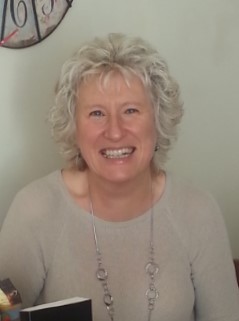
Profile photo


Joy Wood was born in Cleethorpes Lincolnshire, and has returned to her home town since retiring as a nurse, to pursue her love of writing. Joy gets her inspiration from walking along the seafront and watching the tide turn, and thinking about various characters, before rushing home to get them written down before she forgets!

Joy has independently published 3 novels, (April Fool being the 4th), and spends a lot of time doing public speaking events about the transition from a working nurse to a writer (From Bedpan to Pen!) She tried to interject plenty of humour into the talks which the audience seem to appreciate. Joy has been known to write ditties/slogans for consumer competitions and loves nothing better than receiving prizes, however large or small. Again, humour seems to be the key to catching the judge’s eye!

Hi Joy, thank you for joining me today. Congratulations on the launch of  your latest novel, April Fool. Can you tell our readers what inspired you to write it? 

Banner


Hi Tricia, thank you so much for having me, I’m delighted to be here. In answer to your question, the 3 previous novels I have written have been contemporary romances with a few twists and turns along the way. I wanted to write something slightly different this time, and the more I thought about my main character, April Masters, the more she grew on me. I like strong, capable, talented women, and tenacious April is certainly all of those. So I thought about all the able women out there, trying to juggle all the balls we have to, and had an idea they might enjoy April too.

I understand April Fool is a move away from your normal genre, is that correct? What prompted you to take this step?

My purpose has been to test myself a little to see if I could write in a different way, but at the same time producing something I hope the readers will enjoy. It is difficult as the temptation is to stick to the tried and tested format that works. I’m keeping everything crossed I’ve succeeded in writing a story the readers will enjoy. There is a definite change from my previous books so we shall have to see how it’s received. The proof of the pudding and all that ……….!

How long have you been writing and do you write anything else besides novels?

I’m afraid I don’t, unless you can count ditties/slogans for competitions, I’m fairly successful at doing those! I do a lot of proof reading and informal editing for friends though, and not always novels. I help friends/ex colleagues with nursing academic work which I do enjoy. Also, this year I facilitated an author day inviting the public to attend. As a result of that, I’m helping a couple of people to try and self-publish their work. I have been writing for 3 years.

Do you have a special routine for your writing?

Not at all. I write when the mood takes me. It could be morning, afternoon or evenings. And some days I don’t write at all. And of course there is all the social media that has to be done if you want to succeed as a writer. It can be a huge distraction though. Once I get interacting on Facebook and Twitter, it’s hard to break away. Writing is solitary so some days, you feel a bit like ‘Billy-no-mates,’ so it’s easy to slip on social media while you’re taking a coffee break, but then hard to get back to the writing!

Why did you opt to self-publish rather than traditional?

Ah, the million dollar question. The thought of a traditional publishing contract is very exciting, but when I wrote my first novel, I wasn’t sure if it would even sell hence self publishing it and not attempting to get a publishing deal. I quite liked the process of trying to make sales. It was hard work but I enjoyed it and each book I sold, excited me. So the following year, I repeated the process with my second novel and independently published that. Of course by the very nature of having 2 novels, I sold more books. So the process worked well for me.
In terms of submitting to a traditional publisher – never say never! I’m quite impatient though, so once I’ve finished a book, I’m keen to get it out there and I’m guessing with a traditional deal, the process is much slower. That’s not to say I’ll never submit or try to get an agent, I think that would be marvellous. However I’m realistic and recognise it could be quite a challenge.

What advice would you give to writers contemplating self-publishing?

I would strongly suggest they get their work critically edited before anything. We all think we write excellent novels that readers will love, but it isn’t always the case. And because we are very close to our work, it is hard to see it objectively. Criticism can be difficult to take particularly when editors have their critique hat on, even though that is what you are paying them to do. It’s all about looking at their criticism, and changing your novel accordingly, or not as the case may be. It is the writer’s novel at the end of the day, but editors want your novel to be a success so they aren’t out to scupper you in any way. They want your novel to shine.
After editing, it is vital you get someone to read your novel other than family and friends. By the very nature of your relationship with them, they want you to succeed so will love anything you write. If you are able to get a reader to impartially look at your work, it is amazing exactly what they can pick up. It could be as simple as, “You lost me a bit there,” to “Why are his eyes chocolate brown in chapter 1 and further on they become hauntingly grey?”

You also offer Writer Talks. Can you tell the readers a little about how they work and can anyone book one up?

In a previous life, I did a lot of public speaking. I soon realised this could be helpful in terms of getting new readers, particularly locally. So I devised a talk about my transition from being a nurse to writing (From Bedpan to Pen!). The talk involves a lot of humour about the hurdles I’ve had to overcome such as my first appearance on television to promote my book, which seeing myself made me realise my face is better suited to radio, and funny stories about the public attending my signings and a lady asking me in Waterstones if I knew what time Marks and Spencer closed!
I’ve spoken at various events this year, Women’s Institutes, Ladies lunches, book clubs, and a first for me this week is an after lunch speaker at a Gentleman’s lunch. I might have to regroup on my talk and try and make it a bit more applicable to a male audience. I’m lucky that I’m now booking into 2019 and going further afield than just locally.

Your life must be busy with writing and talks, does that leave you any time for hobbies?

Nowadays, I do spend a lot of time writing, but I also like walking and travelling. And of course reading, if I’m not sat at my computer, I can be found with a book or my kindle in my hand. Oh, and socialising – I do a lot of that!

Can you give our readers a taster of  April Fool?

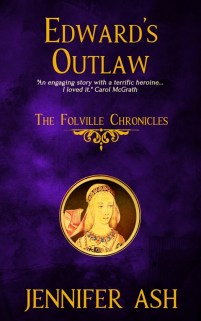
cover for april fool


Extract from Chapter 1

They reached the final door – the exit.
“Is someone outside to meet you?” Dr Death asked with a smirk on her face as if she knew there wouldn’t be.
April wasn’t going to tell her anything. “I’m not entirely sure.”
“You’ve money to get a bus, or a taxi to the station; do you know the area and how to get to town?”
“Yes, it isn’t far, I understand.”
“No. Basically you turn right out of the prison and just keep walking. But here,” she handed her a card, “if you’d prefer to call a taxi. This is a local one the inmates use.”
She shook her head refusing the card, “I think a walk might be good.”
Dr Death shrugged and turned to press in the final code which would mean her release. She didn’t rush. It was almost as if she was prolonging the moment on purpose.
April watched as the door to freedom slowly opened, squinting until her eyes became accustomed to the bright sunshine.
Eighty-five long days she’d been incarcerated. And every single tortuous one of them, she’d meticulously ticked off on a calendar. Visually seeing them disappear gave her the momentum to get through another laborious day.
She stepped forward to make her way through the big oak prison door, and deliberately didn’t look back. There was no way she was going to acknowledge Dr Death by shaking her hand on the way out. Prison officers weren’t friends or acquaintances. They had a bit of power because of the nature of the job, but boy did that go to their heads. Not all of them, some were reasonably okay, but not this one. She’d been hateful.
If Dr Death had known who April really was, then she wouldn’t have been quite so punitive and given her such a hard time. And there was a time she would have made her pay for the way she’d treated her, but not anymore.
Nothing was going to get in her way. Certainly not revenge on a jumped-up prison officer. To get to where she was right now had required meticulous planning and attention to detail. The new identity, the change in her appearance, and the stretch in prison had all been absolutely necessary to assist her as she was about to embark on the biggest pay day of all.

***

How exciting – I can’t wait for more. 

Where can our readers purchase a copy of April Fool and your other books? 

US:    UK:   CA:   AU:

Click on the above links to purchase from Amazon.

All books are also available by ordering from Waterstones and WH Smith.

Thank you, Joy, for joining us today. I wish you every success with April Fool as I’m sure my readers do too. If anyone has any questions, for Joy, please leave at the end of this blog or contact her via her social media links below.

Facebook:   Twitter:

If your tempted by Joy’s books then click on the relevant above links, I promise that you won’t be sorry. Personally I can’t wait to read April Fool. 

Guest Feature: Chindi Author, Lexi Rees, discusses ‘Four Top Tools for Writers’

Have you ever wondered about tools for writers, and  how they work?

Well you’re in luck because today I have a special guest that has come to discuss ‘Four Top Tools as an Author.’ Please welcome fellow Chindi author, Lexi Rees, Chindi’s Author of the Week.

image1 (5)

Thank you Patricia for hosting me on your blog to coincide with my Chindi Author Spotlight.

Banner Lexi jpg

‘Top Tools For Authors’

Lexi Rees

I’m actually pretty organised usually, but when I published my debut novel I discovered I was totally unprepared for this new world. Over the past year, I’ve come to rely on a number of tools to keep me organized and help me spend more time writing and less time on admin, so I thought I’d share my favourites.

Scrivener: the ultimate writing tool

I got a discount code for Scrivener following a successful Camp Nano a few years ago. I was using word but battling to keep on top of changes as the novel got longer. Cutting and pasting sections became an absolute nightmare as I kept dropping bits into the wrong place, or getting distracted by the kids/ dog/ postman mid paste and losing chunks altogether.

I fully admit I’m barely scratching the surface of Scrivener’s capabilities, but I couldn’t live without it now. I adore the word count target setter. This helps me keep my chapters a roughly even length, which I do as I know many kids like to finish reading at the end of a chapter, and for parents who promise to read a chapter only to find out it’s 27 pages long. I also love the cork board layout which makes it super easy to see the plot outline, and to move chunks around.

Cork Board 

CoSchedule: fab blogging tool

I only use the free Headline Analyser at the moment, but I know they have lots of great tools for blog planning and other stuff which I really want to explore. The Headline Analyser helps you create blog post titles that are interesting (without being pure click-bait). It’s super easy – you just type a possible headline in and then it scores it based on the types of words (emotional, power, unusual etc). It usually takes me three or four attempts to get a headline that works well, but I’m getting better the more I use it. Check it out here Coschedule

Canva: best design tool ever

If you haven’t used this, you must! It’s a free design programme. I use it for everything from posters to FaceBook and Twitter banners. There are millions of templates and pictures on it. There is a paid version, but I can’t see why you’d need that. You can even share designs with other people – I was recently working on a poster with a library and we were able to edit the same draft.

Trello: my “trying to stay organised” tool

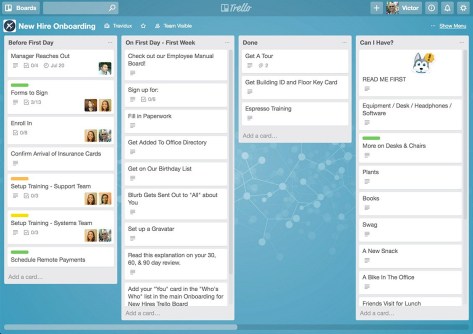
I love a list but was finding that all my new lists post publication were getting confusing on my phone, and I was definitely dropping a few balls. A productivity specialist (did you even know such a job existed??) suggested that I looked at Trello. It’s a free tool. I’ve got the app on my phone, but it works on your desktop too and is a bit easier to see things.  It works a bit like a cork board (I guess the corkboard style appeals to me).

Lexi Board jpg

So far it’s really helping me keep on top of the million things an author has to do on top of writing a book, but I’d still love a virtual assistant though – maybe I’ll get one for Christmas … hint hint …

Have you used any of these? I’d love to know what tools and tips other authors have – please do comment below.

***

I hope you enjoyed Lexi’s article, ‘Top Tools for Authors,’ I know I have, and found it very informative. Scrivener is already on my list to learn after I attended a workshop at Swanwick Writers’ Summer School in August. I just need to find the time to put that theory into practice. I came across Canva earlier in the year and don’t know how I managed without it. I haven’t heard about CoSchedule or Trello so I shall be investigating these.

I’m sure you’ll all agree that these tools look invaluable. Thank you Lexi for sharing  them.

If you have any questions or comments  for Lexi, please leave them at the end of this blog or via her social media links.

***

About Lexi

Lexi Rees grew up in the north of Scotland but now splits her time between London and West Sussex. She still goes back to Scotland regularly though.

Usually seen clutching a mug of coffee, she spends as much time as possible sailing and horse riding, both of which she does enthusiastically but badly.

Her first book, Eternal Seas, is a fast-paced adventure with just a touch of fantasy for 7-11 year olds.

image2

Eternal Seas blurb

Such a small parcel shouldn’t cause experienced smugglers much trouble. But this parcel is far from normal.

Chased across the seas, Finn and Aria must solve the mysteries within the parcel.

What does it mean? Who should they trust? What will happen?

The fate of an ancient people depends on them and time is running out …

***

Where can you buy Lexi’s book?

Eternal Seas

Where can you find Lexi on Social Media?

Website

Facebook

Twitter

Google +

Instagram


MA Journey Part 5 – 2016/17

IMG_0596a

Communities in Practise

Communities in Practise was not only my final module (apart from the dissertation) of the MA course, but also my favourite. Part of the remit was to find a residency and I chose Worth Park, a local Victorian Park.

I discussed with the project manager what they would like from me and also what I needed to provide for my creative piece for the module. It was agreed that I would conduct poetry workshops for adult beginners and an Open Mic, ‘Hoops and Haiku,’ where Poetry met Crochet.

IMG_0623

For my creative piece I chose a fictional timeline of the park dating back from when the Montefiores owned the mansion. The timeline was split into four sections.

  1. The arrival of Sir Francis’s bride, Lady Marianne.
  2. Mansion owned by School.
  3. The demolition of the mansion and a high-floored block of flats built in its place.
  4. Returning to nature.

Below is one of the poems I was inspired to write for my collection, ‘In a Delightful Country,’ which I hope to publish some time next year.

Poetry in the Park

Pulham fountain flows,
children clamber
on stained Jersey cows,

finches flit from tree to tree.
ducks dive,
coots and moorhens chug.

Yarn bombs cuddle bark,
kiss orange fiery branches
under liquid amber’s umbrella.

***

I thoroughly enjoyed teaching and operated my workshops in an informal manner: rather than sitting at a desk we’d stroll around the park and I’d prompt the students to talk about what they could see and hear, and what things reminded them of, encouraging similes and metaphors.

For instance when we walked along a stony path, I likened this to the same sound made crunching on a cookie.

IMG_1836

We finished off at the local pub, drank coffee, ate cookies and cake, testing for sound, taste, and texture. The students did some free writing to act as a prompt in writing a poem for their homework.

coffee-2306471_1280

As part of the module we had lots of informative seminars and even a symposium. We met with lots of local artists and writers. Before starting this module, it scared the life out of me, hence one of the reasons I left it to the last, but it was truly rewarding and certainly helped me to gain confidence as a person and writer.

Next time – Final part to the journey – The Dissertation

***


November 1st – NaNoWriMo Kick off

home-office-336378_1280

Are you planning on having a go at NaNoWriMo this month? I know I am. My new Mac Book Air is set up and rearing to go, in fact making a start is my next job on the list.

Today my special guest is Jon Rumens. Jon is founder of FocusMe.

FocusMe sell a product to help combat distractions. If you haven’t heard of them check here to read their story. They are very proud to be sponsoring NaNoWriMo this year.

So how can their product help you with distraction-free writing?

Here’s what Jon said.

Distraction-free writing?

6 writing hacks you can do right now


It’s that time of the year again.

No, I’m not talking about growing a mustache. I’m referring to that month when hundreds, if not thousands, of writers create their own novels around the same time.

The National Novel Writing Month (NaNoWriMo) is upon us again. And while creating a novel in a month is no walk in the park, just taking on the challenge of producing a beautiful masterpiece in a short period is a win in itself.

But let’s not get ahead of ourselves here. Before we can even close this chapter (pun intended), we’ll have to start magically weaving through a story. In 50,000 words. In a month.

Nineteen years of NaNoWriMo have found many writers facing the brain-wracking challenge of reaching the target number of words in 30 days.

But especially in today’s time, the trickiest part is getting that elusive thing called momentum. Hit it and watch thousands of words fly by. Get sucked into the black hole called Netflix or World of Warcraft and you can say goodbye to your day.

Distractions are all over. You can blame technology or lack of willpower. But believe it or not, it’s totally possible to type up x number of words – nonstop – without so much as a glance on your smartphone.

Want to know how? Here are 6 writing hacks that you can do right now for a distraction-free writing.

Writing Hack #1: Identify your monster and know how much time you spend on them. Use the FocusMe Time Tracker

You can’t solve a problem without knowing who the monster is. Ask yourself – what are your favorite distractions?

Don’t be too hard on yourself. Accept your distraction and if you have to, list them down. To help you get started, here are some of the common distractions writers face:

  • Technology. This can be as simple as the appliances at home, i.e. TV and Alexa, to something as ubiquitous as your smartphone, computer apps, and time-wasting websites.
  • Multitasking. Just Google the words “multitasking” and “productivity” together to see how this strategy isn’t the most efficient. When we talk about writing, always go for quality over quantity.
  • Anxiety, stress, and deadlines. Do you get anxious about being anxious? Can’t stop counting down to your deadline? We’ve all been there. Shush the noise inside your head and focus on the task at hand. (More of this later.)
  • People. Clients, family, friends, and chatters in the cafe can all distract you from writing. Think of ways on how you can have your “me” time, even for only a few hours.
  • External environment and noise. Honking cars and cute cats on your workspace can kill your train of thought. Isolate yourself from them and create your haven for writing.

Once you’ve identified the problem, plot ways on how you can avoid them. You can start by knowing how much you spend on them and easing off gradually. You can go cold turkey, but know that this doesn’t always work. So go easy on yourself and veer away from distraction, one monster at a time.

No idea how to track how much time you’ve spent on certain websites or app? Here’s how to track your website and app usage. This can be eye-opening and some writers who use FocusMe even talk about it as “life-changing!”

Writing Hack #2: Psych yourself up.


Concentration is key. Clear your head of any noise like stress and anxiety. Meditate by either going to yoga regularly or using meditation apps. Visualize your goal and keep your eye on the prize. Have a positive mindset and enjoy writing as a hobby.

Organize your space. De-clutter your immediate working environment. Put materials in front of you that can inspire creativity, i.e. magazines for catchy headlines or picturesque photos for your travel blog.

Make sure you’re comfortable. Keep your environment conducive to writing by setting the right temperature and getting ample lighting. Prepare yourself physically too. Get enough sleep the night before so your mind is in tiptop shape. Take a break and go for a run to see your productivity go through the roof. Before starting your writing marathon, go to the toilet and have your caffeine fix right next to you.

Writing Hack #3: Don’t forget to take a break. Use Break Reminders!

Did you know that you can set breaks that force you to stand up from your computer or laptop and get a glass of water? Check out FocusMe’s break reminders here.

You can also manage your time by using the Pomodoro technique. This technique allows you to break down seemingly large tasks into smaller ones (called Pomodoros), and take short breaks in between them. It’s not complicated at all! Just set a timer for 25 minutes where you’ll focus on a task and that task alone. When the alarm goes off, it’s time to take a break for 5 minutes! Rinse and repeat.

This technique works because it allows you to concentrate on your work in short segments, and reminds you to relax in intervals too! Sounds perfect for writers with short attention span or those suffering from writer’s block! (Find out more about the Pomodoro technique here.)

Writing Hack #4: Zone out. Shut yourself off from the outside world

Listen to music. Try those that are easy to the ears like ambient music, lo-fi jazz, hip-hop or classical music. Or try something totally new: tune into the Rainy Cafe. It might inspire you even more.

Headphones are your best friend. Noise-canceling headphones can help drown out the loud traffic outside, excited barks from your dog, or the dripping faucet in the toilet.

Give people a heads up. If you’ve been talking to them the past couple of hours, let your clients, partners, family, and friends know that you’ll fall off the radar in the next few hours. Otherwise, they may end up calling repeatedly, which could be an added distraction.

Writing Hack #5: Eliminate distractions. Schedule your “focus sessions” with the FocusMe Scheduler.


Move away from technology… other than your computer. Close all unrelated apps (and no – you can’t use Facebook for “research”). Use a distraction-free word processor that’s designed to hide all the other apps on your computer.

Switch off the TV. Completely ignore that voice in your head that says “Netflix binge now.” On the flip side, tell yourself that a reward – Netflix binge soon – awaits once you’ve written your target number words for the day.

Turn your smartphone on silent mode. Or better yet, turn it off. Your phone is the first and last thing you’ll look at today (just like any other day). So what’s a couple of hours away from it?

Plan your “writing spurts” in advance. Plan your whole week ahead, allocate times when it’s just you and your novel alone, and see how much you get done!

Writing Hack #6: If you can’t beat technology, embrace technology.


If you’re so tempted to admit defeat and surrender to the fact that you’re surrounded by technological distractions without any way of escaping them, let me tell you. There’s a way.

To focus on your novel you can lock yourself in a room, throw away the key and write all day, but you might need a drink or the toilet at some point and also it’s not very social. We are worried about your reputation – as a writer and as a human being. So, to prevent you from wearing diapers and having people thinking about you as ‘The Vampire’ maybe you could just download FocusMeto stop you from being distracted, freeing up time to write thousands of words each day. After installing the app you will turn into a crazy productive writing machine!

Now here’s a bonus for NaNoWriMo participants – you can use FocusMe for free during NaNoWriMo!

***

Thank you, Jon, for popping along today and informing us about these much needed hacks.

So if you’re worried about distractions you no longer have an excuse. You’ll find other helpful articles from Jon on the following links below.

1)

2)

3)

And remember while participating in NaNoWriMo, you can use FocusMe for free and what’s more if you decide to go for a purchase they’ll give you a discount. That’s got to be worth checking out.

One last thing, if you are taking part in Nano, then I can’t go without wishing you the best of luck. And on that note – I’m about to start mine…

MA Journey – Part 4 – Prose Fiction

road-1246601_1280

For Prose Fiction part of the remit was to write an online journal. Some of these entries can be found

here

here

and here

I think by looking at the past blogs will give you a much better idea of what the module was like than if I just pull bits out of it.

Apart from Communities in Practise, my final module, Prose Fiction was my favourite.  For my assignment I chose to do sections of ‘The Coal Miner’s Son’ which has now changed quite a lot. I was hoping to have this published by Christmas but unfortunately that was far too ambitious. I didn’t know then that the dissertation of the MA would take its toll on me so badly.

I hope you enjoy looking back on my Prose Fiction journey.


Sorry for the silence


IMG_3561 (002)

Hi Everyone

I haven’t forgotten about sharing my MA journey but unfortunately, or rather fortunate for me, I flew off to Tenerife for ten nights and just ran out of time before I left.

Since getting back I’m trying to catch up with  washing etc home but will be back next week with the remaining MA journey.

In the meantime check out these wonderful photos of Puerto de Santiago, Barcelo Santiago, where I stayed.


MA Journey – Part 3

Poetry and Research – Spring  2015

Poetry


photo (2)

2015 wasn’t a great year for me at uni. I began the poetry module in February which consisted of two separate seminars a week. One on a Thursday with the MA literature students studying American contemporary poets, and the second on a Friday where a small group of creative writing students got the chance to workshop each other’s work.

At the beginning of March I was offered the chance to go out to Bucharest on a European playwriting course with my peers. Unfortunately while out there I managed to break my hip when misplacing a step in the metro. This necessitated me having to stay behind in Romania after the others left for the UK because I needed an operation. It was hard saying goodbye to my peers and being left in a strange country on my own for 24 hours until my husband arrived.

IMG_0819

Above: Timetable – The Day I tripped –  completed by my friend Sue Bamblett. 

In hindsight I should have deferred the Poetry Module as I was unable to walk so couldn’t get down to Falmer to the seminars. But I didn’t defer, instead I struggled on and probably cost myself a good mark. I didn’t receive any lecture notes on the literature/theory side although the creative writing poetry tutor offered critique on my poems.

I missed being with my peers.

This would have been one of my favourite courses had I been able to continue the seminars.

***

At the end of September I was able to return to uni – HURRAY!!

Research Module – Grand Parade Brighton – Autumn 2015

sun-loungers-708579_1280

Out of all the modules that I completed for the MA, this one had to be the worst. In fact this was the only module that I didn’t love. I particularly hated the literary review and data qualitative analysis but just about coped with methodology.

So much of this course was not designed for creative writers but more for social sciences. I wasn’t alone in my hatred of this module. Thankfully the university listened to student feedback and have now replaced it from this academic year with a compulsory publishing module. I’d loved to have taken that.

***

coffee-2306471_1280

What I enjoyed about attending the weekly research seminars was meeting up with my friends beforehand. I’d meet up with Sue Bamblett, and Liz Eastwood in Brighton around 10:30am at, Lydea, a lovely vegetarian café where we’d drink coffee and chat about our projects, followed by lunch before strolling over to Grand Parade.

***

IMG_3449 (002).JPG


And I suppose if I hadn’t completed the research module I probably wouldn’t have researched Emily Dickinson (my chosen project) which I enjoyed.

Next – Part 4 – Prose Fiction 


MA Journey – Part 2 – Rhetoric

Yesterday I mentioned that I studied Narrative and Rhetoric in my first year and  talked about Narrative, today I will focus on Rhetoric.

Practising Rhetoric

When I first began Rhetoric, I don’t mind telling you that I felt out of my depth sitting amongst MA Literature students when I hadn’t even studied A level Literature, never mind a degree. However, I didn’t let it get to me and participated in the seminars as much as I could and became more confident as the weeks went by.

Some of the works we studied:

I can’t say I’m a particular fan of Jane Austen and I certainly didn’t enjoy Kathy Acker, however, I liked Lolita and loved A Girl is a half-formed thing. If you’re going to read the latter then may I suggest you read it like a poem. Lots of students struggled to get through the novel and initially I did too, until I noticed McBride’s poetic language. I went back to the start and approached it like a poem, reading aloud, and discovered a wonderful piece of literature.

The remit for Rhetoric was to present a persuasive speech and write a 3000 word creative piece.

For my presentation I invented a charity, Melody’s Music Makers, and my speech was to convince the audience to become a volunteer.

Melody provided entertainment to local care homes and handed out instruments to the residents so they could join in with singing and tap a tambourine, jingle the bells, or tinkle a triangle. I must have been convincing because the tutor thought it was my own company rather than a work of fiction.

For my creative piece I used a couple of extracts of persuasive speech from my debut novel, House of Grace, A Family Saga. I won’t provide the excerpts as I don’t want to spoil the story for those that haven’t read it yet, but I can say the scenes were set with Grace and her mother, Lady Granville, and taken from Chapter 4 and 5 in Part II.

Here’s a link for anyone that would like to read House of Grace.

http://mybook.to/HouseofGrace

House of Grace KINDLE COVER web promo

***

Next time Part 3 – Year 2 – Poetry and Research Modules  


My MA Story 2014 – 2018 – (Part 1)

DSCF1250 (2)

Me and my lovely mum before she got poorly. 

In July 2014 my lovely mum died. To help me fill the void my husband suggested I took an MA in Creative Writing. I’d completed a BA in 2013 via the Open University. My initial reaction was I didn’t want to do anything. I wasn’t sure I even wanted to write anymore. I didn’t know who I was. I felt like I’d lost my identity.

In September 2014 I  came across a brand new MA Creative Writing course being run by Brighton University. This really grabbed my interest. I spoke to the course leader, sorted relevant paperwork, and within a few days I had an offer from the university to study the MA. I was going back to uni but this time a brick one.

IMG_3395 (002)

My first trip down to the university was terribly tiring, walking to the station, changing trains at Brighton and then climbing the huge volume of steps at Falmer. To top it all it was pouring with rain. Thankfully I soon got used to the journey.

In my first year I took two modules, Rhetoric and Narrative, as they were both on Mondays, it made sense to save on train fare. For today’s blog I will concentrate on Narrative.

I really enjoyed Narrative. The remit was to complete a creative piece and perform a presentation. I’d never done a presentation in my life before so I was learning something new.

During the weekly seminars we were privileged to wonderful guest speakers including novelists such as Paul McVeigh and Matt Haig.

For my creative piece I opted to write poetry and produced a sequence of fictional poetry on ‘Lost Identity.’  I found this great therapy as in giving my characters pain it took some of it away from me. The presentation was conducted on a collaborative basis where we partnered up with another student. This was a great way to learn.

Completing narrative and writing the sequence of poetry was my first step to finding out who I was.

Today I will share one of the poems I wrote.  ‘Recognition.’

‘Recognition’ has been previously published in Reach magazine and on  Oapschat.

sun-loungers-708579_1280

Recognition

Black and white prints
cover creased hands.
Eyes narrow, dazed,
not seeing…

We slung satchels over knitted cardigans,
slammed the door,
grey pleated skirts hitched high above the knee.

We stood to attention at the bell,
split from my look-a-like,
a whistle insisted we march
into separate classrooms.

In the sixties we explored
Brighton Laines,
rummaged antique stores,
picked up gold leafed books,
bought treasure boxes
to hide shared secrets.

We sank into striped deckchairs,
flipped off our tops to reveal
psychedelic swimsuits-
plastic sunglasses concealed our faces.
We lazed by gull-grey waves,
pebbles chattered at our feet.

We sniffed salt from the sea,
cardboard cones on our noses,
read Jackie in the sun.
A transistor radio blurred Cathy’s
Clown, from the Top Ten charts.

I sit by the iron framed bed,
wait for a flicker of recognition.

Chubby Checker
blasts from the box
high on the wall

Lillie looks up,
whispers my name.

‘Freddie – The Twist.
you and me that day
down in Brighton.’

***

Next blog – MA Journey Part 2 will be on Rhetoric – watch this space.


~ The Deed is Done ~

IMG_3385 (002)

So Wednesday evening, 19 September 2018,  I submitted my MA dissertation electronically and Thursday morning set off on the train to Falmer to hand in the printed version into Brighton University.


I met up with my uni friend, Suzi Bamblett in the library and we headed to the Humanities office to hand in our manuscripts. It was a bit of an anti-climax popping it into a cardboard box.

IMG_3420 (002)

After submitting we went for a walk around Falmer and discovered a duck pond and wild flowers before finding The Swan, a lovely country pub, that served us a fabulous jacket potato with salad. Of course with that we had to have a glass of Prosecco to congratulate each other for all our hard work. We made it. It took us four years but we got there in the end.

Once I got home a glass of Rosé Champagne was in order.

IMG_3427 (003)

So there you have it, after four years of study my MA journey has come to an end. Over the next couple of weeks I plan to share my MA Story so watch this space.