Interview Feature – Val Penny

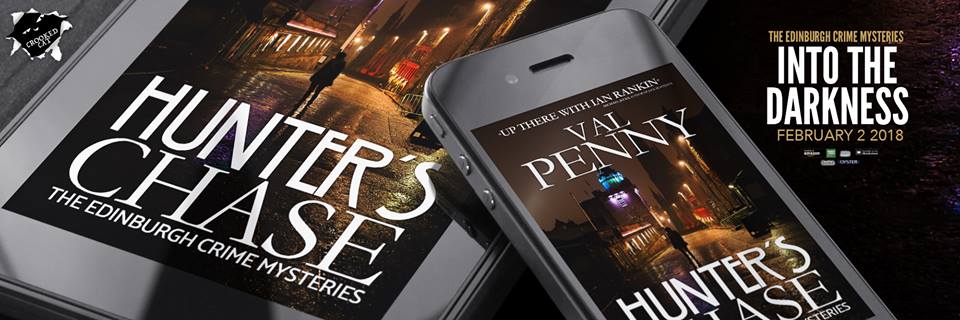
Hunter's Chase banner (003)

Today, I’m privileged to feature author, Val Penny. Val is not only a fellow Swanwick writer but also a good friend. We’ve all heard of Hunter’s Chase, then Hunter’s Revenge, well today Val’s here to talk about her writing including her latest novel, Hunter’s Force

First of all let’s find out a little about her.

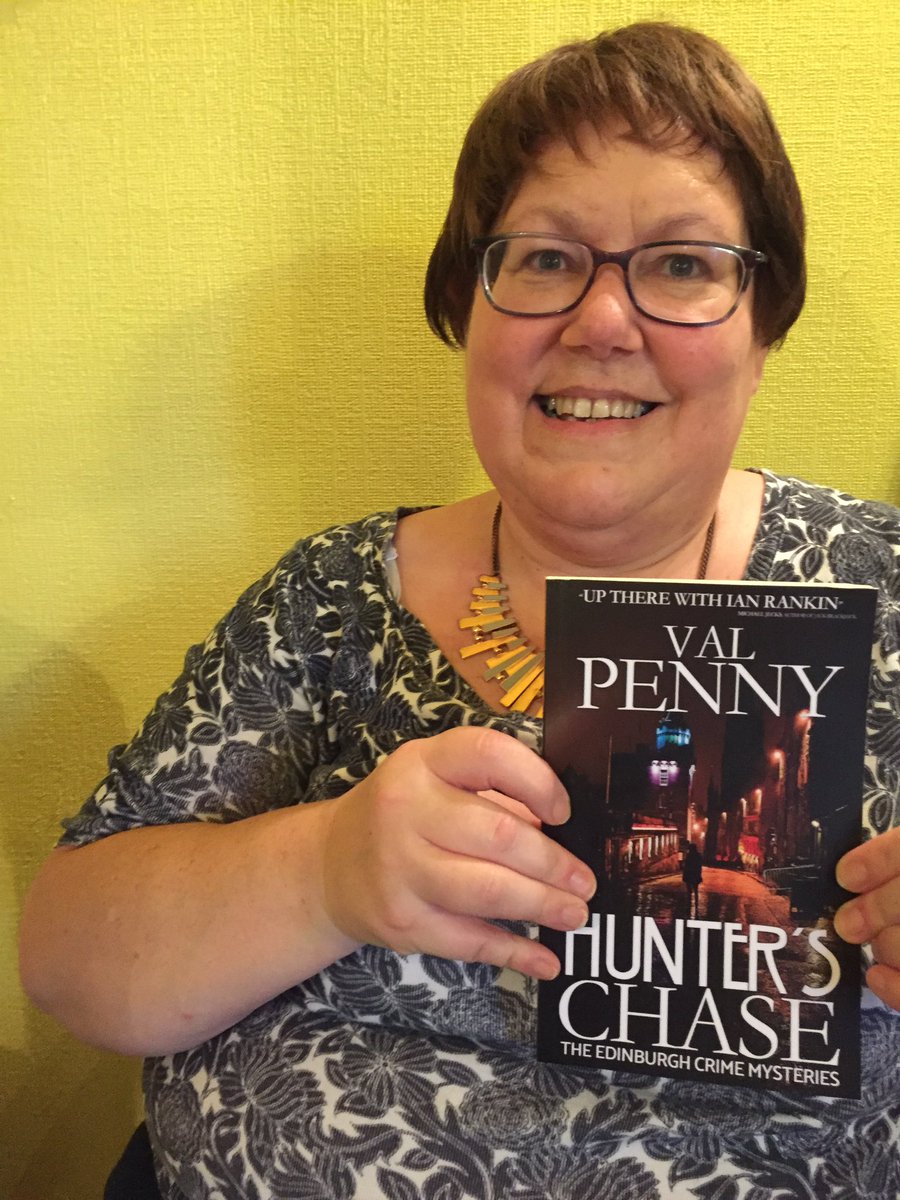
hunter's chase and me (003)

Val Penny is an American author living in SW Scotland. She has two adult daughters of whom she is justly proud and lives with her husband and two cats. She has a Law degree from Edinburgh University and her MSc from Napier University. She has had many jobs including hairdresser, waitress, lawyer, banker, azalea farmer and lecturer. However she has not yet achieved either of her childhood dreams of being a ballerina or owning a candy store. Until those dreams come true, she has turned her hand to writing poetry, short stories and novels. Her crime novels, ‘Hunter’s Chase’ Hunter’s Revenge and Hunter’s Force are set in Edinburgh, Scotland, published by Crooked Cat Books. The fourth book in the series, Hunter’s Blood, follows shortly.

Hunter's Force banner (003)

Hi Val, thank you for joining me today. Hunter’s Force is your latest novel, can you tell our readers a little bit about it?

Hunter’s Force is, again, set in Edinburgh. However it is set in 2013 shortly after the regional police forces in Scotland were combined into one operational force, Police Scotland. In this story, Hunter’s past catches up with him and he suffers the full force of the rage of his antagonist.

I understand Hunter’s Force is the third book in The Edinburgh Crime Mysteries. What inspired you to write this series?

I enjoy working with my characters and exploring how their lives progress and how they react to the situations I put them in. It is so much fun to develop the characters I create and watch them grow.

Is this the last in the series or is there more to come?

I am presently writing the fourth book in the series, Hunter’s Blood which will be published by Crooked Cat Books later this year.

Is it necessary to read the earlier books first or do they all act as standalones?

As with any series, details of the characters and there are details of characters that are revealed in each book. However, I do try to make sure that each novel works as a stand-alone story.

How long have you been writing?

I have been writing and telling stories all my life, but I started writing novels seriously about five years ago when I was recovering from cancer. The treatment left me very tired and I had little energy to pursue more active past times like walking and swimming, so I read even more voraciously than usual. Then I started blogging reviews of the books I read on my blog  and as I got a bit better, and more restless, my husband suggested that, if I knew so much about what makes a good book, why didn’t I write one.

Do you write in any other genre?

I write poetry as well as my novels. Indeed, it was my poetry that was published first in national anthologies. Now I mostly write crime novels: they are what I like to read.

Do you have a special routine for your writing?

I usually do my publicity and routine work in the mornings. I work on my novel in the afternoon and catch up with other obligations and more publicity in the evenings.

Does your writing leave you any time for hobbies?

My favourite hobby is spoiling my little grandbaby who is now ten months old and, as you would expect, this is, in my opinion, the most fabulous grandbaby on the planet. I will always make time for this!

I also enjoy travel, swimming, walking and going out for meals. Somehow there are never enough hours in the day.

Can you give our readers a taster of ‘Hunter’s Force?’

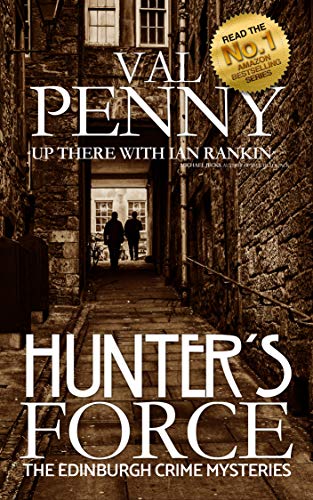
Hunter's force cover (003)

“DI Hunter Wilson, may I introduce Lord Lachlan Buchanan, more commonly known as Lucky? He owns the flat here,” Tim said.

“DI Wilson, I’ve heard good things about you. Call me Lucky. But there’s nothing common about it, Timmy boy,” The young man gritted his teeth as he held out his hand to shake Hunter’s. “I’m sorry, it took me longer to get here than I thought it would.”

“No problem, Lucky. It’s good of you to come and help us sort this out,” Hunter said. “So you employ my son? What on earth does he do for you that makes him eligible for an elegant New Town apartment like this?”

“He’s my driver, DI Hunter.”

“How did he qualify for that job? He’s got three points on his licence.”

“Cameron and I went through rehab together. I want to give the boy a chance. I would have thought you might be pleased?“

“I don’t understand why you chose Cameron for this position,” Hunter said, “and when I don’t understand something, I get suspicious. Always have done. It goes with the job.”

Lucky frowned. “Well, I don’t understand who broke the lock on my door. That makes me suspicious.”

“Speaking of not understanding things, where is Cameron? Tim said something about there being a woman here, but as far as I am aware Cameron is the only tenant. So I want to know where this woman has come from.”

Meera appeared at Hunter’s side. “I don’t know where this one came from, but I know where she’s going. Hunter, I’m going to follow the victim back to mortuary. Sam is just taking a few final pictures and then she’ll be leaving with me too.”

“Okay, Meera. That’s fine. Did you find the extra bits?” Hunter asked. He wanted to contain, as far as possible, the information about the removal of the fingertips.

“Unfortunately not. If CSI can’t find them, I’ll have to work with what we’ve got.”

“Extra bits?” Lucky asked.

*

Some great answers Val. Thank you for joining me. I’m sure that taster of Hunter’s Force will make our readers want to order it now.

Where can we order a copy of Hunter’s Force, Hunter’s Revenge and Hunter’s Chase? 


Hunter's force cover (003)      Hunter’s Force

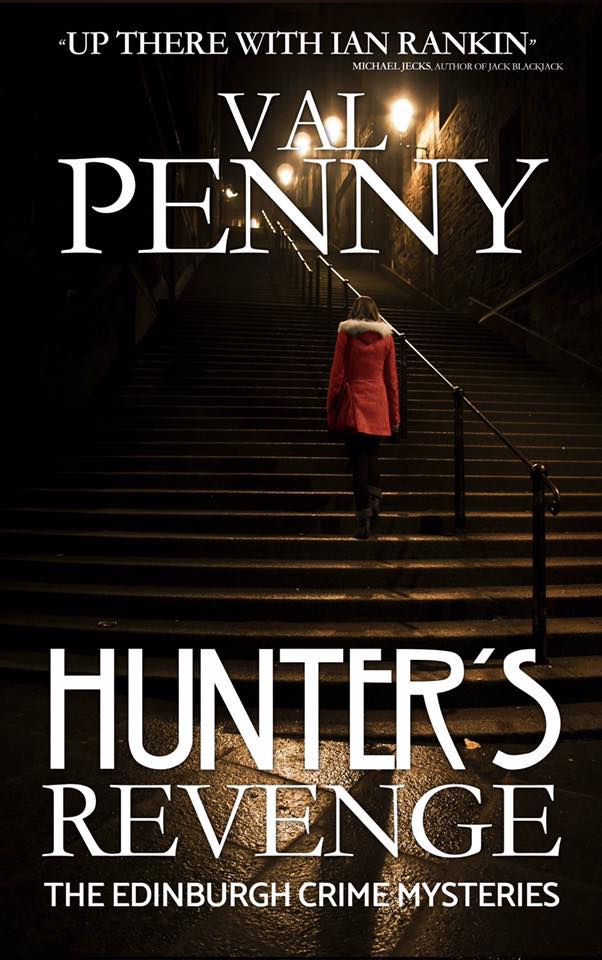
Hunter's Revenge Cover (003)      Hunter’s Revenge

51nQlT4HjzL._SY346_      Hunter’s Chase

Links below to find Val Penny.

Facebook

Facebook (Groups)

Twitter

Website.

Guest Interview – Angela Petch

Untitled design (13)

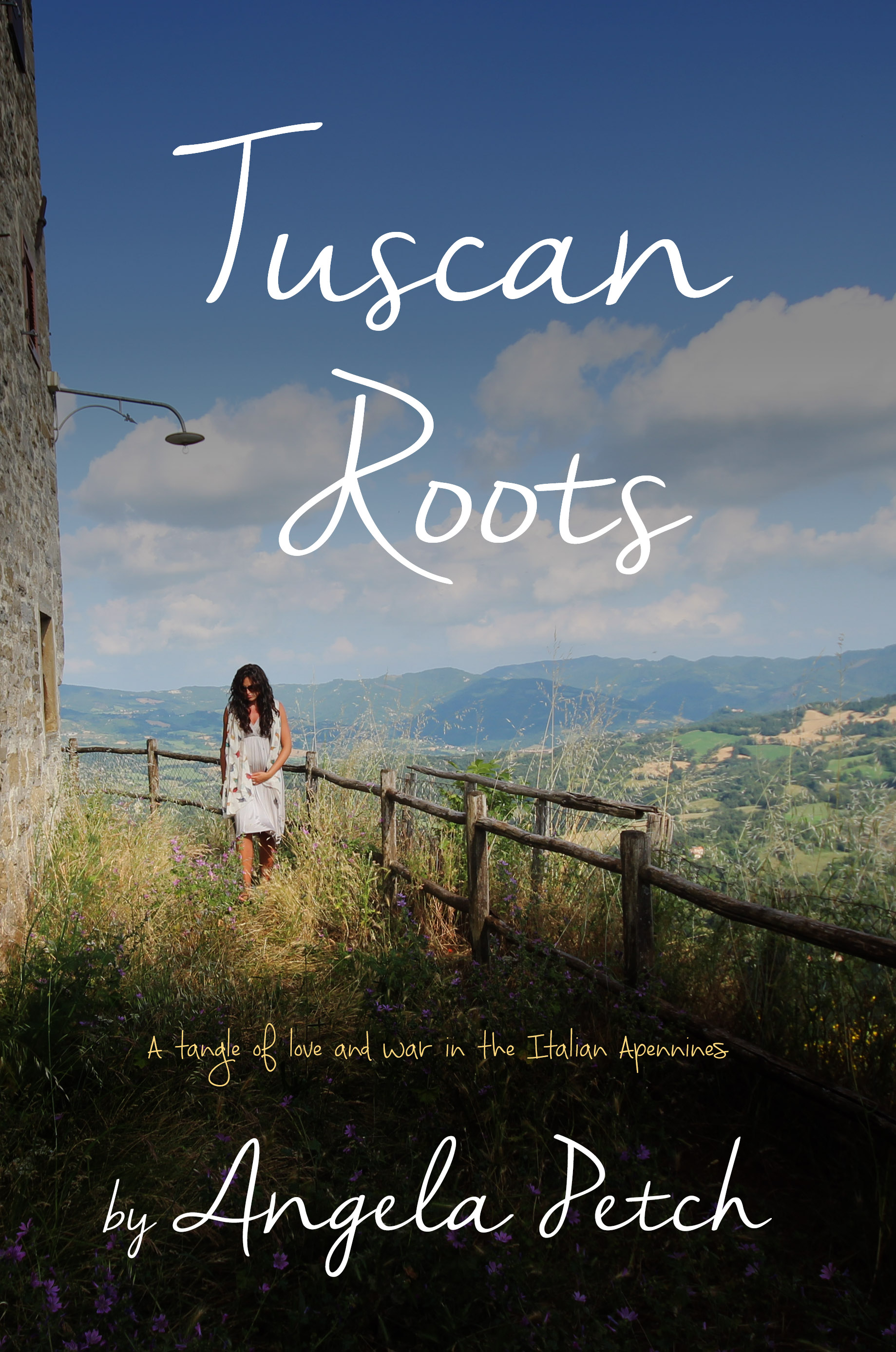
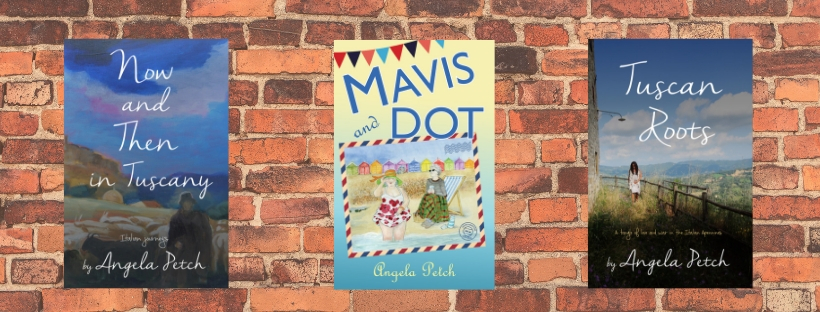
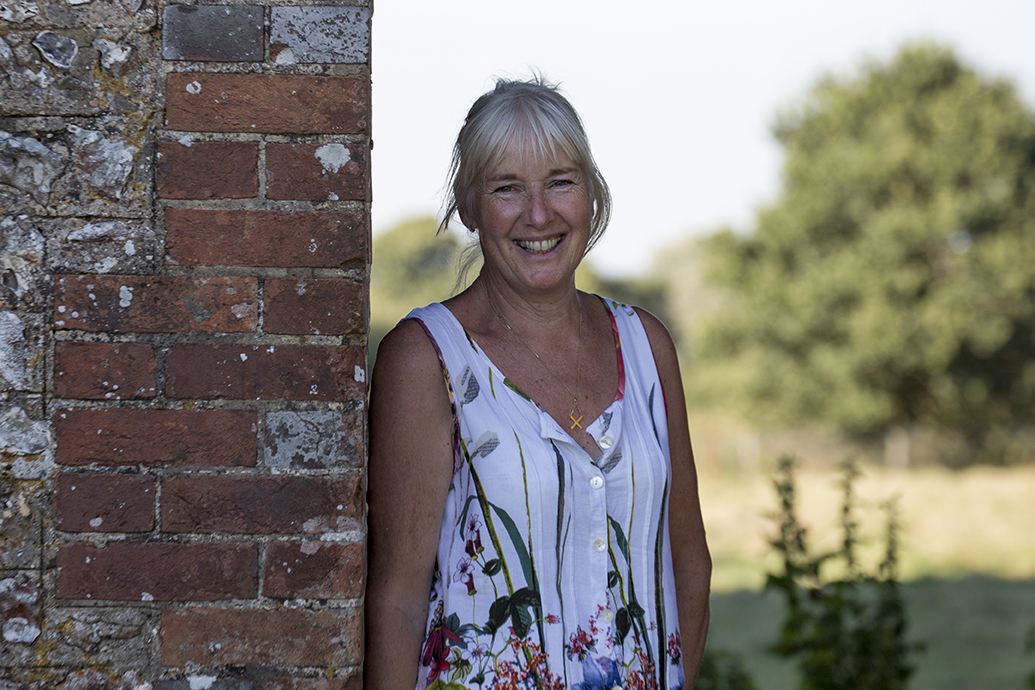
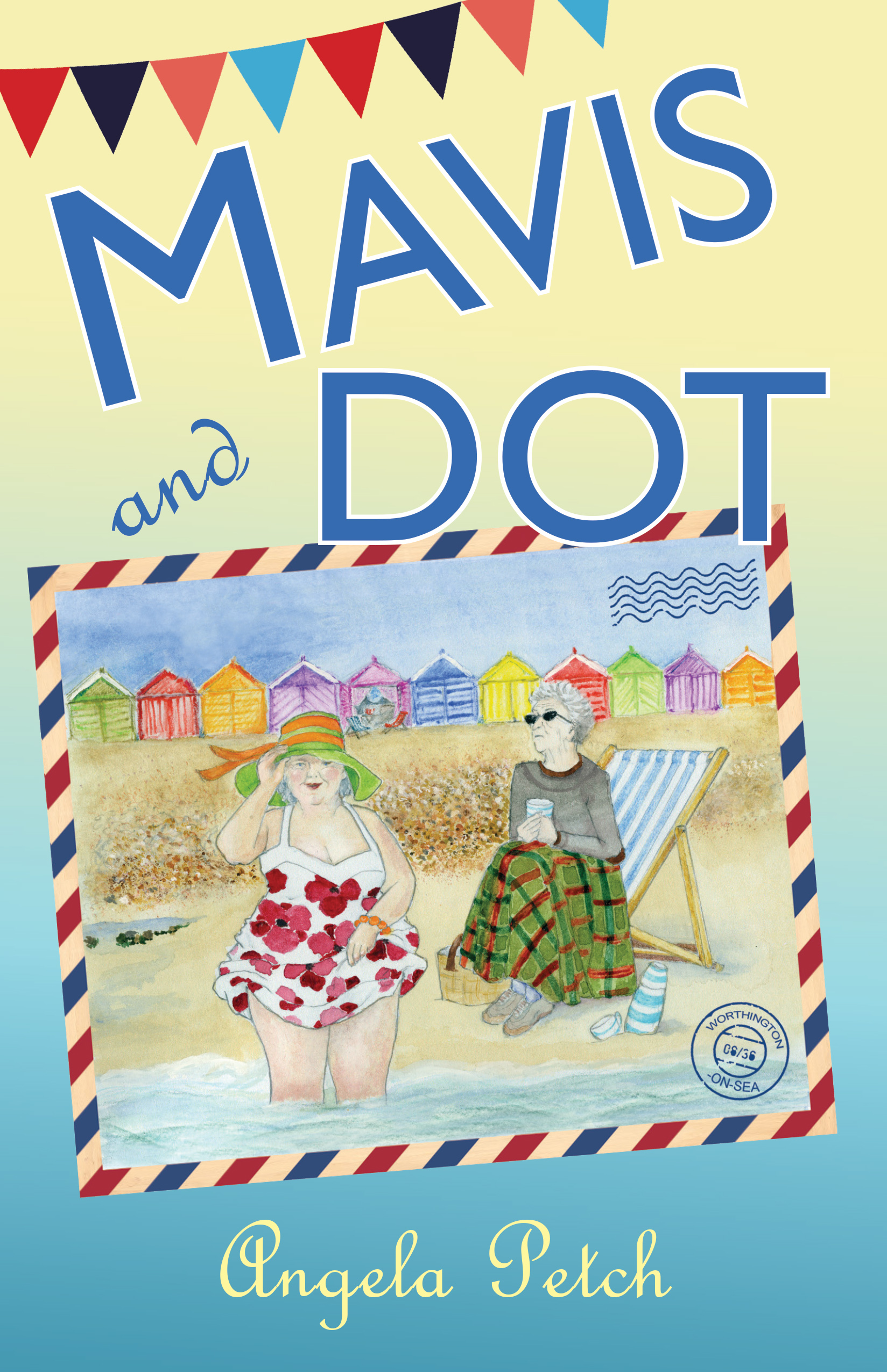
Today I am joined by fellow Chindi author, Angela Petch, to talk about her writing including her latest novel, Mavis and Dot. This week Angela is Chindi’s Author of the Week.
AP 24e (002)

Hi Angela, thank you for joining me today. Mavis and Dot is your latest novel, can you tell our readers what inspired you to write it?

Thanks for having me on your blog. It’s always great to have the chance to talk books.

Mavis and Dot had been on the back burner for more than thirteen years, since losing my best friend to ovarian cancer. We used to enjoy charity shops and auctions and when we went out and about, we nicknamed each other Mavis and Dot.

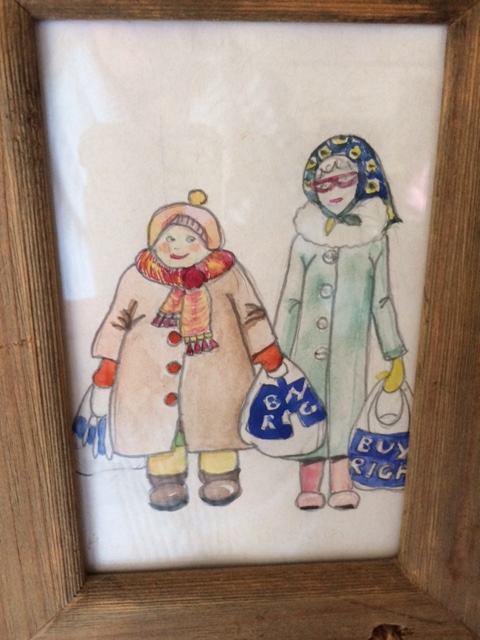
When she fell gravely ill, I wrote her a silly story about Mavis and Dot and it made her laugh. Out came her paints and she sketched a cartoon, which I still have in the cloakroom.
Olga's picture of M and D (002)

That’s one fabulous painting. It’s lovely that you still have it. 

Over the years I wrote more stories until last year I decided to publish them as a novella. I felt as if she was in the room when I wrote, urging me on. I still miss her.

Writing the book is a great tribute to her.

I understand Mavis and Dot is a move away from your normal genre, is that correct? What prompted you to take this step?

My usual genre is historical fiction. But I felt I had to write Mavis and Dot, for reasons explained above. All profits from sales go to Cancer Research. I think we all know somebody who has suffered from this disease. We need a cure.

I also feel we are judgemental about the elderly. They were young once and there’s a lot of colour in that grey. I love the company of older people, they have so many stories to share.  And they are fun.

It’s wonderful that all profits from sales are going to Cancer Research.  

How long have you been writing and do you write anything else besides novels?

English was my favourite subject at school and I’ve always been a bookworm. I wrote a play for my family when I was eight, made all the puppets from papier-maché, forced my parents pay to watch and got very cross when my father started to read his newspaper half way through. In my teenage years, I wrote angsty, moody drivel… the short answer to your question would be – for a long time.

I enjoy writing short stories and in the last year have been published in women’s magazines. Short stories are underrated. I like capturing glimpses of life.

Do you have a special routine for your writing?

I always have a notebook and pen with me, but I write best at my desk and in absolute silence. In Italy I write during the afternoon siesta and in England, whenever I have time. I need to write every day.

I understand that you’re a Hybrid Author. Can you explain to our readers what this means? 

I’m self-published and have written three novels that way.

But in 2018 I signed a two-book deal with Bookouture, a digital publishing company, and I’m very excited about this. So, I have a foot in both camps. I’m presently rewriting my first novel and enjoying the editing process. It’s very hard work and was hard to “let go”, after having gone solo (albeit with the help of beta-readers and a paid editor) and follow a professional’s suggestions. But I think “Tuscan Roots” (which will have a new title for June 2019) will be a better book in the end.  I hope so!

I’m also writing a new Tuscan book for Bookouture and that will be out in April 2020. Readers of “Mavis and Dot” have asked for a sequel, so that is on the cards too. I am busy!

It all sounds very exciting. 

What advice would you give to writers contemplating self-publishing?

Brush up your social media skills and be prepared to be active on authors’ sites. I’d suggest joining a friendly, supportive indie group like CHINDI, but be prepared to give as much as you take. We can all learn from each other. It’s not enough to sit at your desk and write. As wonderful as your work might be, nobody will find you by chance.

Very true words, Angela.

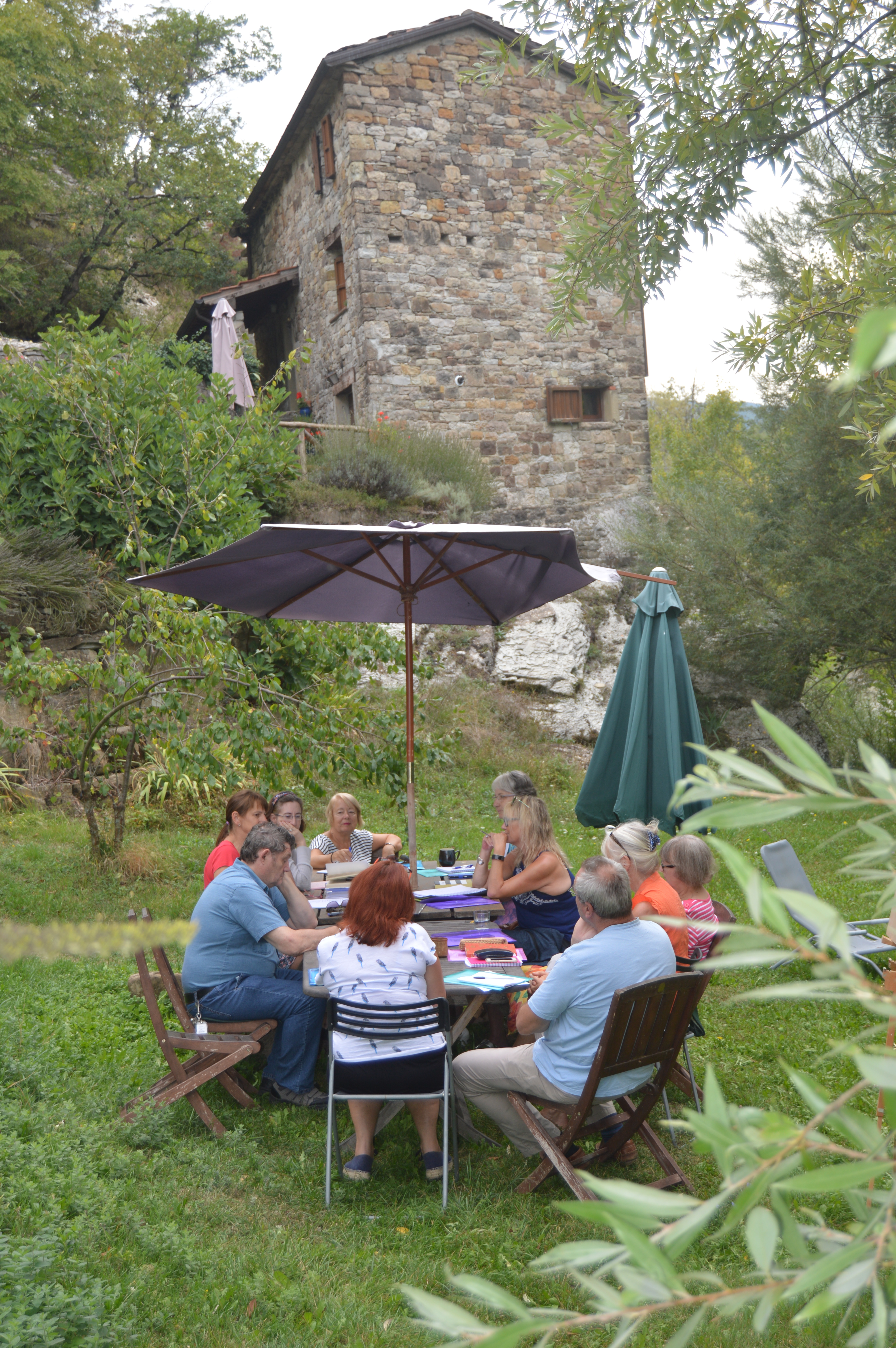
You also host Writer Retreats in Tuscany. Please tell our readers a little about these, how they work, and can anyone book?
 DS_0727 (002)

Oh, this is a new venture and one I love. This September 11th – 18th will be the second time we lay on a writing week at our secluded watermill. Anybody can come to Write Away in Tuscany, but numbers are limited, so the group is not too big.

We had a full-time tutor last year but in 2019 we have planned one full day with social media experts, Kathryn and Kent Bax (from One Stop Fiction) and on other days we will have short, morning sessions led by authors on a variety of subjects, such as humour, research, location and short story writing. Each day starts with 5-minute writing warm-ups and there will be other exercises to follow, IF WISHED.  All sessions are optional, as we realise some writers may prefer to spend time on their own work. Similarly, our outings and the two meals out are optional.

This year we have reduced the price to £550 and we know we are extremely competitive. That price includes food, lodging and airport transfers.

Sounds and looks lovely, Angela. I imagine it must be very popular. 

(If you fancy booking get in touch with Angela via one of the links below)

Your life must be busy with writing and hosting, does that leave any time for hobbies?

I love playing tennis and used to play competitively but since a shoulder operation last year, I limit this to social tennis. Walking is another favourite pastime and I often think of writing solutions this way. Cooking, especially with fresh, Italian ingredients from our Tuscan vegetable garden.

Can you give our readers a taster of Mavis and Dot?
Mavis and Dot Front Cover in RGB mode for screens jpg (002)

From Chapter Five

Tuesday night saw Mavis in the local school-hall. Bums and Tums was aimed at the reluctant exerciser. She hadn’t known what to wear, although she’d seen pictures in a magazine of ladies in Lycra. Unfortunately, no charity shop had provided a leotard to fit her figure but a bright pink shell suit with orange stripes down the side of the legs and arms seemed appropriate enough. It was a size too small, but she reasoned it would be extra incentive to lose weight and there seemed little point in buying something in her present size when she was planning to shed at least a stone. The legs were a little long, so she’d rolled them up.

‘Well, girl,’ she said aloud to her reflection in the bathroom mirror, ‘you don’t look too bad. In the pink, I’d say.’ She pouted and twirled, then swept her untidy curls up with a fuchsia hairband from the Pound Shop. It was a little on the tight side but, as well as keeping her hair off her face, it had the same effect as a facelift, pulling her eyebrows up and back into a permanent look of surprise. Why people went to the bother of having painful operations at exorbitant prices to remove wrinkles, when they could buy a cheap hair-band to achieve the same effect was beyond her comprehension.

*

She decided to stay at the back of the class, not only to call less attention to herself but also to follow the moves of Patsy, the pert young instructor. Mavis was in awe of the way the girl managed to move and talk simultaneously into the microphone. The device was cleverly attached to her head and Mavis decided to enquire after class where she could buy one. It would save shouting at Dot, for Mavis had noticed she tended to suffer from deaf moments.

The exercise and moves were harder than she’d anticipated. It was all she could do to move and breathe at the same time. And then when Patsy shouted, ‘And one, two, three, turn…’ and the whole class was facing her and prancing forward in one fast-moving surge, she found herself at the front with nobody to follow. There were titters behind her as she flailed her arms here and there and collided with a lady to her left by side stepping in the wrong direction.

‘Floor work now, ladies. Find yourselves a mat,’ Patsy instructed, not a bead of sweat flattening her slick, smooth, immaculate hair.

‘Good! A chance for a rest,’ thought Mavis, who by this time was the colour of boiled beetroot, hair clinging to the back of her neck like a wet mop. She was also conscious of unsightly perspiration marks spreading like enormous blots under her armpits and between her breasts.

But there was to be no rest on the mats. The positions that Patsy expected her to arrange her body into made her wince. She tried valiantly to bring her right knee up to her left shoulder and extend her left leg as far as she could.

‘Imagine you’re touching the opposite wall,’ Patsy encouraged. ‘Stretch a little further, ladies.’

Mavis duly stretched and heard a ripping sound. When she looked down, she saw the stitching under her crotch had come apart and her underwear was visible. She lay there, wondering how she could creep away without revealing to the whole of the class her three-for-the-price-of-two Poundstretcher knickers.  Patsy, anxious and trained in First Aid, came rushing over to administer the kiss of life to her ‘new lady’ as Mavis struggled to sit up.

*

Thank you Angela for joining me today and talking about your writing and giving readers a taste of Mavis and Dot. I’ve read it and thoroughly enjoyed it. So why not download a copy from the link below, and not only be entertained, but raise funds for Cancer Research too? Also available in paperback.

If you have any questions for Angela about her writing or retreat then leave a question at the end of this blog or contact her on one of her links below. 

About Angela

Angela Petch lives in the Tuscan Apennines in summer and Sussex in winter.

Her love affair with Italy was born at the age of seven when she moved with her family to Rome. Her father worked for the Commonwealth War Graves Commission and he made sure his children learned Italian and soaked up the culture. She studied Italian at the University of Kent at Canterbury and afterwards worked in Sicily where she met her husband. His Italian mother and British father met in Urbino in 1944 and married after a wartime romance.

Her first book, “Tuscan Roots” was written in 2012, for her Italian mother-in-law, Giuseppina, and also to make readers aware of the courage shown by families of her Italian neighbours during WW2. Signed by Bookouture in 2018, this book will be republished in June 2019. Another Tuscan novel has been commissioned for 2020.

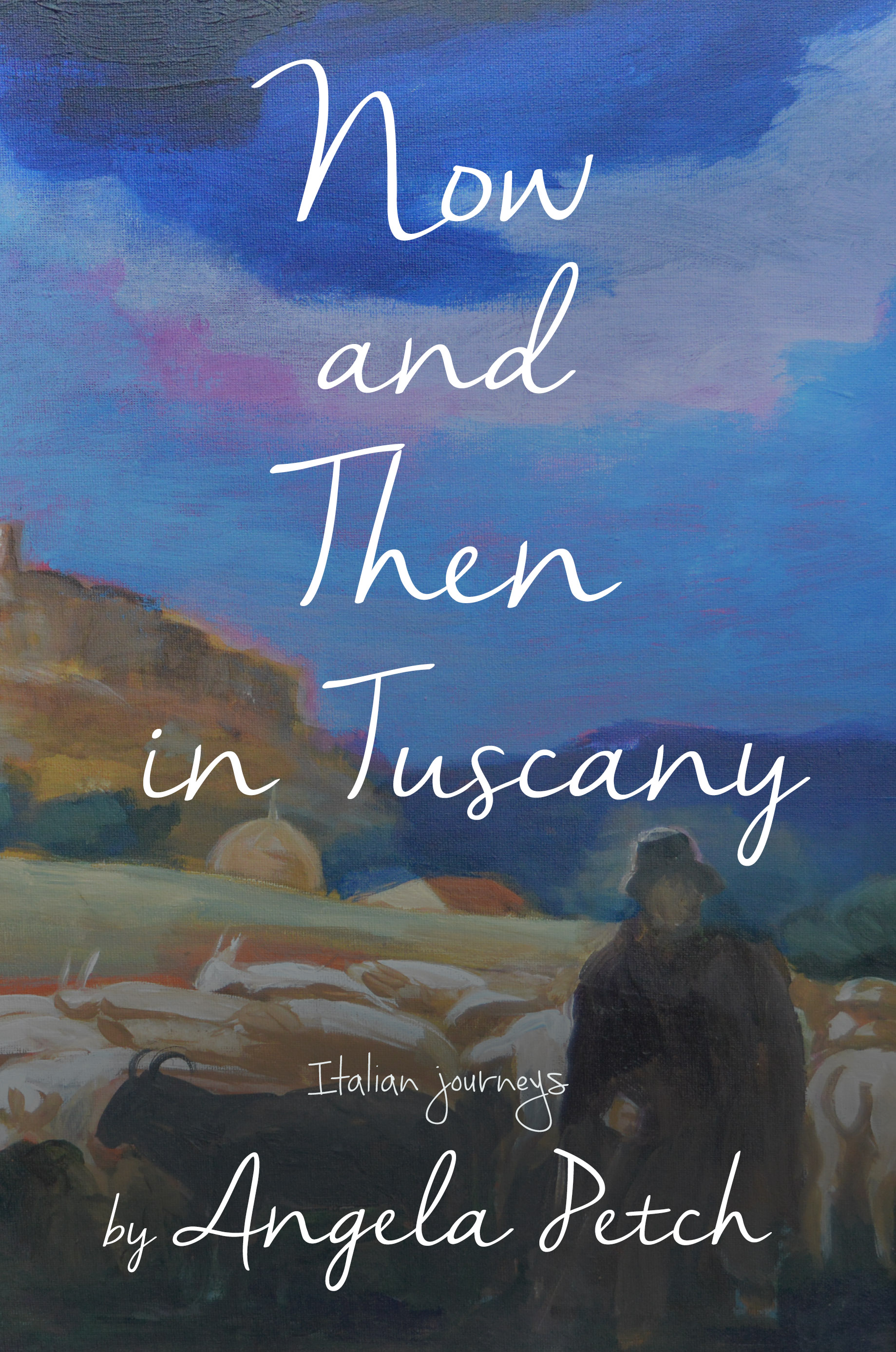
“Now and Then in Tuscany”, a sequel, was published in April 2017 and features the same family. The background is the transhumance, a practice that started in Etruscan times and continued until the 1950s. Her research for her Tuscan novels is greatly helped by her knowledge of Italian and conversations with locals.

Although Italy is a passion, her stories are not always set in this country. “Mavis and Dot”, published at the end of 2018 and sold in aid of Cancer Research, tells the story of two fun-loving ladies who retire to the Sussex seaside. They forge an unlikely friendship and fall into a variety of adventures. Ingenu/e Magazine describes it as:“Absolutely Fabulous meets Last of the Summer Wine… a gently hilarious feel-good book that will enchant and delight…”.

A prize-winning author, member of CHINDI independent authors and RNA, she also loves to travel and recently returned to Tanzania, where she lived at the start of her marriage. A keen tennis player and walker, she also enjoys spending time with her five grandchildren and inventing stories for their entertainment.

Her short stories are published by PRIMA and the People’s Friend.

Where can readers purchase a copy of Mavis and Dot and your other books?

Mavis and Dot Front Cover in RGB mode for screens jpg (002)

Click here

2018 kindle (002) 

 Click here (only for a little while longer)
2018 kindle cover (002)

Click here

Where can readers find you?

Amazon author page

Facebook

Twitter

email

Website


Graduation Day – Master of Arts

balloons-1869816_1280

The day has arrived – the day that I collect my certificate and receive recognition for all my hard work –  Master of Arts in Creative Writing. Hopefully I will  manage to have lots of photographs taken and be able to share them with you.

The ceremony is at Brighton Centre where I will meet up with my peers and tutors as well as having the support of friends and family. It’s pouring with rain but I’m not going to let that spoil the day. Today will be special. Having left school at fifteen without any exams to go to work, because my father was disabled, I never thought I’d get a BA degree, never mind an MA, and I never thought I’d publish a novel and write another one to be published later this year, and I never thought I’d have a huge amount of poems published. It just shows that it’s never too late to learn.

Join me in my celebration –  and if you’re around at 3:15pm, GMT, this afternoon, you can tune in and watch the ceremony live from the link below. Who knows, you may be able to spot me?

watch live ceremony here

or via Facebook

So all I have to say now is thank you for all your support and Cheers – join me in my celebration and help yourself to a glass of virtual sparkly.

drinks-1283608_1280

Guest Feature – Rosemary Noble discusses Australian Flora and Fauna

untitled design (11)

I’m delighted to welcome Rosemary Noble, Chindi’s Author of the Week. Rosemary’s article is close to my heart as she discusses Australian flora and fauna. 

OLYMPUS DIGITAL CAMERA

Thank you, Patricia, for inviting me to feature on your blog today. Knowing that you are fascinated by trees, I thought that it was time I wrote a blog about my interest in Australian flora and fauna, since three of my historical novels are set there.

Australian Flora and Fauna

Rosemary Noble

OLYMPUS DIGITAL CAMERA

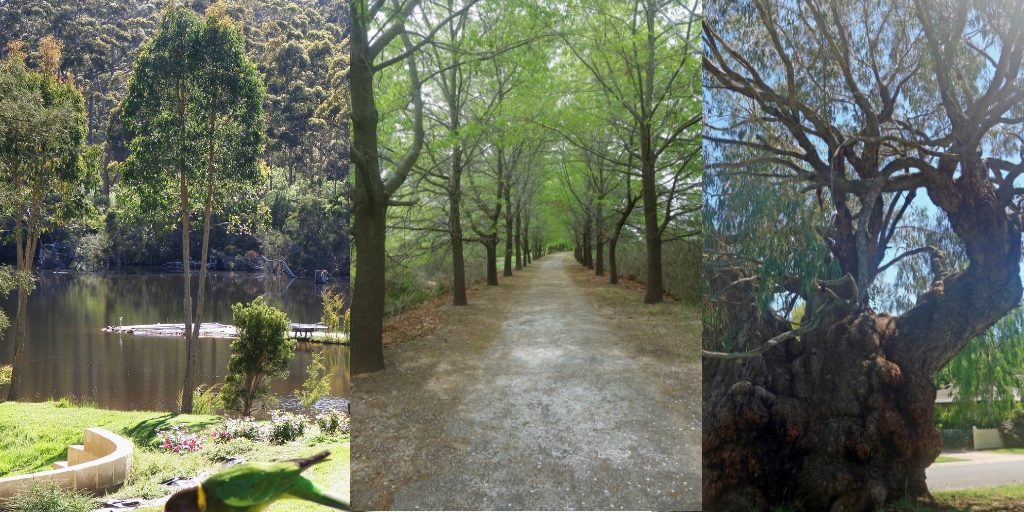
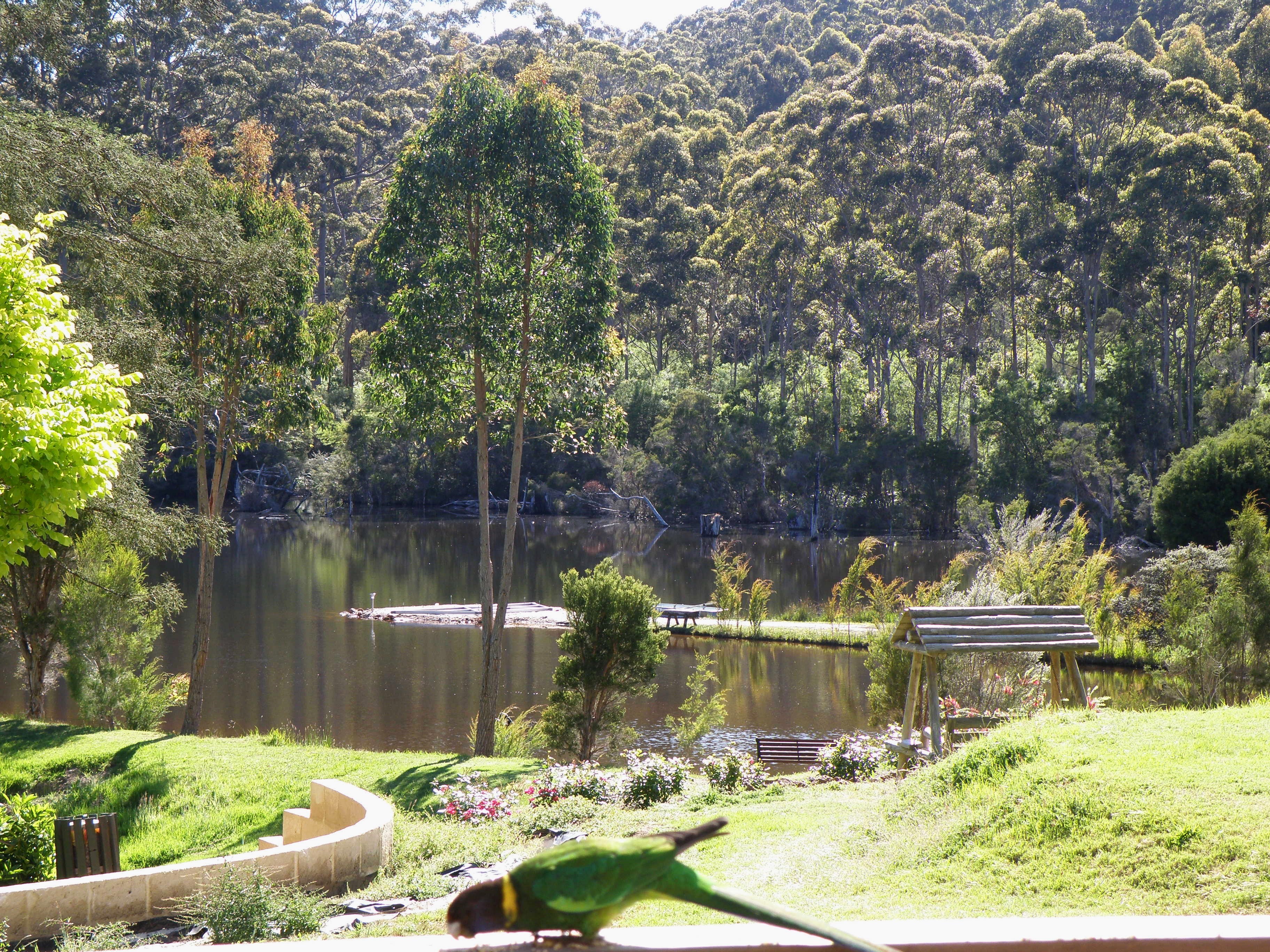
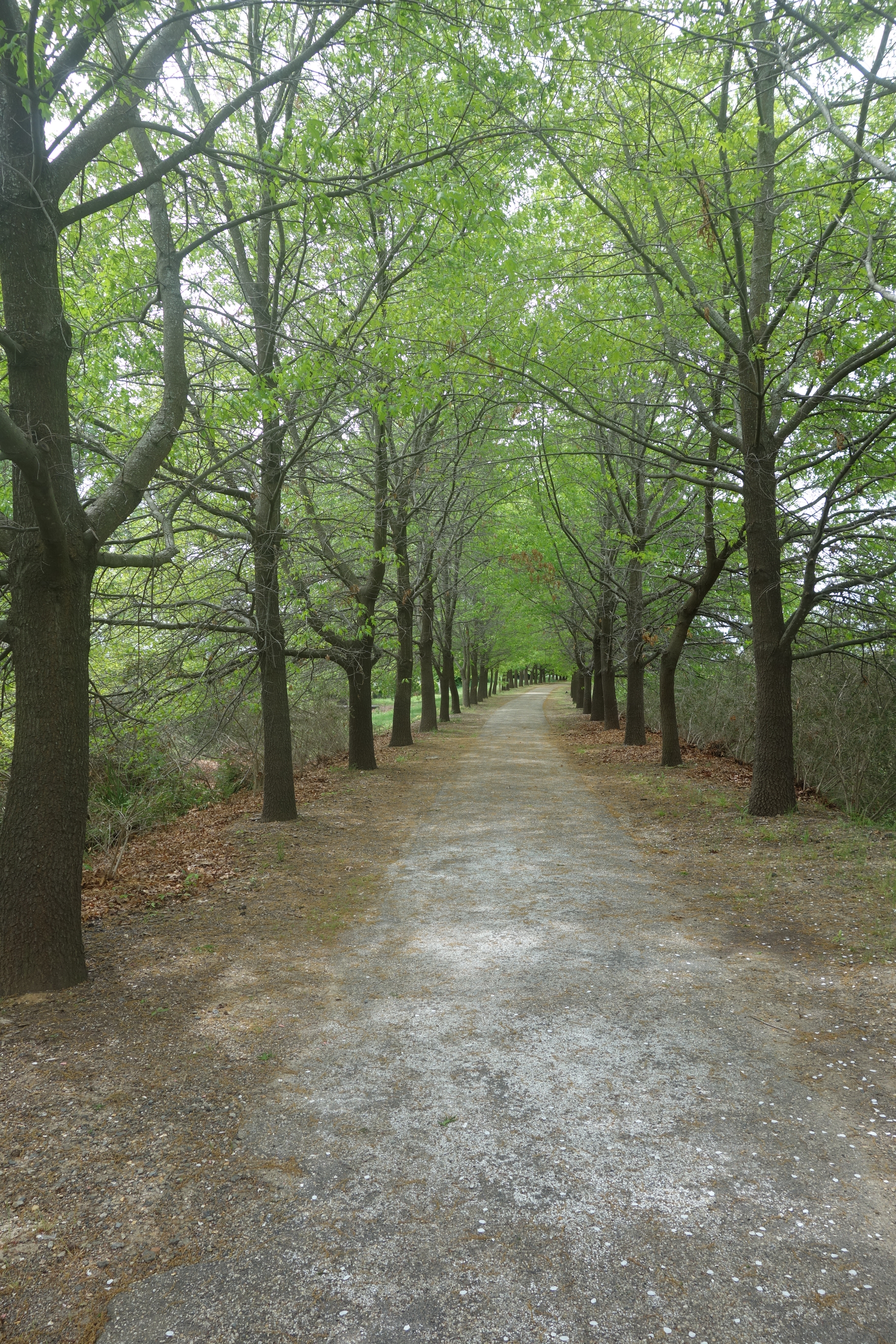
The first time that I visited Australia in 2011, I was struck immediately by the different colour tones of the green, I do not profess to know anything about botany but even I could tell that these were not the colours I was used to, more olive than bright green. Not only was the colour unusual, but also the canopy. The trees reminded me of delicate ladies’ parasols. The settlers missed their British trees, so you find all sorts of British trees in gardens or avenues, hence the bright spring green on the left of the above picture.

picture 2

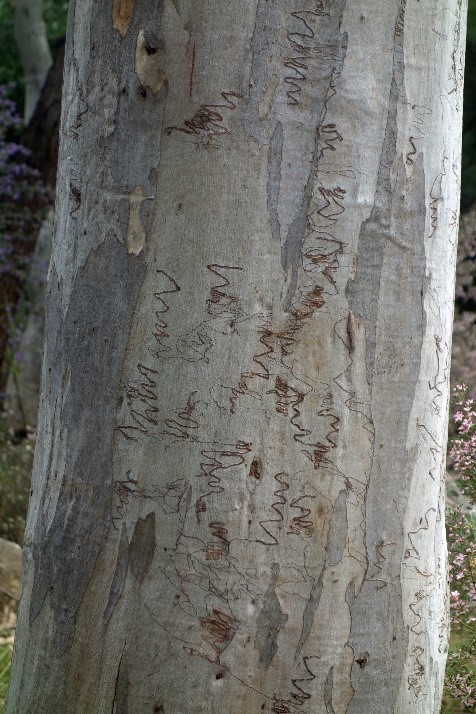
There are many species of native eucalypts. In the upside-down world of Australia, these trees do not lose their leaves in Winter but their bark. I love the common names of these trees such as the paper-bark gum and the scribbly gum, where a grub infests the bark so that it looks like it’s been scribbled on.

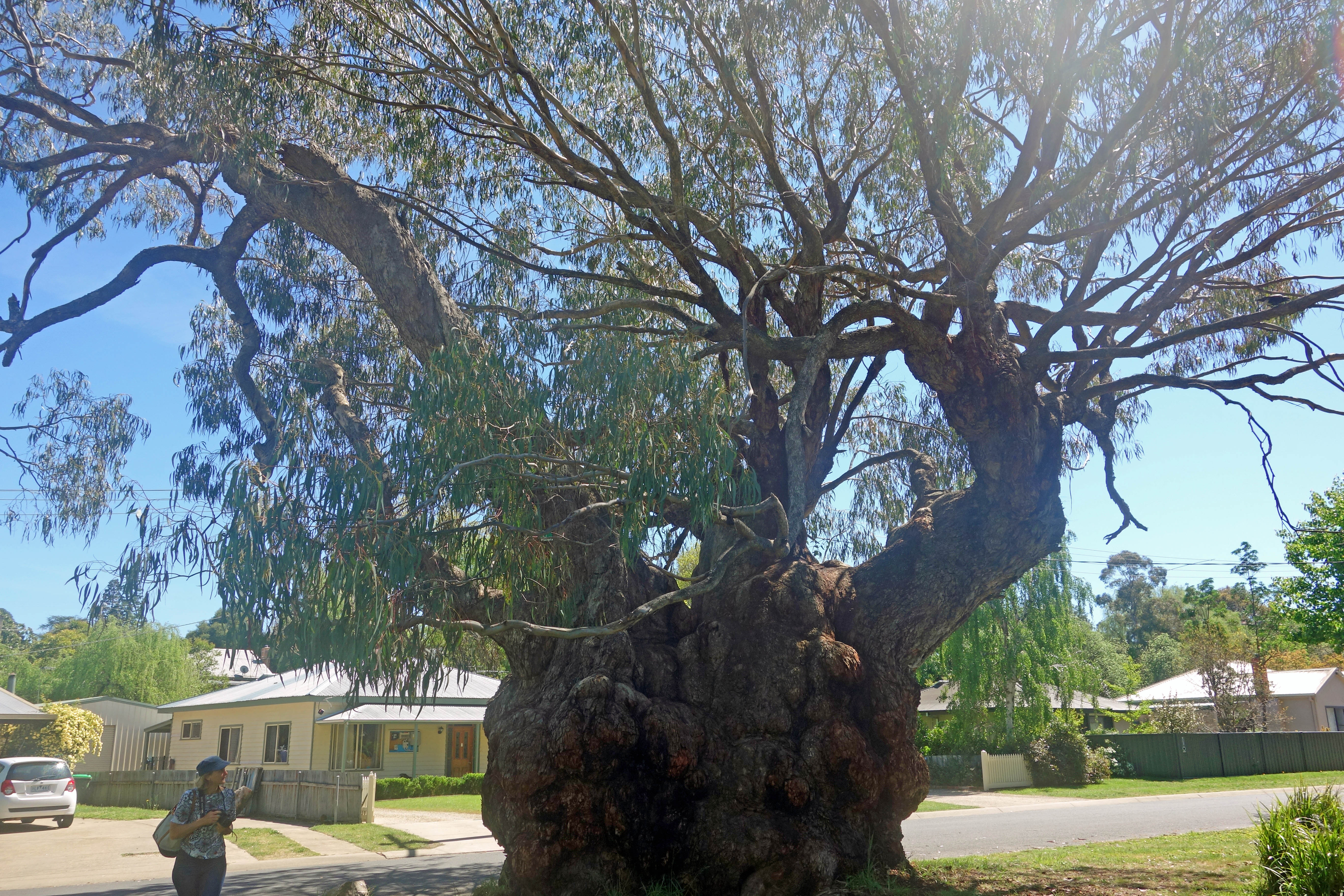
Trees can also tell a story, Take a wide-girthed tree in the Adelaide wine region. The tour guide showed us this hollowed out tree, still alive, where a hundred years before a man had lived, married and brought up several children inside the tree, until at last, he found them a proper home. Should we have taken this with a pinch of salt, possibly? But people did live in the most primitive conditions. I was told of a Dutch family after WW2 who moved to West Australia and lived in a canvas sided hut for more than a year.

goldminer's tree (002)

The above picture tells another story. We found this in a former gold mining town. Why is it so wide, so misshapen? The gold miners used to leave notes nailed to its bark, telling their friends where they had gone.  Over the years, the tree has repaired all the nail holes and covered them up.

picture 4

When we were in Canberra last October, there was a fabulous exhibition at the National Library about the voyage when Captain Cook visited and named Botany Bay. Joseph Banks, renowned botanist, made his name for the work on samples brought back to London.  Imagine the excitement on seeing these new and exotic species, the grevilliasproteas, bottle brushes, acacias and many different kinds of tiny pea flowers.

What perturbs me is the way that settlers were not satisfied with native species, neither of trees, flowers or fauna. We all know the disaster of introducing rabbits, foxes and cats into Australia, but how many realise that they imported sparrows, blackbirds and nightingales back in the 1850s. The latter didn’t survive but I recently sat in a motel garden in northern Victoria listening to the birdsong. Along with the boom from a bittern, the warbling of the Australian magpies and the shrieking of the cockatoos came the overpowering song of birds I hear every day in my Sussex garden, all descendants of the three dozen pairs imported into Melbourne.

2018 11 17_0671

The oaks, the elms and the beech lined avenues of that small town could not be considered native in any way. They have effectively supplanted the native flora, just as the British and Chinese gold miners of the 1850s supplanted the aboriginals. What is done is done.  One good outcome is that the mighty elm has found its refuge in Australia. I had forgotten what a magnificent tree it is since they were wiped out in Britain by Dutch Elm disease way back in the 1960s.

Each time I return to Australia, I try to use my eyes and ears more. Travelling along the road around the southern edge of Victoria into New South Wales last time, we thought something was wrong with the car until we opened the window. Billions of cicadas accompanied us along a hundred miles of virgin forest. The sound was deafening and thrilling.

Of course, Australia is both large and diverse. I have not touched upon the rainforests of Queensland nor the central dry outback. In good years the outback has its wealth of flora. The 2018 drought has wiped much of it out. Wild fires have laid waste to tropical rainforest around Mackay with such ferocity that it may not recover for decades. It’s a harsh and unforgiving country; drought, fire, flood and dust storms abound but it is also my second home.

*

Thank you Rosemary for that fabulous article. I’m intrigued to know the names of the wide-girthed tree in the Adelaide wine region and the wide tree in the gold mining town as they are great candidates for me to write poetry narratives to add to my myth and folklore collection.

If you have any questions for Rosemary, please leave them at the end of this blog or via her social media links provided.

About Rosemary

Rosemary Noble lives in West Sussex and worked as an education librarian. Books have been her life, ever since she walked into a library at five-years-old and found a treasure trove. Her other love is social history. She got hooked on family history before retirement and discovered so many stories that deserved to be told.

Her first book, Search for the Light, tells the story of three young girls transported to Australia in 1824. Friendship sustains them through the horrors of the journey and their enforced service in Tasmania. The Digger’s Daughter tells of the next generation of gold-diggers and a pioneering woman who lives almost through the first hundred years in Victoria. The third in the trilogy, Sadie’s Wars takes the reader to the fourth generation and into the twentieth century. The trilogy is based on the author’s family. It tells of secrecy and lies, of determination and grit and how all can be done or undone by luck.

Rosemary is a member of CHINDI independent authors and is involved in literary events in and around Chichester. She also loves to travel, especially to Australia and Europe and not least, she loves spending time with her grandchildren, one of whom is a budding author herself.


Where can a reader purchase your books? 

https://www.amazon.co.uk/Rosemary-Noble/e/B00J7TLMKC?ref=dbs_p_ebk_r00_abau_000000

Where can readers find you?

Blog – here

Twitter – here

Facebook – here


As 2018 closes

new-years-eve-1905140_1280

As 2018 closes – and what a year it’s been.

I was awarded an MA in Creative writing (Merit) after my four-year journey.

I won NanoWrimo for the first time.

I have a complete manuscript of ‘The Coal Miner’s Son,’ (albeit that it still needs editing)

Several of my poems have been published.

This year my blog has grown. I’ve featured authors with articles and interviews. 2019 will bring many more of these and hopefully so much more.

I haven’t forgotten that I need to finish telling you about my MA Creative Writing Journey. There’s the last section/dissertation to go and the finale will be after I graduate in February at Brighton Centre.

I hope to share lots more of my poems on myth, folklore and legend around trees.

Thank you all for sticking with me through 2018.  Let me know what else you’d like to see.

I’d like to take this opportunity to wish you all lots of Christmas cheer and may all your dreams come true in 2019.

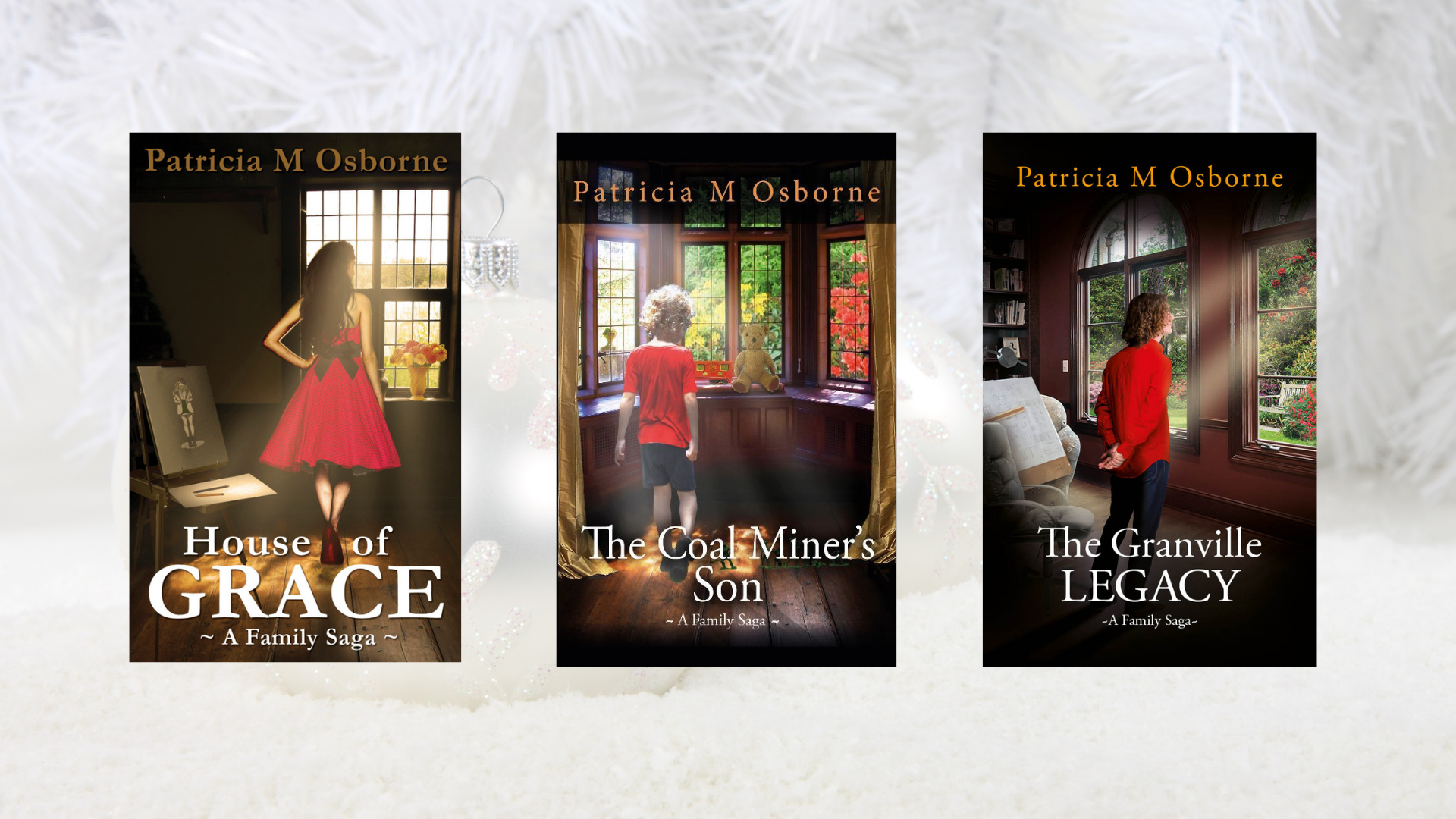
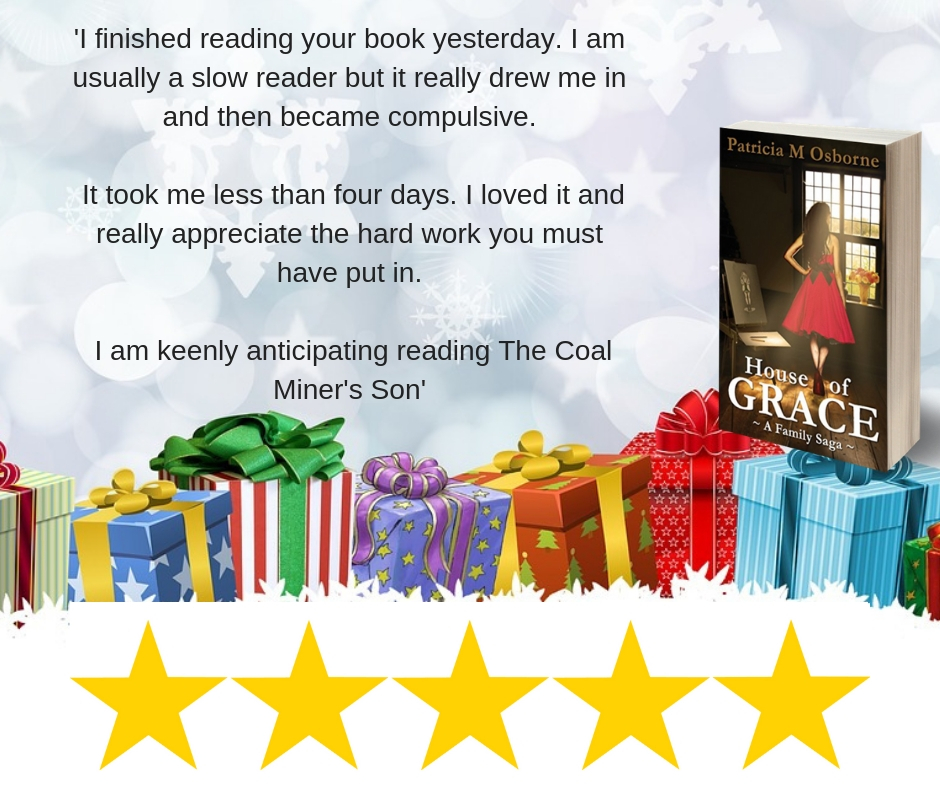
On that note I’d like to share a Christmas gift (a review) that I received from one of my readers in relation to House of Grace. A review is precious to any author. If you’ve read House of Grace and enjoyed it, please consider leaving a  short review on Amazon, Goodreads or anywhere on social media. Spread the word.

_IFINI~1

If you haven’t read House of Grace yet, now is a great time to give it a try – the price has been reduced from £2:49 to £1:99 on Kindle and remember – It’s FREE to read with KindleUnlimited.

http://mybook.to/HouseofGrace


Winter Solstice-Folklore

fantasy-2824654_1280

As most of you know for my MA dissertation I researched folklore, myth, and legend around trees. Today I shall tell you a story uncovered during my study and at the end as a Winter Solstice gift, I’ll share a poem I wrote using some of the facts from folklore, along with fiction.

‘Sacred Tree,’ forms part of a poetry collection, ‘Spirit Mother.’  ‘Lady of the Woods,’ also part of the collection, was published in Reach Magazine, earlier this month, Issue 243. Watch this space for more.

The Oak and The Mistletoe

To the ancient druids the oak tree was sacred. An English oak was more sacred, and if it was an English Oak that had accepted mistletoe, that was the most sacred of oaks.

Ancient druids gathered in the grove of oaks on Winter Solstice when a special ritual was performed. The chief druid climbed the oak and lopped the mistletoe which was caught in a white cloak by the other druids. During the ceremony two white bulls were sacrificed and mistletoe was later presented at the altar to the earth goddess to bring ‘fertility to the spirit of the earth’(Paterson, 1996). The white berries signified the sun god’s semen.


Imagination as a Writer- Mark Giglio

banner for blog (6)

Red City Review: “a style reminiscent of Gabriel Garcia Marquez’s magical realism”

I’m delighted to welcome, author, Mark Giglio, from across the water. Mark has come here today to discuss imagination and writing, but before that, let’s find out a little about him.

mark face (002)

Mark Giglio is a writer, artist and award-winning furniture maker with a degree in creative writing from San Diego State University. He lives in Escondido, CA in San Diego County.  He has written novels in Historical Romance “Alchemist Gift”, and a Romantic Thriller “The Patròn’s Wife”. The second volume of “Alchemist Gift”, “Curious Journey” with the main character of Count Emilio is in the works. His short stories are in the Horror and Science Fiction genres.

first picture for blog

Reading with Your Imagination

by

Mark Giglio 

The wonderful thing about your imagination is that you bring all of your experiences to a scene in a story or novel. Sometimes a written description can spark a different and more focused experience as compared to a video. A video can be very well done and can certainly tell a story. But we are limited to what our eyes can take in and the score to elicit the proper emotion or reaction. With a video, we are truly witnesses. With literature, we are more participants. I hope I did that in my description of Emilio’s trip down the Rio Oscuro in my latest novel, ‘The Patròn’s Wife’. Many moons ago, I was stationed in the Florida Keys and at Homestead Air Base, which was very near to the Everglades. Both places were hot and sticky and buggy. In the summer you could just about set your watch to the time of the daily thunderstorm. Those were the experiences I drew from for the opening description.

2nd picture for blog a

“The dull pulse of the boat motor echoed back from the dense wall of tangled greenery that crowded its way to the edge of the river bank. The chirps and clicks from a thousand insects set an unearthly cadence that was palpable.  Mist swirled overhead, opening now and again to let the sun’s rays play off the living pearls of dew that rolled down from leaf to quivering leaf back into the brown waters of the Rio Oscuro.

“My clothing was always damp with sweat. The heat and humidity made the trip unbearable. Even the breeze coming off the water was warm and fetid. The chatter of monkeys was tiresome; the biting insects were bothersome and painful. The occasional shadowy animal, drawn undoubtedly by the sound of the motor, would stalk us, making its way through the undergrowth that grew along the riverbank. The relentless heat, discomfort, and unpredictability reached out like a smothering and heavy hand from the jungle and kept its dank grip on me and the boat.”

Another scene has to do with the protagonist Emilio being driven up from the Rio Oscuro to El Paradiso, the name of the plantation where the greater part of the story takes place.

2nd picture for blog

“The road was rutted and bumpy. Branches and fronds reached out and clawed and scratched at all sides of the Land Rover as if trying to pull us into the undergrowth. There was no view to speak of, only a twinkling tunnel made through the tangle of low brush, large green leaves and overhead vines and flowering creepers and still higher the canopies of the great trees.

“We travelled inland for maybe twelve kilometers. I heard birds and the chatter of monkeys, but I saw no animals. Leòn came to a jarring stop. A jaguar appeared out of the brush and stopped on the road.  Its golden eyes burned into mine. Leòn looked away from the animal; he even held his hand up to shield his face and gave the big cat a wide berth. I expected him to say something, but he did not. He did not even look at me. We drove off in silence.”

In The Patrons Wife the scenes are to do with the jungle and by reading the words the reader becomes part of the story.  The reader becomes an active participant by reliving their own set of experiences and memories. A video can never do that.

***

Thank you, Mark for popping over today and sharing your very informative article.

Where can readers purchase Alchemist Gift and The Patron’s Wife?

Alchemist Gift

The Patron’s Wife

Where can you find Mark Giglio?

Website

Twitter Alchemist Gift

Twitter The Patron’s Wife

Facebook Alchemist Gift

Facebook The Patron’s Wife 

Facebook Author Page

Facebook Alchemist Gift Inspiration Group


New Release: Edward’s Outlaw by Jennifer Ash

edwardsoutlaw_ebook small (002)

It’s a privilege today to welcome Jennifer Ash on the final day of Edward’s Outlaw Blog Tour.  Today she’s looking at Mathilda – The Reluctant Investigator. Congratulations Jenny and over to you. 

Many thanks for allowing me to visit as part of my mini blog tour to launch the third novel of The Folville Chronicles; Edwards’s Outlaw.

In the first two novels of the series, The Outlaw’s Ransom and The Winter Outlaw, Mathilda of Twyford (now Lady Mathilda de Folville), found herself thrust into situations where she was forced to get to the bottom of a crime simply to stay alive. In book three however, Mathilda’s reputation for solving mysteries sees her being asked to solve a murder by the sheriff…and she is in no position to say no…

Here’s the blurb.

January 1330: England is awash with corruption. King Edward III has finally claimed the crown from his scheming mother, Queen Isabella, and is determined to clean up his kingdom.

Encouraged by his new wife, Philippa of Hainault, and her special advisor a man who knows the noble felons of England very well King Edward sends word to Roger Wennesley of Leicestershire, with orders to arrest the notorious Folville brothers… including the newly married Robert de Folville.

Robert takes his wife, Mathilda, to Rockingham Castle for her own safety, but no sooner has he left than a maid is found murdered. The dead girl looks a lot like Mathilda. Was the maid really the target or is Mathilda’s life in danger?

Asked to investigate by the county sheriff in exchange for him slowing the hunt for her husband, Mathilda soon uncovers far more than murder… including a web of deception which trails from London, to Derbyshire, and beyond…

The third thrilling instalment in Jennifer Ash’s The Folville Chronicles series.

EO blog banner correct version. (002)

Mathilda has only been married to Robert de Folville for three days, and already trouble has coming knocking at door of their home; Ashby Folville manor, Leicestershire. A warrant for the brother’s arrest sends Mathilda alone into Rockingham Castle for her own safety. Under the protection of its constable, Robert de Vere, she shelters within the castle while her husband and his brothers are on the run.

Mathilda doesn’t have time to worry about her new husband, Robert, for long. Within only a few days a young girl is dead and the sheriff thrusts the role of detective upon her.

But why would anyone believe her if she did find out who the killer was? The word of a woman, even one who has married into one of the most notorious households in England, is not worth much without substantial evidence. And what if she gets it wrong and accuses the wrong person? Mathilda is terrified that she might send the wrong person to the gallows.

The pressure on Mathilda to succeed becomes even greater when she begins to wonder if Agnes, the murdered maid, was the intended victim after all. The more Mathilda thinks about it, the more she sees how easy it would have been for the killer to mistake the dead girl for her…Was Mathilda the intended target after all?

Extract

Blood hammered in Mathilda’s ears. She had tracked down killers in the past, but never by appointment. The first time had been unintentional, a task she’d stumbled upon to save her father’s honour and her freedom. The second had come with an even higher price tag. The cost of failure would have been her life.

Now, these previous successes had earned her a third attempt, and Mathilda doubted she was up to the task. In Ashby Folville she had Sarah and Adam to back her up, not to mention Robert and his brothers. Here, she was alone but for Daniel, who’d already had a myriad of household duties heaped upon him.

Would her desire to find justice for Agnes, and her equally strong curiosity to uncover what was going on in the castle, be enough to solve the crime. Or crimes?

Whatever her misgivings, Mathilda’s starting point was clear. The sheriff and his associates had not yet left the castle. She wanted to talk to each of them privately. The constable had promised her the freedom of the castle while he’d had little choice but to agree, but would he continue to extend that offer once Wennesley and his comrades had gone to recommence the search for her husband.

Not sure if she was heartened or worried by Sheriff Ingram’s claim that she was unstoppable in her pursuit of felons, Mathilda wiped away the perspiration from her palms.

As she walked towards de Vere’s rooms, Mathilda forced herself to focus. Even if the arresting party remained with the constable, that didn’t mean they would be willing to answer her questions. After all, they hadn’t been there when Agnes had died, yet Mathilda couldn’t shift the uneasy feeling that it was all connected somehow. She had no logical reason for that suspicion beyond the coincidence of Isabella’s abrupt reappearance and the night-time movements of a tall, short-haired man who could have been either of the younger men on the warrant party… or someone else entirely….

Thanks again for inviting me to visit today.

Happy reading,

Jennifer.

It was a pleasure, Jenny. Good luck with the new book. 

About the Author 

head shot (002)

Jennifer Ash

With a background in history and archaeology, Jennifer Ash should really be sat in a dusty university library translating Medieval Latin criminal records, and writing research documents that hardly anyone would want to read. Instead, tucked away in the South West of England, Jennifer writes stories of medieval crime, steeped in mystery, with a side order of romance.

Influenced by a lifelong love of Robin Hood and medieval ballad literature, Jennifer has written The Outlaw’s Ransom (Book One of The Folville Chronicles) – a short novel, which first saw the light of day within the novel Romancing Robin Hood (written under the name Jenny Kane; Pub. Littwitz Press, 2018).

Folville- 123 (002)

Book Two of The Folville ChroniclesThe Winter Outlaw – was released in April 2018. (pub. LittwitzPress)

Book Three of The Folville ChroniclesEdward’s Outlaw– was released in December 2018.

Jennifer also writes as Jenny Kane. Her work includes the contemporary women’s fiction and romance novels, Romancing Robin Hood (2nd edition, Littwitz Press, 2018), Abi’s Neighbour (Accent Press, 2017), Another Glass of Champagne (Accent Press, 2016), and the bestsellers, Abi’s House (Accent Press, June 2015), and Another Cup of Coffee (Accent Press, 2013).

Edwards’ Outlaw can be read as a standalone book, or as part of The Folville Chronicles. (Book 1- The Outlaw’s Ransom– Book 2- The Winter Outlaw)

If you’d like to read Edward’s Outlaw, it is available in eBook format and paperback from…

Buy Links

Edward’s Outlaw (US)

Edward’s Outlaw (UK)

To find out more about Jennifer and Jenny Kane’s news – click here

Social media links

Twitter  – Jennifer Ash

Twitter  – Jenny Kane

Facebook –  Jennifer Ash

Facebook –  Jenny Kane

Once again, thank you Jennifer for dropping by today. I’m sure my readers will agree that The Folville Chronicles are excellent reads. Good luck with Edward’s Outlaw.