Guest Feature – Alan Parry

I’m delighted today to introduce poet, Alan Parry to Patricia’s Pen. Alan is also the editor of poetry press, The Broken Spine. Today Alan blogs about his own writing.

My Writing

Alan Parry

Writing about my own writing is something I often find challenging. But when Patricia offered me an opportunity to discuss my work, I figured I ought to give it my best.

Anybody who has followed my writing career, such as it is, may have heard me discussing my need to write before today as being born out of an inability to create anything of any worth in any other medium. What I’d give to be a talented singer-songwriter or painter! I write because I cannot do these things. What is more, I write poems because I cannot write good comedy. I have fallen into writing poetry, because I wanted to, no I needed to create something that would live after me. I had hoped that my creative output would have a wider appeal, like music and visual art often does, or that I’d leave behind a classic sitcom – one for the ages. This wasn’t to be.

However, over the last four or five years, since I have taken up writing poetry with a view to getting my work published and getting my work read I have developed a style, of sorts. In penning my debut collection, Neon Ghosts, (The Broken Spine) written between 2018-2019, I found my voice. I was listening to a lot of jazz, reading the Beats and the New York poets.The musicality of this work seeped into mine, but I worked hard to spin it with a distinctive northern Britishness. I likened the short, vignette style poems from that collection to the paintings of Edward Hopper. My work from that period seemed to capture a highly stylized, faux-Americana.

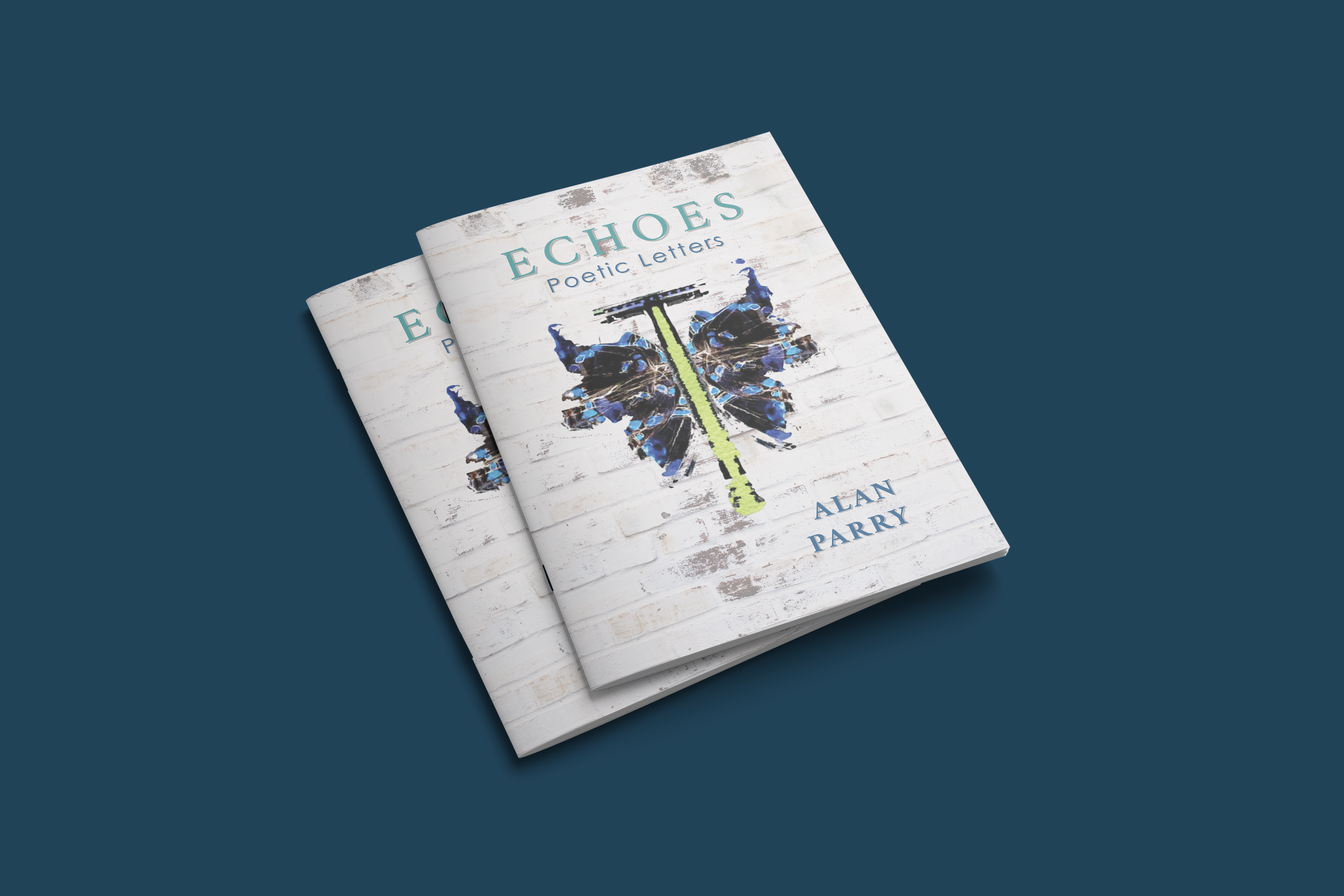
I have since published my second solo collection, Echoes (Rare Swan Press). Echoes has some similar stylings to my earlier work, and is distinctly mine. However, my focus switched from imagining a lost America to reimagining my familial memories. It is an autobiography, of sorts. It reveals much more of me to my readers; is far more honest and personal. This gear shift was wholly intentional, as I do not think it is sustainable to write purely those noir style poems for which I was becoming known (although I do still find room for those every now and again). As my writing further develops, I find myself attempting to write longer form pieces of flash fiction, short stories and CNF. I feel as if my feet are barely touching the sea floor sometimes, but I believe that discomfort is a positive thing. I think I’m a better writer than I was when I started submitting work, I’m confident of that. Things do not happen in my writing by accident any more. I’m a more rounded writer, capable of much more nuance. But that early voice will never completely disappear.       

About Alan Parry

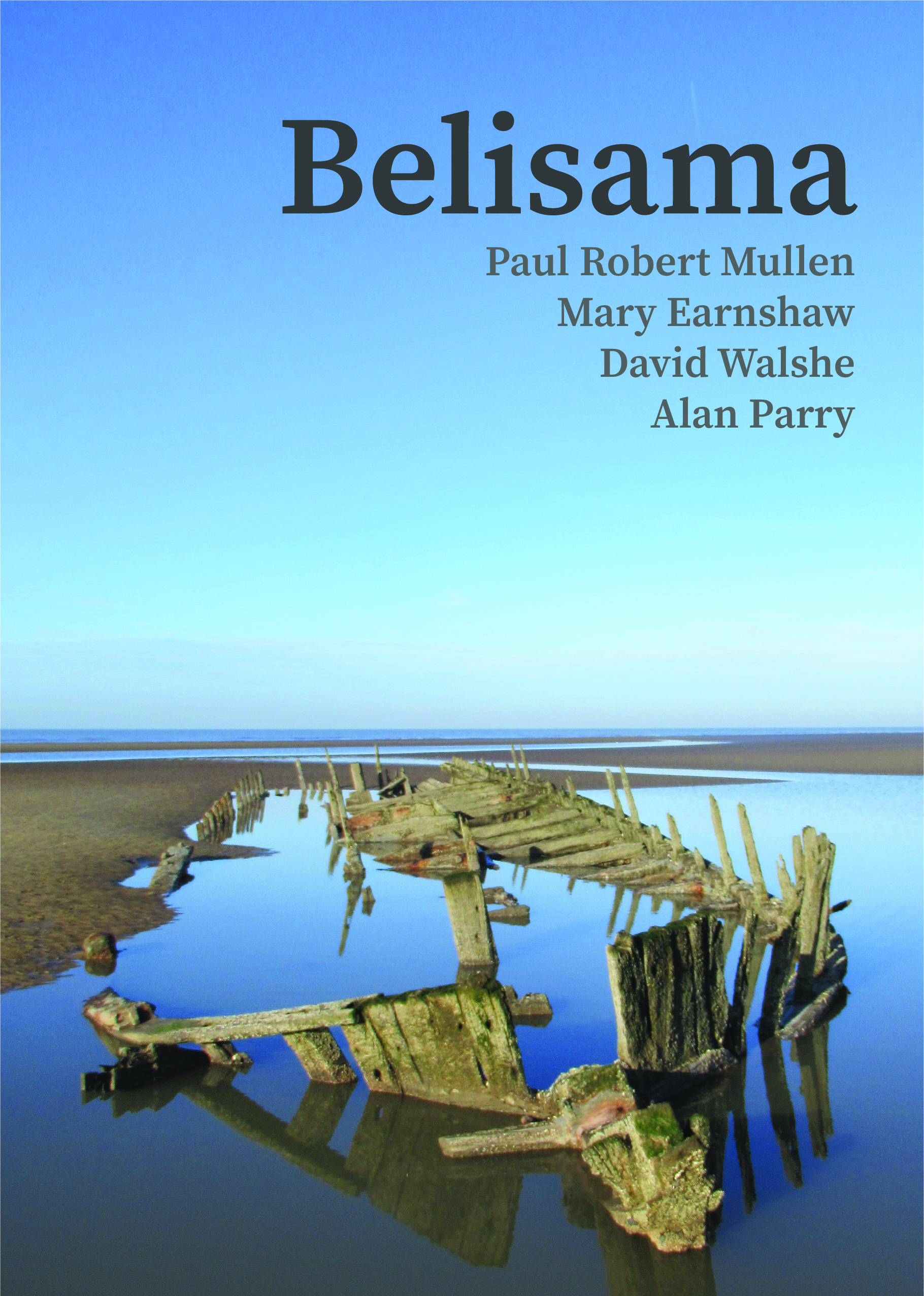
Alan Parry is Co-founder / Editor of The Broken Spine. In 2021 Alan formed the collective The Southport Poets, a collaboration with Paul Robert Mullen, Mary Earnshaw and David Walshe. Their debut work Belisama was published by Dreich in 2021. Alan’s debut collection Neon Ghosts was the first book to be published by The Broken Spine. In 2022 Parry released Echoes with Rare Swan Press. He is currently working on two new titles.

LINKS

Twitter

Twitter (Broken Spines)

BUY BOOKS

BUY

BUY

BUY

Special Launch Feature – Paul Brookes

Please join me in congratulating poet, Paul Brookes, on the launch of his latest poetry collection, Otherness. Without further ado it’s over to Paul to tell you all about it.

Otherness

Paul Brookes

Otherness is dedicated to David Morley and the late Les Murray. It all sprang from a comment David Morley made when I interviewed him for my blog Wombwell Rainbow Book Interviews HERE

For me, the poet Les Murray is a talismanic figure, and his Translations from the Natural World is my Wonderbook. Les Murray ingeniously imitates and translates the perceptions and voices of molluscs, sunflowers, spermaceti, cuttlefish, cell DNA, elephants, cats, cows on a killing day, ravens, echidnas, lyrebirds and – most memorably – a poem written in the syntax of bat’s ultrasound using ancient Welsh metre. The rich, inventive language of this slim volume still knocks me out. The voicing is precise, instinctive, and never anthropocentric: it is a total inhabiting of creaturely worlds. For my part, given by background in zoology and poetry, negative capability melds with its apparent opposite, precision. (David Morley, 2021)

Morley’s comments inspired me to look at animals through Les Murray’s eyes, his zoopoetics. I was already into writing from the first person, but to look through animals’ eyes, feel through their surfaces would need an extra leap of imagination. I enjoy challenges of new ways of looking. Les Murray showed me myriad ways of doing this. It is up to the reader to say whether I have arrived close to what Murray achieves.

Unlike Murray I chose to use the Shakespearean sonnet as a form to view these worlds. A familiar through which to see the unfamiliar.

Jane Cornwell’s stunning artwork accompanies these sonnets and are another door into these worlds. For me she brings the words into another life.

About Paul Brookes

Paul Brookes is a poet and lives in a cat house full of teddy bears. He has had several chapbooks published and his first play was performed at The Gulbenkian Theatre in Hull. Paul is a contributing writer of Literati Magazine and Editor of Wombwell Rainbow Interviews, book reviews and challenges. His work has been broadcasted on BBC Radio 3 and featured by Barnsley Museums and Hear My Voice Barnsley.

BUY from Amazon com

Links

Website

Facebook

Twitter

Amazon Author Page

Guest Feature – Helen Laycock

I’m delighted to welcome back writer, Helen Laycock, to Patricia’s Pen. Helen is a poet, children’s author, and flash fiction writer, but today she’ll be chatting about her poetry. Without further ado, it’s over to Helen.

My Poetry

Helen Laycock

Thank you, Patricia, for inviting me on to Patricia’s Pen!

I always think writers are blessed with not one life, but many. What an absolute privilege to be able to visit so many places, and to meet so many characters, all of which, and whom, reside just up there… *points to head*

Creator, architect, conductor, it’s not just a matter of typing words. Words are merely bricks, but arranged just so, writers can build any structure, embellishing it with metaphor, compromising its integrity with emotion or danger, or twisting its corridors into labyrinthian cul-de-sacs. They can thrust a reader into unique and unforgettable experiences, and the joy is that we go there, too, and emerge safe and enlightened.

Words (plus the essential mortar of space and format) also build poetry. Poetry, however, seems to be much more anchored to truth than fiction and, as such, can be affecting and impactful in a deeply personal way.

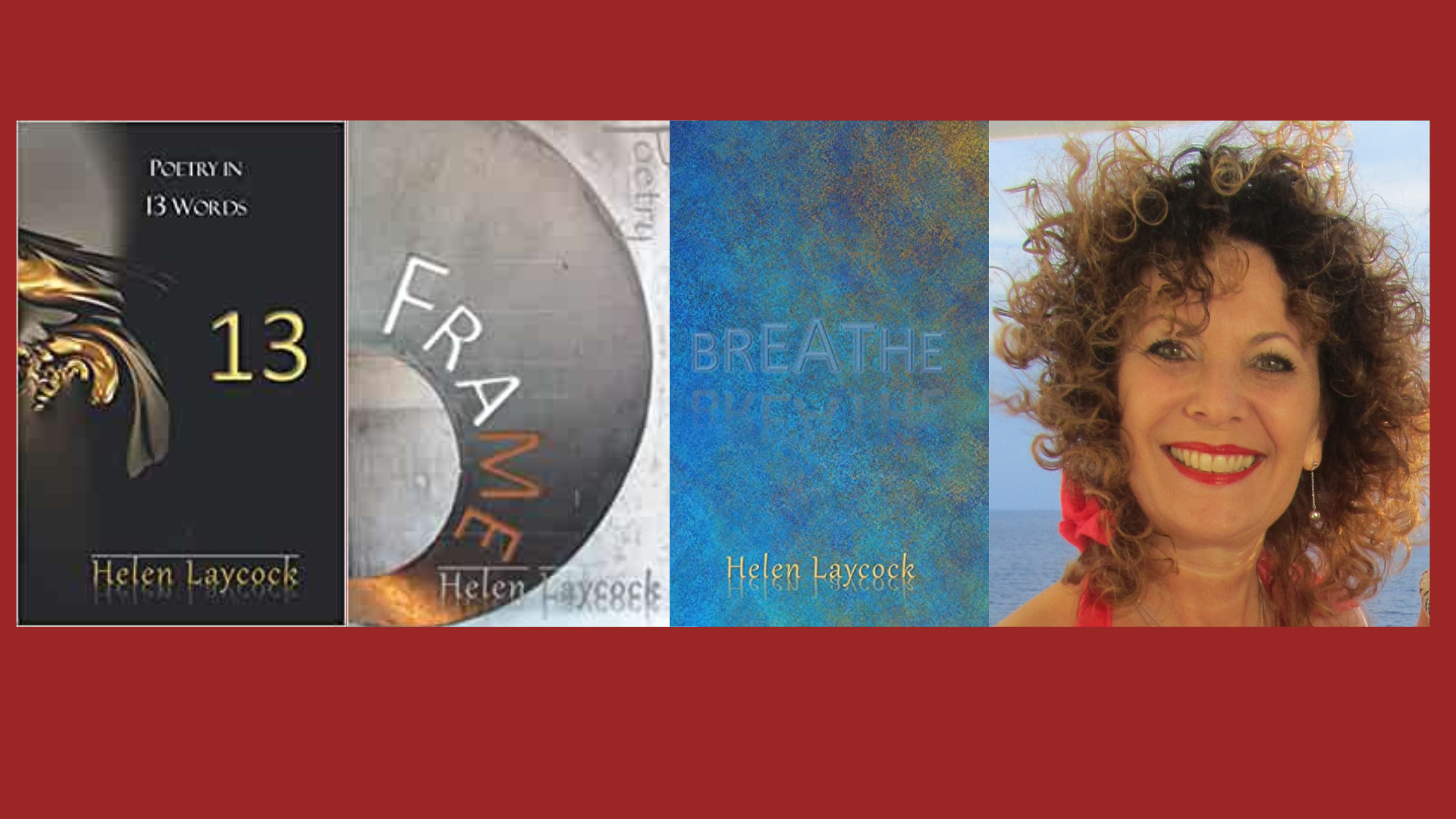
When I compiled my poetry collection Frame, as much as the scenarios of people living on the periphery were in my head, the reality of their situations was undeniable. In this collection, I did allow them to fall, by visiting themes such as orphaning, abuse, bullying, and the psychological issues which continue into teenage and adult life after such difficult beginnings, touching on such areas as anorexia, unwanted pregnancy, depression and suicide. A lot of the feedback I have had has, understandably, been via private messaging. Being human is complex and taxing, and so many of the areas I explored were familiar to those reading the poetry.

Poetry can also be uplifting, and as an antidote to Frame is Breathe, poetry which encompasses the natural world. I like to balance my writing, perhaps to always have a light on in the corner of my mind.

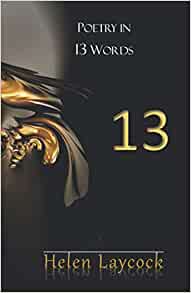
13 is a collection of, quite simply, 13-word poetry which captures the fleeting nature of life, about which has been kindly written:

‘Highly imaginative and beautifully crafted, Helen’s 13 brilliantly spans an absorbing variety of thoughts, themes, and viewpoints in the compact space of just 13 words’.

Such a fun challenge, and proof that you don’t always need to say a lot to say a lot!

Buy Helen’s latest collection

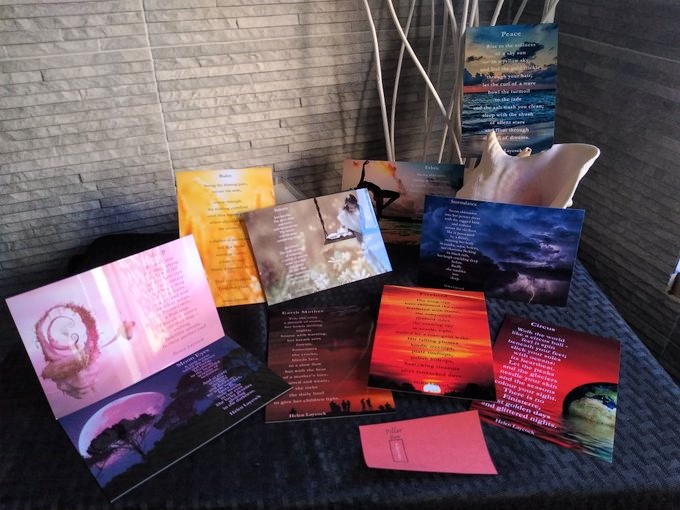
Many of Helen’s poems can be purchased as postcards at Pillar Box Poetry and her website Conjuring Marble into Cloud showcases my work.

About Helen Laycock

Helen Laycock’s writing encompasses poetry, microfiction, flash fiction, short stories, plays, and children’s novels.

Former recipient of the David St. John Thomas Award, and nominee for the Dai Fry Award, Helen has been an occasional competition judge and a lead writer (Visual Verse). Her poetry has featured in an art exhibition, and her collection Frame has beenBook of the Month at the East Ridge Review.

Poetry, prose, and children’s stories have been published in various anthologies and magazines and in 2019 her piece of flash fiction was longlisted with Mslexia.

Links
Facebook

Twitter

Website

Amazon Author Page

BOOKS

BUY

BUY

BUY

Special Launch Feature – Anna Shenton

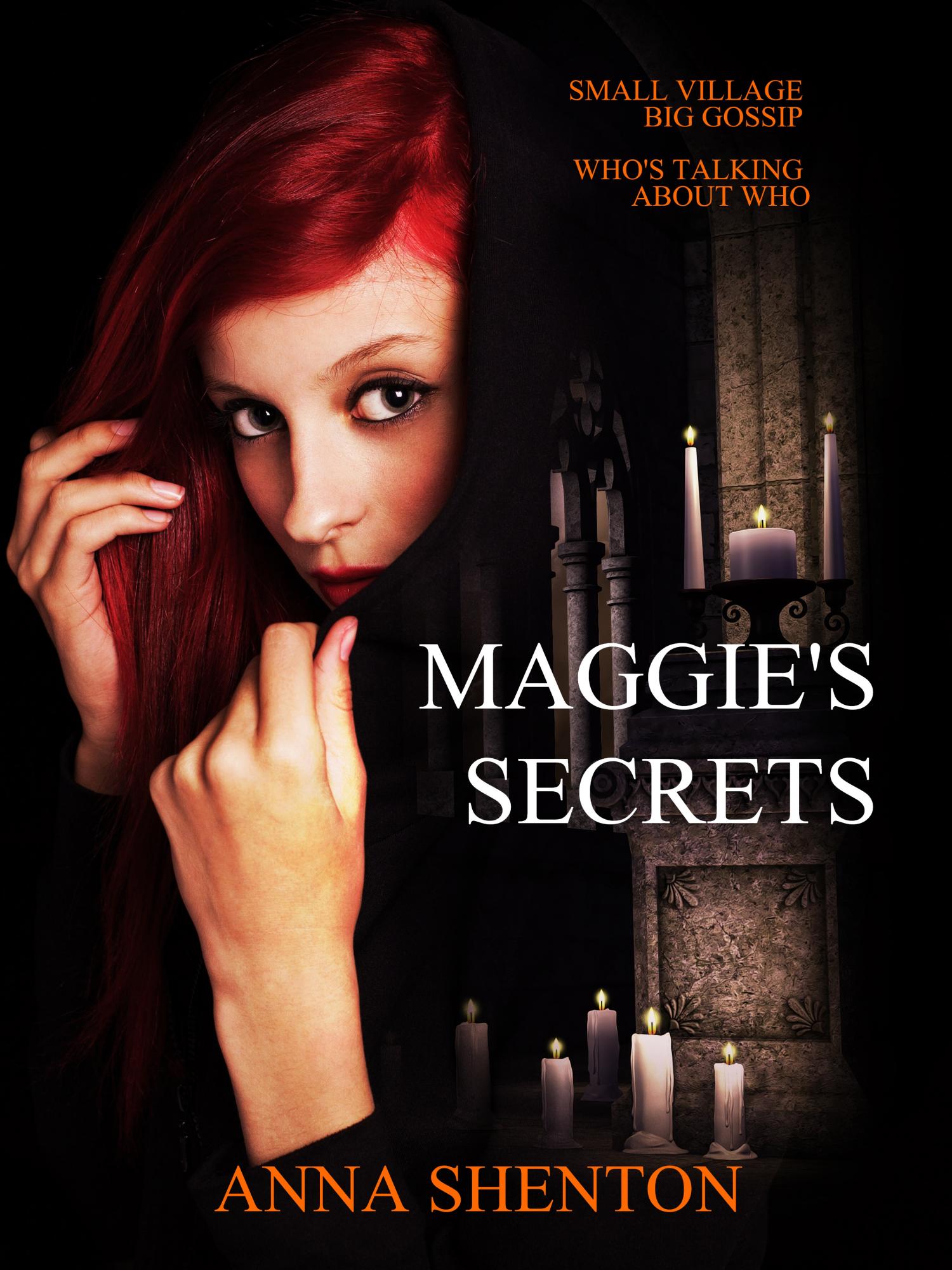
Congratulations to Anna Shenton on the publication of Maggie’s Secrets. I’m delighted to invite novelist Anna Shenton back to Patricia’s Pen. Anna joins me to share what inspired her to write this novel. Without further ado, it’s over to Anna.

Maggie’s Secrets

Anna Shenton

Hi, hello everyone, I’m delighted to be here on Patricia’s Pen once more. I know what a fab place she has created, welcoming her friends into this wonderful warm, comforting place. It’s a delight to be here. Huge thanks Patricia, for this fabulous opportunity.

Love the theme of inspiration for this blog slot, it leaves me with an array of things to talk about within Maggie’s Secrets, my new release for today, February14th, 2023, and more.

What inspired me to write a Family Romance Saga? I ask myself. Firstly, I wanted to go back in time to 1962 and what better place to do it, no other than where I grew up. Remembering the times we lived in, has aroused so many special childhood memories. The clothes we wore, the food we ate, music we loved, games we played, family life, where we had very little, but were short of nothing.  

Like Maggie Foster, I spent a few years in a council house in Dovecliff Crescent. “Yes, Maggie, this is the perfect setting for you to tell your story.” Nothing like mine, but descriptions, scenes and ambience for a beautiful, sometimes scary, small village all came flooding back, like yesterday.

Secondly, my protagonist, Maggie, has had so much to contend with. She deserved a great setting to unburden herself from the past. I don’t know how she coped with what life’s thrown at her, but believe me, she is a supper strong, compassionate, selfless woman, who does everything in her power to keep her eighteen-year-old, fatherless Son, Gavin, happy and safe, even if she hasn’t been totally honest.

Thirdly, a family saga, genre, can take you almost anywhere in the writing world. I wanted that freedom to let my characters act out their individual lives, be who they wanted to be and lead the way in some strange, controversial, yet wonderful places.

Inspiration is a kind of lifeline, waiting to be snatched – something we all experience yet sometimes lies dormant, we can’t force it, but we can sense it lingering, and need to bring it to the forefront of our lives. Okay I’m happy with that. Like many fellow author friends, my time, and your time, will come. Every day of our lives will piece in like a jigsaw puzzle. Live your life, whatever it is, and inspiration will find you.

Blurb

Maggie’s Secrets have haunted her for years. She sets off on a reconstruction to try to unburden herself, from the day her Son, Gavin, was conceived in a church by a stranger, that disappeared.

To her surprise, Maggie is met with an elderly lady, Rosa, who claims to be Gavin’s Great Grandmother, who has been longing to meet him one day. 

Gavin, eighteen, knows nothing about his father. Maggie promises to tell him the truth one day, living in hope, it won’t destroy her relationship with the only family member she has contact with.

Moving into the last council house in Dovecliff Crescent, Maggie and Gavin face torment by gossiping neighbours when they hear Maggie is a single mum.

When the police arrive on Maggie’s doorstep she is horrified to hear Gavin has been accused of taking advantage of a young woman, Cheryl Patterson.

Is she telling lies? Can Maggie find out the truth and prevent history repeating itself.

BUY YOUR COPY ON KINDLE

(Paperback to follow shortly)

About Anna Shenton

Anna Maria Shenton from Staffordshire, World Poetry Day Prize Winner 2015 at Vind & Vag Publishing House.

Her boys flown the nest, Anna took a home study course which led to publications in various  magazines, including Writer’s Forum. Anna’s flair to write continued into fiction where she enjoys creating many wonderful characters and story plots.  Family life experiences are her book of inspiration, often creeping into her stories. She independently published her debut novel, short story collection, writing for beginners and novella series.

Anna loves to write from home and in her caravan when enjoying travels with her husband.

LINKS

Twitter

Amazon Author Page

Guest Feature – Mick Arnold

I’m delighted to invite Mick Arnold back to Patricia’s Pen. This time to celebrate his brand-new release The Lumberjills. Mick blogs about this new book which is first in a series. Without further ado, it’s over to Mick.

The Lumberjills

Mick Arnold

Outside of the Armed Forces, the Civilian Services were of undoubted necessity to Great Britain’s contribution to winning World War Two. Most everyone will have heard of our women’s participation as air raid wardens, ambulance drivers, doctors and nurses, firewomen and, most famously, as land girls, part of the Women’s Land Army. Can you hold your hand to your heart and say you’ve heard of the ‘Women’s Timber Corps’?

Only created in 1942, they were formed along the lines of women who performed the same duties during World War One. As with the land army, these girls sometimes had difficulty in obtaining a billet, as there was a great deal of prejudice towards them, believing them to be dirty, however, they swiftly earned the admiration of the farmers and those male foresters left, that they were as good as the men they replaced.

In this, the first in a new series, I hope to introduce the reader to a group of women whose work was so vital to our war effort, yet still, if not forgotten, relatively unknown. These women faced death, maiming and injury, every working day, and I shall not shirk from making this danger a part of their stories.

Having said this, and these are a big part of historical sagas, there are love stories to be told and having served in the Royal Air Force for sixteen years, I’ll also be taking the opportunity to show how members of this, as well as the other two services, integrated into civilian life. The RAF takes centre stage in this first book. However, love can never run smoothly in wartime, can it? More than most civilian workers, the Lumberjills moved around a lot, often having lived in dozens of billets during the war, so we’ll also be seeing how relationships were affected by this.

I shall leave you with something to ponder:

Once you joined the ‘Women’s Timber Corps’ (otherwise known as the Lumberjills), you were not allowed to resign; such was the importance of their work to Great Britain’s war effort.

Blurb

Berry Chambers and her co-workers have joined the Women’s Timber Corps—known as the Lumberjills—to do their bit for Britain. On their first day felling trees, they rescue an RAF pilot and become entangled in the loveless marriage of their new landlords.

Danger is never far away, be it an ill-timed axe swing or the occasional activity of the Luftwaffe overhead. Add a psychotic farm cat, a couple of young runaway evacuees, a spate of malicious packages, and the jealousy of the Land Girls next door, and life for Berry and her friends is never boring.

Can the girls find the balance between their vital war work and the natural pull of love?

Author’s favourite passage

Everyone got to their feet, apart from Vicky, who slowly made her way to sit down beside the dead German’s head. As she stroked what the others hoped was the side of his face, she looked up at her friends, though her eyes didn’t appear to be focused upon them. “You go,” she said to no one in particular. “I’ll stay here with him.” She turned her attention back to the body before adding, “He’s about the same age as my brother.”

About Mick Arnold

Mick is a hopeless romantic who was born in England but spent fifteen years roaming around the world in the pay of the late HM Queen Elisabeth II in the Royal Air Force before putting down roots—and realizing how much he missed the travel. This he’s replaced somewhat with his writing, including reviewing books and supporting fellow saga and romance authors in promoting their novels. He’s the proud keeper of two Romanian Werecats bent on world domination, is mad on the music of the Beach Boys, and enjoys the theatre and humouring his Manchester United-supporting wife

Social Media Links

Facebook

Twitter

Instagram

YouTube

BUY

Amazon and Apple Books

Nook

Special Launch Feature – Judith Barrow

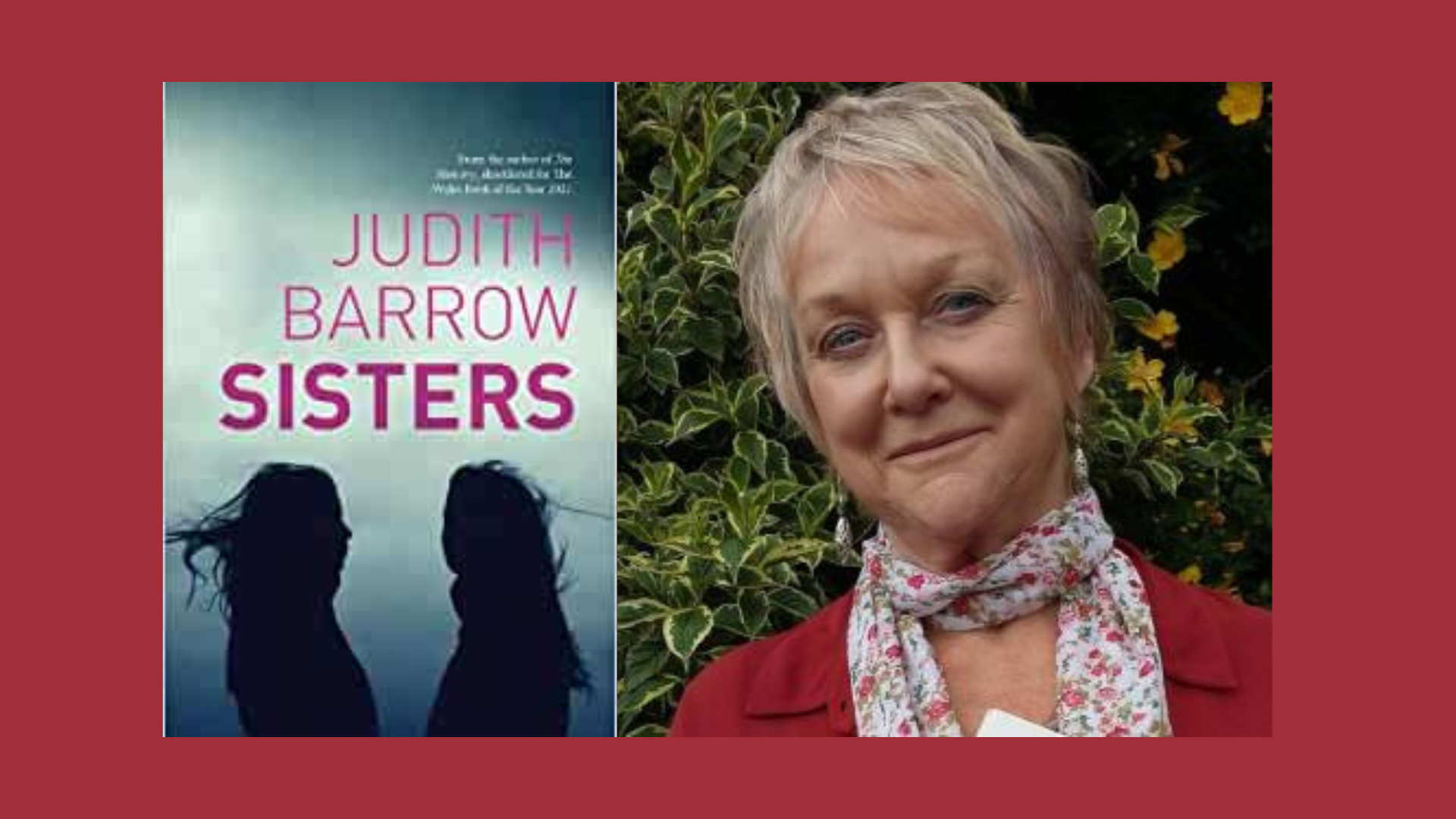
Please join me in congratulating family saga novelist, Judith Barrow, on her latest novel, Sisters published today.

Sisters

Judith Barrow

Sisters is based around an accident and a lie that tears apart the lives of two young sisters. The consequences leads them to exist in completely different communities and social structures. The underlying theme throughout the story is the uncertainty of whether familial love and duty can prevail over resentment and hatred. And what it might take for good to overcome the evil that lies hidden behind closed doors.

The initial inciting incident in Sisters is taken from a memory that has stayed with me from childhood. Something that has had long-term consequences and has completely changed the lives of all the members of it that family on so many levels.

BLURB

An accident and a terrible lie tear a family apart. When sixteen-year-old Angie blames her younger sister for their brother’s death, she changes their lives forever. Lisa is sent away, Angie spirals into self-destruction and they don’t speak for thirteen years. Returning in 1983 for their mother’s funeral, Lisa quickly realises her sister is trapped in a dangerous marriage. What does Lisa owe to the family that betrayed her? And if she tries to help, will she make things more dangerous for them all?

BUY

honno

Amazon Kindle

Blackwell’s Book Store

About Judith Barrow

Judith Barrow, originally from Saddleworth, a group of villages on the edge of the Pennines, has lived in Pembrokeshire, Wales, for over forty years.

She has an MA in Creative Writing with the University of Wales Trinity St David’s College, Carmarthen. BA (Hons) in Literature with the Open University, a Diploma in Drama from Swansea University. She is a Creative Writing tutor.

She has had seven books published with honno, the longest-standing independent women’s press in the UK.

Special Launch Feature – Helen Laycock

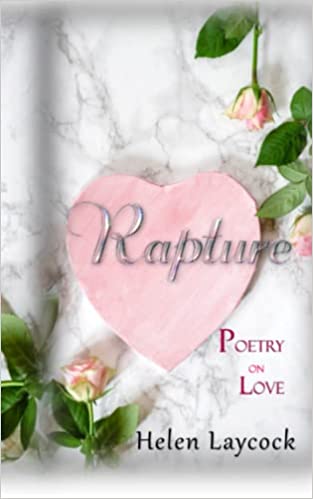
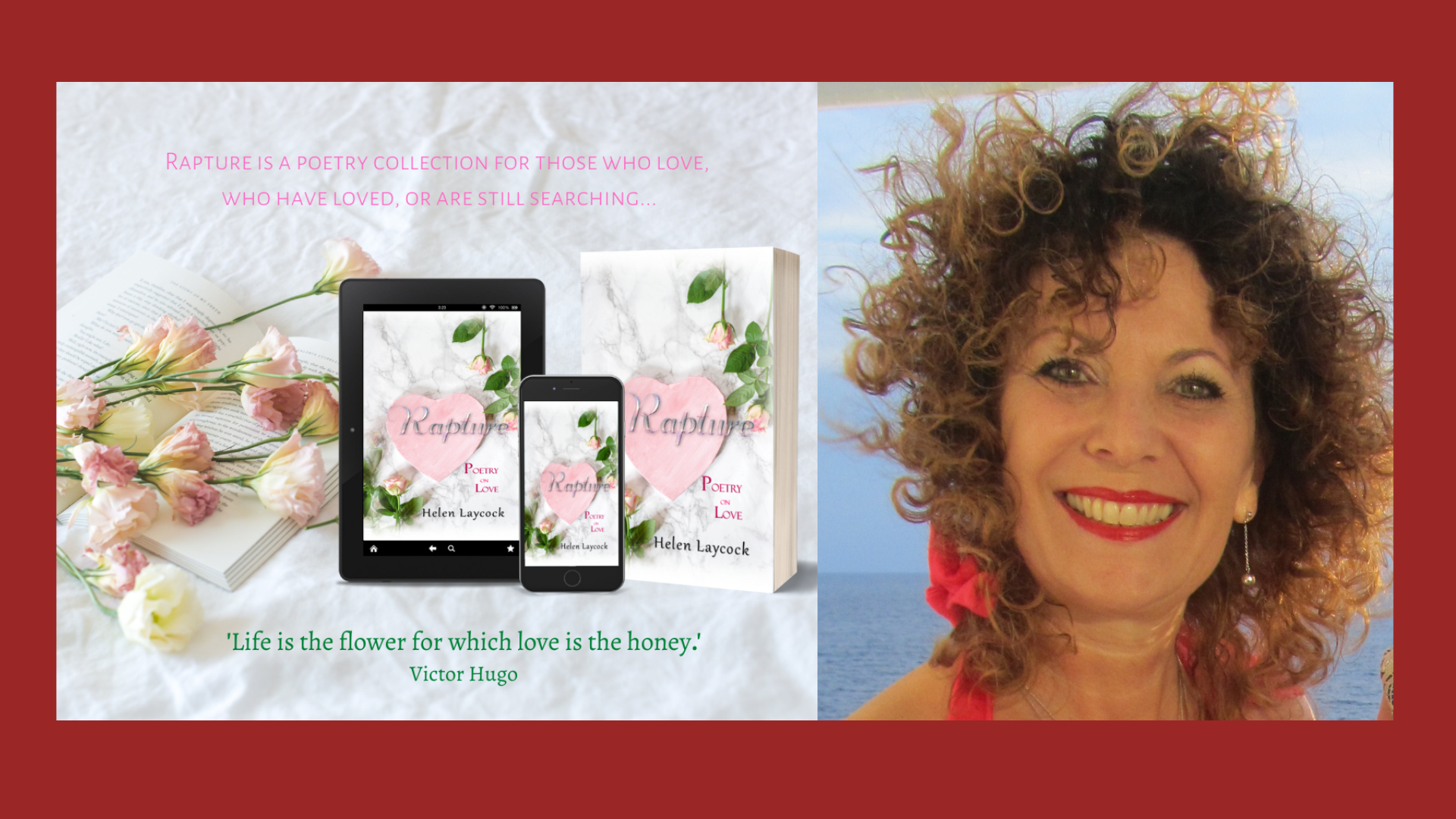
Please join me in congratulating poet, Helen Laycock, on the launch of her brand new poetry collection, Rapture. Helen shares snippets of inspiration.

Rapture

A flirtation with love between the covers

Helen Laycock

Love has long been a subject for poets. In fact, the oldest love poem is said to be The Love Song for Shu-Sin, written in 2000 BC for use in the sacred rites of fertility.

I never really thought of myself as a writer of love poetry, but, bit by bit, inspired by pictures, prompts and evocative places, I began to gather it, like stray flowers, until I had something that resembled a bouquet, and that became the collection RAPTURE, which is still smouldering off the press!

Love is a powerful emotion, and one most of us will have experienced in some way. Even the degree of grief suffered by a bereaved partner correlates to the depth of love they *have for that soulmate (and, yes, I use the present tense deliberately here; as John Galsworthy said, ‘Love has no age, no limit; and no death.’).

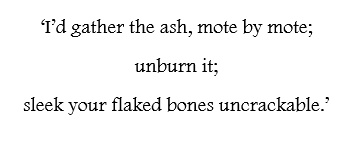
In ‘Unburn’, the final poem in the collection, I have tried to capture this futile yearning to bring back a loved one, be it even for a moment:

Writing about love through the medium of poetry is almost always a joyous and fulfilling undertaking, however. Finding metaphor can be a delicious sensory quest. I found myself pondering over such intricacies as breath, for example, and how goosebumps can trill across skin…

‘Night Breath’ is set in a jasmine-infused, moonlit scene, the woman depicted as

(Yes, I had fun with the spacing of those letters… )

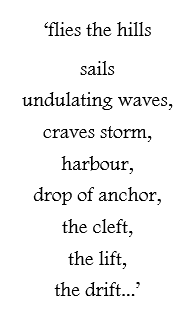
In it, we see the power of touch as she subsequently

In general, the pace of the poems is unhurried. That moment of falling asleep is often alluded to, and the beach has more than once featured as the backdrop, capturing that sense of warmth as the sun sets against the lull of the rolling waves, themselves metaphors for body heat and emotion.

One of my favourite lines in ‘Embers’ is:

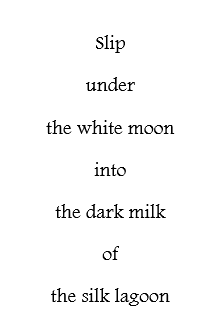
Rapture is a collection of poems with soft voices and very few sharp edges. Perhaps one of the most mellifluent is ‘Lagoon’, a thirteen-word poem:

Interspersed throughout are a scattering of quotations, my favourite of which is possibly ‘Love is composed of a single soul inhabiting two bodies.’ Aristotle

I couldn’t have put it better myself, though I’ve had a good go!

BUY YOUR COPY

Helen Laycock returns to Patricia’s Pen on 14th February 2023 to chat about all her poetry books. Don’t miss it.

Guest Feature – Damien Posterino

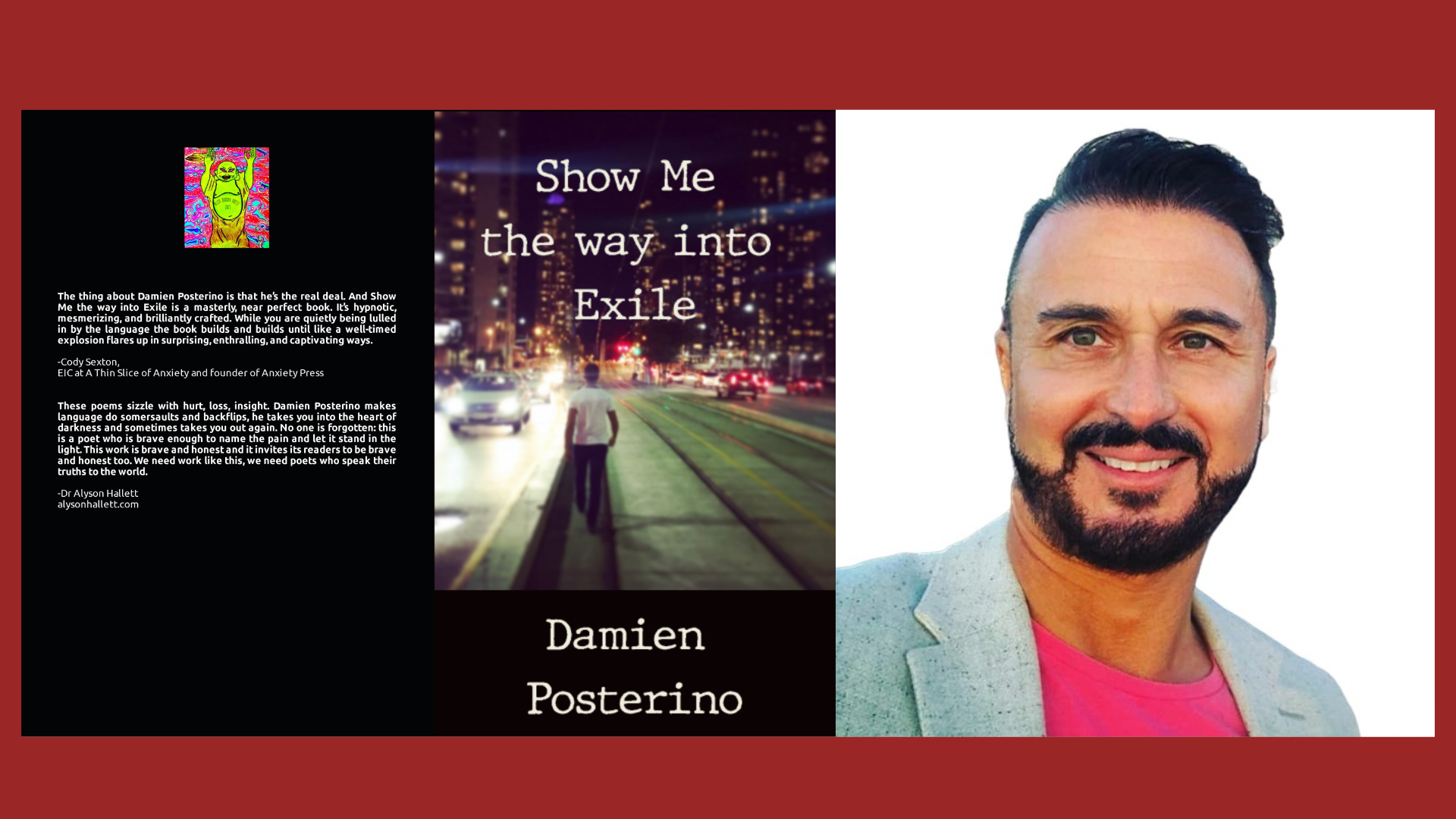
I’m delighted to welcome, Melbourne born poet, Damien Posterino, to Patricia’s Pen. Damien is here to blog about his collection Show Me the way into Exile published by Alien Buddha Press. Without further ado, it’s over to Damien.

Show me the way into Exile

Damien Posterino

I would like to firstly express my gratitude to Patricia who recently invited me to be a guest poet on her blog. The blog reflects her passion for poetry and writing and it’s an honour to be a part of it. 

My first collection of 40 poems Show Me the way into Exile was written over eighteen months from 2021/22, but on reflection it had been sitting inside me for years. The theme of exile has always been in my life and always captivated me. 

I left Australia and moved to London from Melbourne twenty years ago. My mum often uses the analogy of going out to the desert when you need to find your way again. I am the son of an Italian immigrant who travelled out to Australia when he was four. I remember loving a 2004 French film called Exils about a young couple who travel from France to Algeria to reconnect with their heritage. 

There is pathos and darkness about exile but there is also the narrative of reinvention, exploration and spinning the wheel for good and bad. I guess I’m all those things, and these poems reflect this in different ways.

To continue with my personal journey, the collection was written in Mexico where my partner is from. We had been working in Singapore and Thailand for 4 years between 2016-2020 and our work ended abruptly when Covid hit in 2020. We decided to move to Mexico for eighteen months where I would write full time. That new page allowed the seeds for the collection to germinate. 

Across the collection I’ve tried to explore exile in very different and sometimes subtle ways. Everything from job loss, feeling like an outsider, isolation in a big city, changing communities around us and the individuals within it who get lost, addiction in various forms, darkness in love, distance in our relationships and the pain of nostalgia. There are others that I hope readers will also enjoy exploring. 

Salman Rushdie in the Satanic Verses says:

“Exile is a dream of a glorious return. Exile is a vision of revolution: Elba, not St Helena. It is an endless paradox: looking forward by always looking back. The exile is a ball hurled high into the air.” 

I would like to thank Alien Buddha Press who published the collection. I hope readers enjoy the poems and the journey I created. 

About Damien Posterino

Damien Posterino is Melbourne-born but has made London his home. He has lived in 5 countries including Mexico where he recently spent 18 months creating his first poetry collection “Show Me the way into Exile”. His other published poems can be seen in over 30 international publications including A Thin Slice of Anxiety, The Bangor Literary Journal, Paddler Press, Madrigal Press, Roi Fainéant Press and The Jupiter Review. You can find him walking around Victoria Park in East London or on Twitter @damienposterino.

Links

Twitter

Instagram

BUY

Amazon UK

Amazon US

Amazon Australia

Amazon Japan

Special Launch Feature – Suzi Bamblett

Please join me in congratulating my very dear friend, Suzi Bamblett, on today’s publication of her latest novel Prescient Spirit. Read what inspired Suzi to write this new book and find out how to order your copy.

Prescient Spirit

Suzi Bamblett

I’ve always loved a spooky story set in an old, gothic house – Rebecca, The Woman in White, Northanger Abbey, The Turn of the Screw.  When I was a child, I lived for a few years in a haunted farmhouse. Perhaps this is why I relate so much to these fantastic classics.

The setting for Prescient Spirit was inspired by yoga lessons I attended in an old gothic house near Cross in Hand, Holy Cross Priory. The house was steeped in atmosphere and history, and I was fascinated by its many chimneys, towers and gargoyles. I couldn’t wait to set one of my own novels in a house like that.

As I prepared to take part in National Novel Writing month in November 2015, a story began to take shape in my mind. There would be a ghost of a little girl, dressed in yellow with starfish hands and a tiny red heart-shaped birthmark.

I wrote 30k words during November that year. Here’s a short extract:

As I rounded the column, I glimpsed a tiny, star-like hand. Swiftly it shot back out of sight. There was no one there. But I’d spotted it – a red, heart-shaped birth mark on the back of the hand.

I was mid-way through my MA in Creative Writing at the University of Brighton, so I put the unfinished manuscript aside for a few months.

And then something spooky happened…

On 7th May 2016 my grand-daughter Eloise was born. On her cheek was a red, heart-shaped birthmark. It felt as if, like Silvertongue in Inkheart, I had written her into being…

I finished my MA and returned to earlier ‘works in progress’ – The Travelling Philanthropist and Three Faced Doll. Meanwhile, my contemporary gothic novel, Prescient Spirit waited in the wings. Finally, I have completed it. It is, of course, dedicated to my grandchildren.

ORDER YOUR COPY NOW

About Suzi Bamblett

Suzi Bamblett lives in Crowborough, East Sussex. In 2019 she graduated with a distinction for her MA in Creative Writing (University of Brighton)

Suzi writes psychological thrillers, mystery and suspense. Her work has been published in literary magazines and academic collections including Shooter Literary Magazine (2020) and Storying the Self – Performance and Communities (2022).

Her Imagined Dialogue with Daphne (du Maurier) can be found on the Daphne du Maurier website, and her memoir piece – A Grandmother’s Grief was long-listed for the Amy Award in 2021.

Prescient Spirit is Suzi’s third novel.

Links

Facebook

Twitter

Website

BUY

BUY

BUY