It gives me the greatest pleasure to announce, hot off the press, my poetry pamphlet Sherry & Sparkly co-authored with the most talented writer, Maureen Cullen. Thank you to our wonderful editor, Mark Davidson, at The Hedgehog Poetry Press for this publishing opportunity. Mark publishes the most gorgeous books.
Sherry & Sparkly – A Poetry Conversation
Maureen and Patricia grew up hundreds of miles from each other in different countries of the UK but share common experiences of childhood in the fifties and sixties when ice laced the inside of bedroom windows and corporal punishment was common in schools. They survived to become brides, mothers, career women and technophobes. Sometimes joyous, sometimes painful, these poems are a conversation about love, hope and identity.
And look what has just landed!
Watch this space to find out how to get your pre-ordered copy.
All proceeds from signed copies will go to Cancer Research.
It gives me great pleasure to introduce Poet, Paul Brookes, to Patricia’s Pen.
My Writing
Paul Brookes
Prelude
In school something in me wrote of Morko Ryanne
Space Captain whose ship spirals
into a black hole of my parents arguments
as if it knew something was not right.
In school something in me wrote
of peeling white paint on worm ridden window sills
of my parents screams as I sat on the stairs
as if it knew something was not right
The hand that propelled the pen.
If a poem is meant to be a short, encapsulation of an experience then “prelude” neatly sums up why I began to write. Also, the genres through which I began to explore writing, sci-fi and gritty realism. Then from a quiet village school I moved to a comprehensive in Barnsley. A culture shock. I stand against bullying because I was bullied relentlessly. My parents were headmaster and teacher so lower middle class. I was “coddled”. I was the “other”. They were the “other” to me. I needed to walk in their shoes. While the sensible ones played football I sat on the sidelines scribbling in a big green book.
One Room
to myself during playtime, or lunchtime, as I pass through the school years. Teacher tells me to “stay in here.”, he points to dark lines of desks, ” if you can’t stand the cold. Purple
skin.” He closes the door on my silent nod. I recall crouching on our Rugby field, ice cracking my palms as I am bent double in pain, becoming a ruby.
I wait patrol teachers quizzical look through these classroom windows, their burst into the room, “What are you doing in here? Buck your ideas up and get outside. Who?”
I hand them a scribbled Headmaster’s note. “Never heard such nonsense!” leaves and emotes.
My first pamphlet 1993 was called The Fabulous Invention of Barnsley, came from a need to belong. It contains some Yorkshire dialect poems, too. I tried to do what Steve Ely has done with far more depth in his first collection, “Oswald’s Book of Hours”, portraying a whole community and landscape through history and language.
About Paul Brookes
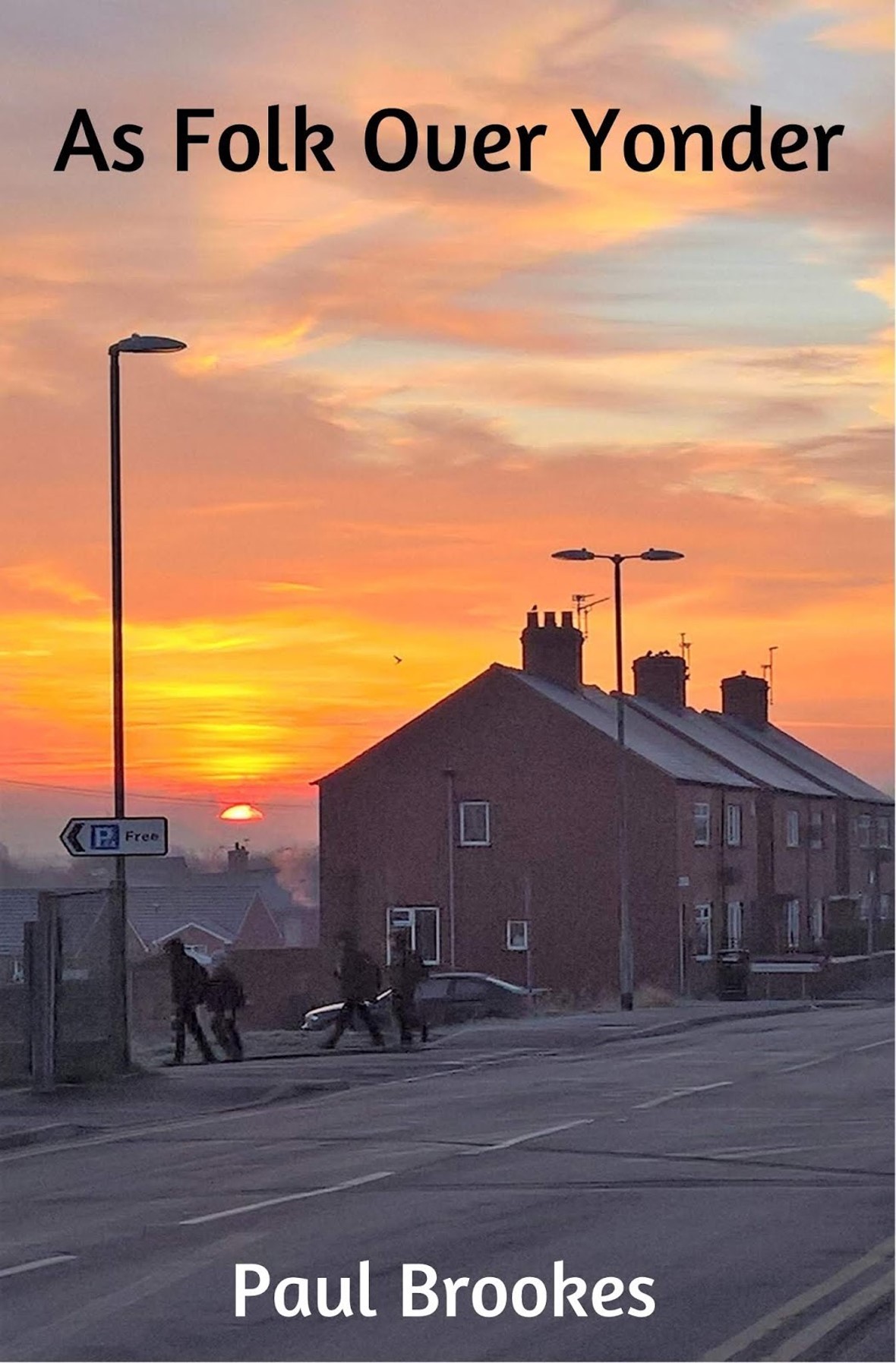
Paul Brookes is a shop asst. Lives in a cat house full of teddy bears. First play performed at The Gulbenkian Theatre, Hull. His chapbooks include The Fabulous Invention Of Barnsley, (Dearne Community Arts, 1993). A World Where and She Needs That Edge (Nixes Mate Press, 2017, 2018) The Spermbot Blues (OpPRESS, 2017), Port Of Souls (Alien Buddha Press, 2018), Please Take Change (Cyberwit.net, 2018), As Folk Over Yonder ( Afterworld Books, 2019). Forthcoming Khoshhali with Hiva Moazed (artist). He is a contributing writer of Literati Magazine and Editor of Wombwell Rainbow Interviews. Had work broadcast on BBC Radio 3 The Verb and videos of his Self Isolation sonnet sequence featured by Barnsley Museums and Hear My Voice Barnsley. He also does photography commissions.
Today is a special blog to announce the release of Lynette Creswell’s first children’s picture book Hoglets’ Christmas Magic. Lynette joins me today to tell you all about it.Without further ado, it’s over to Lynette.
Hoglets’ Christmas Magic
Lynette Creswell
Hi, I’m Lynette and I’ve been writing for over thirty years. Having suffered a dysfunctional childhood, I was compelled from an early age to write stories which took me to another place. I created mythical realms and magical creatures influenced by stories such as TheFaraway Tree and The Wishing Chair, written by Enid Blyton.
Since moving to Lincolnshire in 2000 I’ve written six novels and a compilation of short stories. I’ve published four fantasy books and two romance novels although Hoglets’ Christmas Magic is my first ever children’s story.
I’ve always enjoyed writing for children. I used to write for my own children when they were small. It gave me such a buzz to see their eyes light up when they realised they were one of my characters. My husband could see how much joy writing gave me and bought me a laptop.
I didn’t write the story about the hoglets with the intention of turning them into a book. I wrote Hoglets’ Christmas Magic as a free read a couple of years ago for my blog. I uploaded the Christmas freebie and the response was phenomenal. I received a mountain of messages and emails from parents and grandparents asking when the hoglets were due to be published. Overwhelmed by the response, (and a hard push from a dear friend) I took the plunge. It’s been no easy feat to publish Hoglets’ Christmas Magic. It’s taken blood, sweat and a pandemic to turn the hoglets into a beautifully illustrated paperback.
What can readers enjoy from the book?
Hoglets’ Christmas Magic is a heart-warming tale about two adorable hedgehogs who save Christmas for a little girl. It’s a book to read on Christmas Eve or when you’d like ‘special quality time’ with your little ones.
The book’s been a huge hit with my BETA readers. A primary school teacher who read the story tweeted…
Gather your children, curl up by the fire, sip hot chocolate and enjoy a story that will make your heart glow.
A headmistress of another school emailed and said…
I wish my children were little again so I could read them such a delightful and uplifting story.
Prickles and Primrose are excited. That is until… As they decorate the Christmas tree they discover the star for the top has shattered. Not to be defeated – the brave hoglets set out into the wood to seek a substitute star but stumble across Santa instead.
What adventure will they encounter?
AND… what about the star?
If you love Winnie the Pooh you’ll fall in love with the hoglets, Prickles and Primrose, from Briar Wood
Lynette Creswell was born in London, but raised in Burnley, Lancashire. From the tender age of five she lived with her grandmother who gave her books to keep her quiet. Lynette found she had a passion for reading and started writing once she began school.
Lynette’s inspiration came from childhood books written by Enid Blyton. The Enchanted Wood and The Faraway Tree were her first taste of fantasy. In adulthood, Stephanie Meyer’s Twilight Series captured her own vivid imagination.
Lynette has written fantasy and romance novels but Hoglets’ Christmas Magic is her first published children’s book.
She lives in North East Lincolnshire with her husband. All her grandchildren are the apple of her eye.
To find out more about Lynette’s writing and her published books pop over to her website.
~~~
Wishing Lynette Creswell and The Hoglets’ Christmas Magic the best of luck. Don’t forget you can order your copy from HERE
It gives me great pleasure to introduce author David John Griffin. David has come along to Patricia’s Pen to chat about his writing in the form of an interview. Enjoy.
My Writing
David John Griffin
About my Books
My first book is The Unusual Possession of Alastair Stubb. The genre is gothic with supernatural elements. It is set in an English village at the turn of the last century, populated by quirky characters. The story is full of mystery, suspense and intrigue.
The second novel, Infinite Rooms, is literary and psychological. It is quietly experimental in nature. It involves a young man called Donald Clement whose fragile mind is tortured by unrequited love.
The novella is a magical realism/paranormal story, based on emails between two women who work for an animal rescue centre, interspersed with journal entries from a fictional science fiction writer. The twelve short stories range from magical realism to sci-fi.
My fourth book is a science fiction adventure, Abbie and the Portal. “Help me, I’m trapped” is the plea from a young woman named Abbie Concordia, written as a mysterious note found inside a Victorian book. Terry Bridge, a reporter for The Charington Echo, takes up the challenge to save her…from the past.
My fifth book, Turquoise Traveller, is an urban fantasy novel. It is a strange tale of a young man who wakes up on a bus and doesn’t know where he is going or where he has been. He comes to realise that reality has been overlaid with dream elements.
Where do I find inspiration?
A lot of my ideas just pop into my head, although I also gain inspiration from my dreams. Sometimes, I press the Random button on Wikipedia and that can lead me to surprising places, offering inspiration.
Tips for anyone wanting to write their first book.
I’d recommend that if you’re going to delve right into writing without any planning, at least know how you’re going to start, a rough idea of the middle, and definitely know how the novel is going to finish.
Write your first draft from start to finish without going back to edit/amend/add anything. This all happens in your second and subsequent drafts.
Who is my favourite author?
I don’t think I have a favourite – I like and admire so many – but to mention three of them would be Mervyn Peake, Angela Carter and Haruki Murakami.
My favourite book/s
I still love Mervyn Peake’s The Gormenghast trilogy, as well as Angela Carter’s Nights at the Circus, One by Colin Kapp, The Moustache by Emmanuel Carrere, Twilight Journey by LP Davies, and The Wind-Up Bird Chronicle by Murakami.
My Favourite Place to write
I have a writing desk in my shed at the bottom of the garden – I love to write there but only when the weather is warm.
Otherwise I write on the computer in a spare bedroom which we call the studio. This harks back to the day in the 90s when I actually did have a small recording studio.
What am I working on now?
I am busy writing my sixth book, another novel, called Hotel Pseudo.
~~~
About David John Griffin
David John Griffin is a writer, graphic designer, music composer and app designer. His first three books were published by Urbane Publications: a gothic novel called The Unusual Possession of Alastair Stubb, a literary/psychological novel, entitled Infinite Rooms, and a magical realism/paranormal novella with stories called Two Dogs At The One Dog Inn And Other Stories. He has stories published in four anthologies, one of those stories shortlisted for The HG Wells Short Story Competition 2012. In 2018, he self-published a science fiction adventure called Abbie and the Portal, and has a fourth novel called Turquoise Traveller published in 2019.
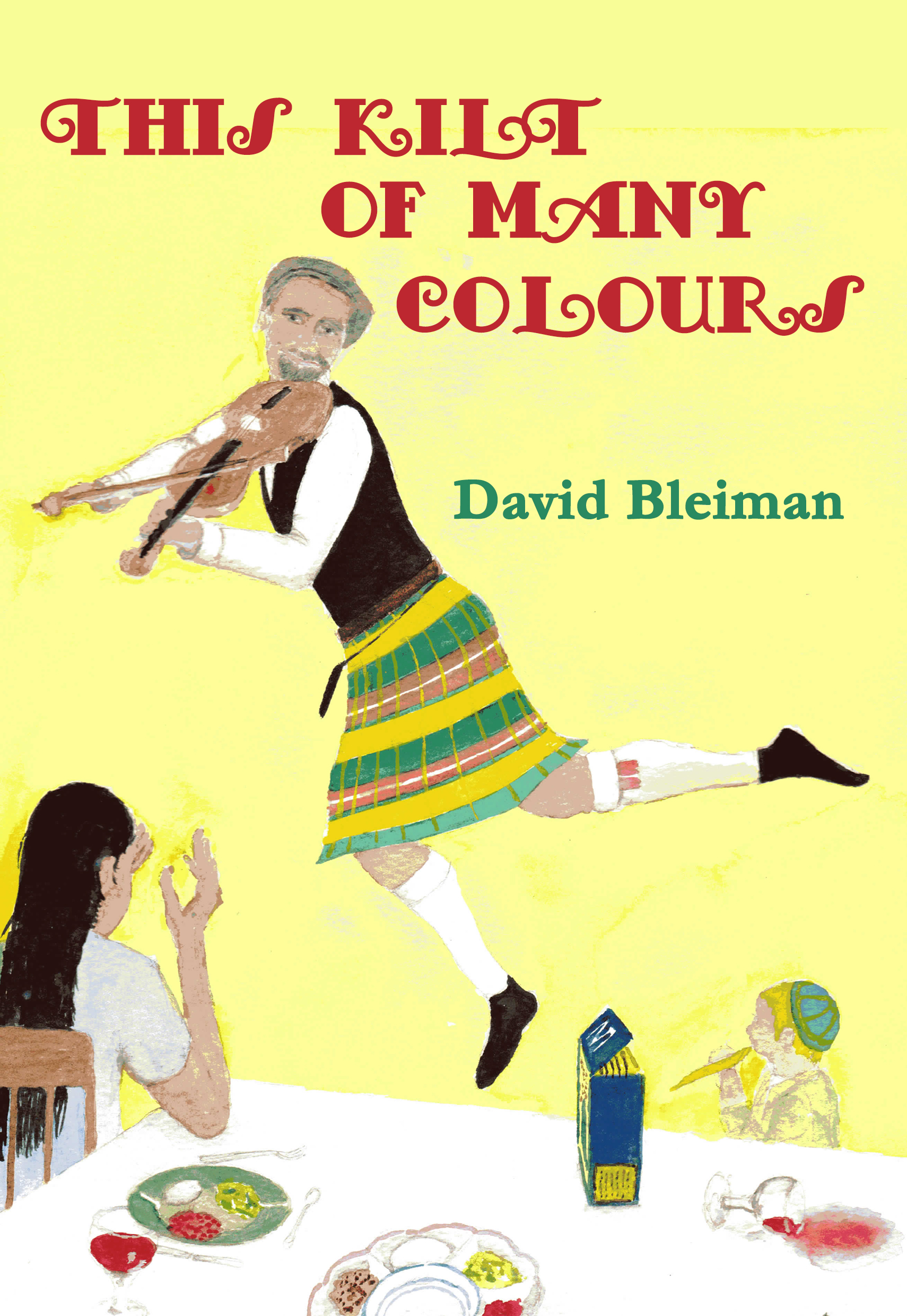
It gives me great pleasure today to introduce talented poet, David Bleiman. I invited David to come and chat on Patricia’s Pen after hearing him read from his poetry pamphlet, This Kilt of Many Colours, at Dragonflies Spoken Word. Without further ado, let’s go over to David.
On Writing
David Bleiman
Ten years after my (happily early) retirement I was still having vivid dreams in which I would be chairing unruly meetings at union conferences. Twenty-five years after my father’s death, he would appear in some of these dreams. I would wake up, the bed drenched in sweat, a poem half-written in my head. I would dash it down, thinking that the poem was done. Later I came to realise that this was just the first draft, the painstaking work of revision lay ahead of me.
In my youth I had an egotistical confidence that I could change the world. Perhaps I have lost that but writing poetry is another expression of a voice that wants to be heard. So, reflecting on my own writing, I can see that, while processing the specifics of my own heritage and life story, I draw out what is universal and promulgate a certain view of the world. The medium of poetry allows for a more nuanced approach. More the nudge of experience than the shove of youthful dogma.
Some of my poetry is unusually niche, for example the lost Scots-Yiddish dialect which I had to excavate and largely reimagine for The Trebbler’s Tale. Yet the thesis I advance in This Kilt of Many Coloursis that enjoying or suffering these unique combinations which make up our individuality is part of our common humanity. Yes, I have my own experiences of migration and half-remembered heritage languages. But so do we all. We are all homo sapiens, all from Africa.
Born in Cape Town, I heard my paternal granny, Oma Ethel, speak a mix of English, Yiddish and Afrikaans in every sentence. Coming to Scotland in 1979, I breathed in the language around me, including the colourful insults of my Glaswegian in-laws. When my son moved to Madrid, I started to learn Spanish. So it has felt quite natural to include both heritage and learned languages in my poetry. In the words of Amin Maalouf (In the name of identity,1996), it is a way to find as many ingredients of my identity as I can and then to assemble and arrange them. For me this has been an exhilarating experience and I hope that some of this exuberation, albeit leavened by melancholy and nostalgia, comes across to the reader. Perhaps even encouraging them to take a fresh look at their own lost languages and mishmash of identities.
~~~
To purchase a copy of This Kilt of Many Colours – UK go HERE– All Overseas go HERE
About David Bleiman
David Bleiman writes out of Edinburgh in English, Scots, Spanish, Yiddish and a largely imagined dialect of Scots-Yiddish which won him the Sangschaw Prize in 2020 for The Trebbler’s Tale. He was shortlisted for the Wigtown Poetry Prize 2020and is a finalist in the Roger McGough Poetry Prize, 2020. An early draft of his first pamphlet, This Kilt of Many Colours(Dempsey & Windle, 2021), was shortlisted for the Wigtown Pamphlet Prize 2020. New to writing poetry in his retirement, he has had 50 poems published or accepted for publication since December 2019.
It is wonderful to welcome back fellow Chindi author, Helen Christmas, to Patricia’s Pen. Today Helen chats about adapting her writing style to a new genre. She also provides ninetop tips in writing psychological thrillers. Without further ado, let’s go over to Helen.
Adapting my writing style to a new genre
Helen Christmas
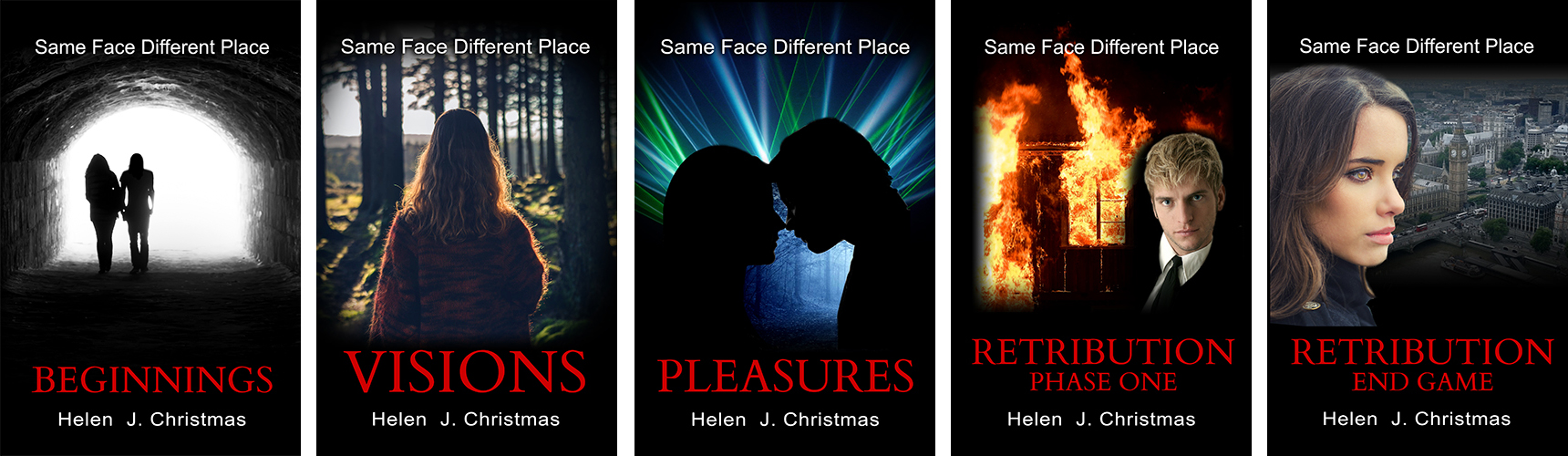
I have always loved thrillers. For six years I was immersed in writing a series, Same Face Different Place, a mystery crime thriller across four decades. But in 2018 (after completing my series) I started reading psychological thrillers, a passion born from authors like Caroline Mitchell and Clare Macintosh.
At the same time I was thinking about what new direction to take my writing in and had an idea: the concept of three friends fighting to survive in a children’s home. One of them mysteriously vanishes, leaving the others traumatised, their memories repressed. I imagined them meeting as adults; twenty years had passed and they never knew what happened to him…
This very concept inspired ‘Lethal Ties.’
This was to be a psychological thriller; a historic child abuse case portrayed through the minds of the victims. Parts of my story I wanted to relate in psychotherapy, one character, Maisie, recovering memories, only to experience shocking flashbacks and nightmares. My male protagonist, Joe, meanwhile, spent a lifetime looking over his shoulder.
My book deals with mental health, the characters complex. I struggled at first, because the process of writing a psychological thriller was so different to writing an action thriller.
What are the differences?
Crime thrillers are fast paced. There is action and it needs to be explosive, the storyline gripping. There is likely to be violence, scenes such as police chases or a kidnapping.
But in a psychological thriller, the pace has to be slower. The biggest difference in writing psychological fiction, I discovered, is they are far more character driven.
There is a mystery in Lethal Ties, which needed careful unpicking. This started with my two characters sharing memories. But in my first draft, I revealed too many clues, too fast. You can’t rush a psychological thriller, or you kill the suspense. A gradual drip feed of information keeps readers hooked. And the more of the genre I read, the more I understood how essential this was, but it took two re-writes to hit the spot.
1. Create a suspenseful backstory; the past has a significant bearing on the predicament explored in the present timeline.
2. Withholdcrucial information; psychological thrillers contain secrets in the characters and plot. Keep them hidden to ramp up suspense.
3. Include narrative twists and turns. Taking the story into darker territory will leave your readers on tenterhooks.
4. Create strong, memorable protagonists, the more flawed, the better. It is their failings and instability that keeps readers on their side.
5. Get inside their heads, tap into their thoughts and emotions. An overriding emotion is often fear and there is plenty in Lethal Ties.
6. Create an atmospheric setting. Woods are a favourite and I liked the idea of including a sea mist.
7. But it is not uncommon to use a familiar setting for a shocking scene or twist. Example: a beautiful country house, which transforms into a place of terror.
8. Well researched police procedures are the key ingredient essential to all thrillers (both crime and psychological). Get police procedurals right to give your story authenticity.
9. Checking procedures was one factor that ensured I got the investigation in my story water-tight, so embarking on a 3rd re-write, using this research, I completed a first draft in autumn 2020.
About Helen Christmas
Helen Christmas is creative, ambitious, and enjoys working from home with her husband, running their web design business. She loves where she lives and with a passion for walking and photography has found inspiration to base her novel in West Sussex. She is also active on social media, writes a blog and likes networking with other authors. In 2017 she completed a mystery thriller series Same Face Different Place, and has many ideas for books in the psychological suspense genre. LETHAL TIES is her first psychological thriller, a standalone novel, and there’s even a little romance woven into the pages.
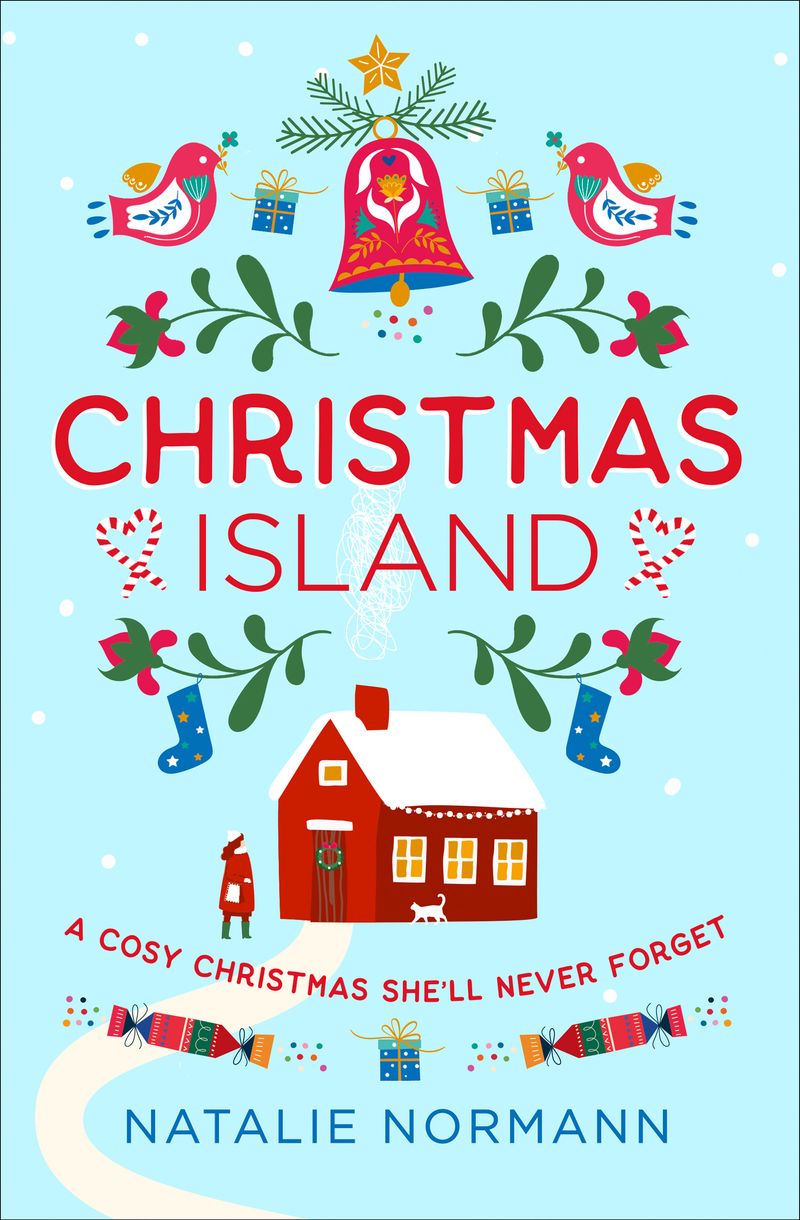
My guest today is author Natalie Normann who has come to chat on Patricia’s Pen about how she gets ideas. Without further ado, it’s over to Natalie.
Why are ideas such a pain in the …?
Natalie Normann
I’m always asked how I get ideas. I’m never what to say because that’s one of those questions with no simple answer. Honestly, I don’t know where ideas come from. I have written 64 novels in 26 years – that is, it’s been 26 years since my first book was published. Before that I was a writer in training, with loads of abandoned stories and ideas that disappeared before they ever made it out of my head.
I started writing when I was a teenager, when there were no books on writing available in Norwegian. I learned by copying stories I loved, except I didn’t know that was what I was doing. I would watch a movie, and then rewrite it as I remembered it. I also wrote sequels if I disliked the ending. Meaning nothing of what I wrote was remotely original, and most of it was terrible.
Even so, I kept writing, and at some point it finally dawned on me that the only thing I could bring to the table, was how I wrote my stories. And when that happened, I stopped worrying so much about being original, if that makes sense.
Now I love the idea stage because whatever idea I get, it always feels like the best idea I’ve ever had. I get a nice notebook, and write down the idea, such as it is. Then I keep coming back to it, playing with it, looking for new developments and just collecting snippets that I feel is a part of it. Maybe finding names I like, do some research, play around with the options. Developing an idea is so much about choices, and I play different scenarious out in my head all the time. It’s part of the fun of writing.
I might start writing years later, or right away, depending on how I feel. And there’s always more than one idea floating around, and of course, because I’m writing, I can’t just drop what I’m working on and start something new.
When I finally start, even if I have done all the preperations and the research, and have the lovely notebook, whatever I write usually falls apart after a few chapters. After that, it’s like holding on to a slippery jellyfish that sprouts tentacles all over the place.
This is because ideas are always better in my head than out of it. That’s just a fact of writing life. If your first instinct is to chuck the thing in the bin, you’re like me. But don’t do it too soon. Keep writing and at some point it will get better. I always get the first draft down without much consideration to storyline or character arcs or any of the things that builds a story. I don’t spend much time on the first three chapters either, because I know it’s a waste of time. The story will change, and then I have to rewrite those chapters anyway.
And then there’s always edits.
About Natalie Normann
Natalie Normann is a Norwegian writer and writes historical romance series in her native language. Her writing journey started with short stories in women’s magazines until her first book was published in 1995. Writing in English has been a lifelong dream, and with Summer Island and Christmas Island that dream has come through thanks to One More Chapter.
She grew up in a shipping town on the west-coast of Norway, and always wanted to be a writer. Actually, she wanted to smoke cigars and drink whisky like Hemingway, but prefer chocolate truffles and the occasional glass of Baileys.
To buy Natalie’s books and find out more – pop over to her LinkTree
Today I was honoured to be included among an array of other hoglet poets published by The Hedgehog Poetry Press on Damien B Donnelly’s Eat the Storm Poetry Podcast. Do tune in by clicking HERE and scrolling down.
I am delighted to welcome Christal Rice Cooper, from St Louis, to Patricia’s Pen. Christal has come to chat about her her poetry collection gone sane. Without further ado, it is over to Chris.
gone sane
Christal Rice Cooper
On October 23, 2011 my first and only poetry collection gone sane was published by River King press.
gone sane is an illustrated poetry collection of violence but it is also a collection of persona poetry (A persona, from the Latin for mask, is a character taken on by a poet to speak in a first-person poem.)
The title gone sane came from many of Reverend Jim Jones sermons he gave and I included it in one of my persona poems on Jim Jones in this collection.
I would not describe gone saneas autobiographical; however there is one poem that is autobiographical and perhaps the most emotional and distressing poem for me to write, and that poem is Mark.
At the time of writing Mark I was doing a story for The Altus Times on Child Abuse Awareness Month in April of 2003. This story involved me interviewing the Altus Police Department about a murder case of a two-year-old. The perpetrator was executed a few days later.
At the time this event occurred my first baby was only 20-months-old, and even though I endured post partum depression and felt disconnected from my baby, I could not fathom doing to my baby what this man did to Mark. Soon Mark became my own baby, and I decided to celebrate his life by going to an upscale baby clothes shop called BELLES & BEAUS and purchased a green long sleeve onesie, and yellow jumper with matching socks. I then went to the cemetery and asked the caretaker where Mark was born and he showed me immediately. It was one of those flat tombstones embedded in the grass. So I dressed Mark’s tombstone with the outfit and socks and took a photo. Then I came home to where my eight-month-old baby was and just held him. And I decided then and there that I would tear up the photo the police department had given me of the murderer and I would NOT mention the murderer’s name.
The victory was knowing that Mark was never orphaned – that he always had poets and people, like at the Altus Police Department, and at the cemetery, who loved him and looked after him.
Mark
Mark was severely beaten and had sustained serious injuries –abdomen injuries, defense wounds, brain swelling, his liver was almost split in two, bruising on the back of his hands, blisters on his chest, and burn marks (from what experts believe was a sauntering iron) on his thighs and ears. Mark succumbed to his injuries and died due to severe bleeding.
Excerpt from The Altus Times article dated Sunday, April 6, 2003 By Chris Cooper
~~~
What a heart-breaking story, Chris, and well done on such a poignant poem.
About Christal Rice Cooper
CHRIS RICE COOPER aka CAR COOPER is a newspaper/fiction writer, poet, photographer, & painter. CRC Blog is an INCLUSIVE & NON-PROFIT BLOG acknowledging ALL voices, ALL individuals, ALL political views, ALL philosophies, and ALL religions including Islamism, Hinduism, Buddhism, Catholicism, Protestantism, Judaism, Agnosticism, Atheism, etc. She has a B.S. in Criminal Justice & completed her workshops required for her Master’s in Creative Writing. She lives in St. Louis.