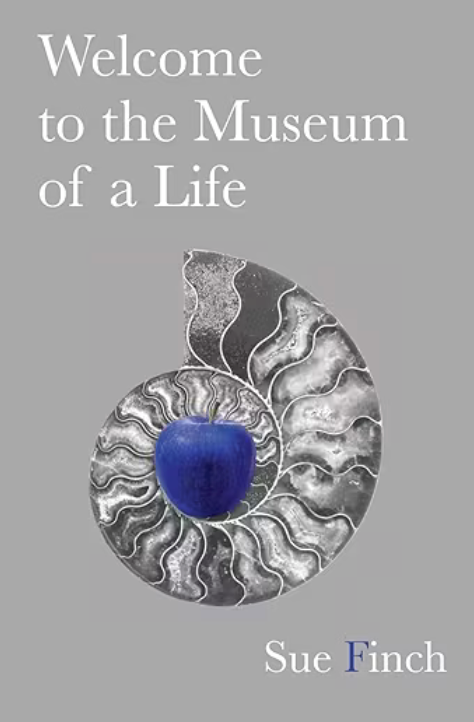
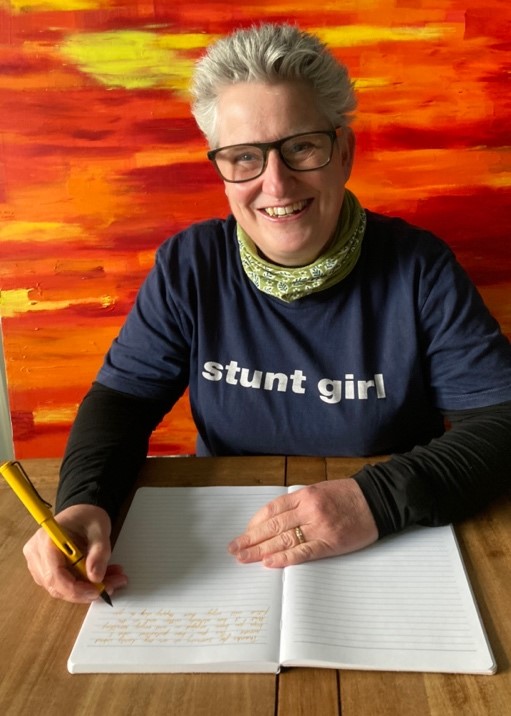
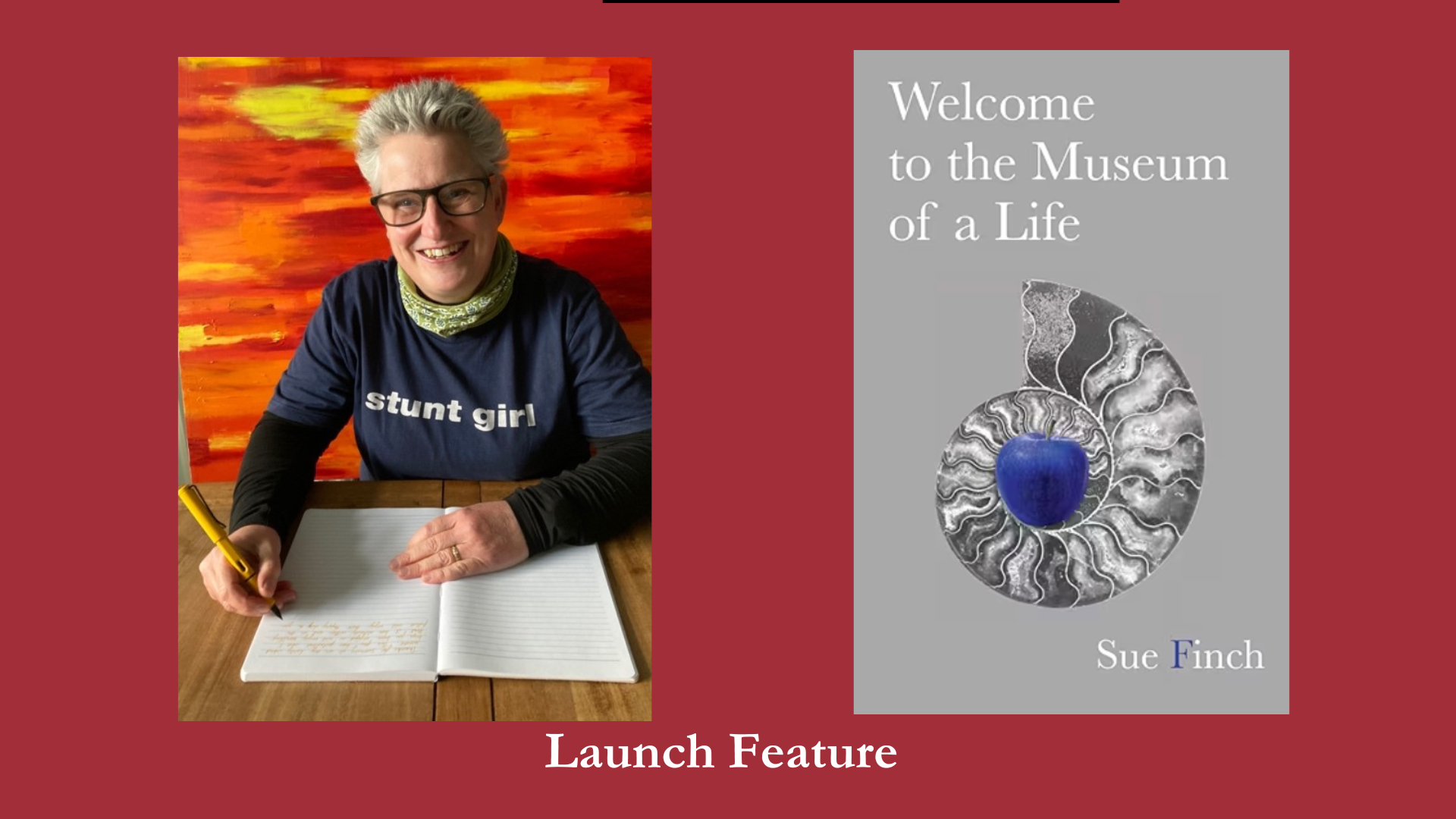
Please join me in congratulating Sue Finch on the launch of Welcome to the Museumof a Life published by Black Eyes Publishing UK.
On entering this Museum of a Life, feel free to wander at will. However, don’t miss a single gallery, as every exhibit invokes a small part of the life of Sue Finch. By the time you leave the museum for the Gift Shop to buy a blue apple for a loved one, you will know her well.
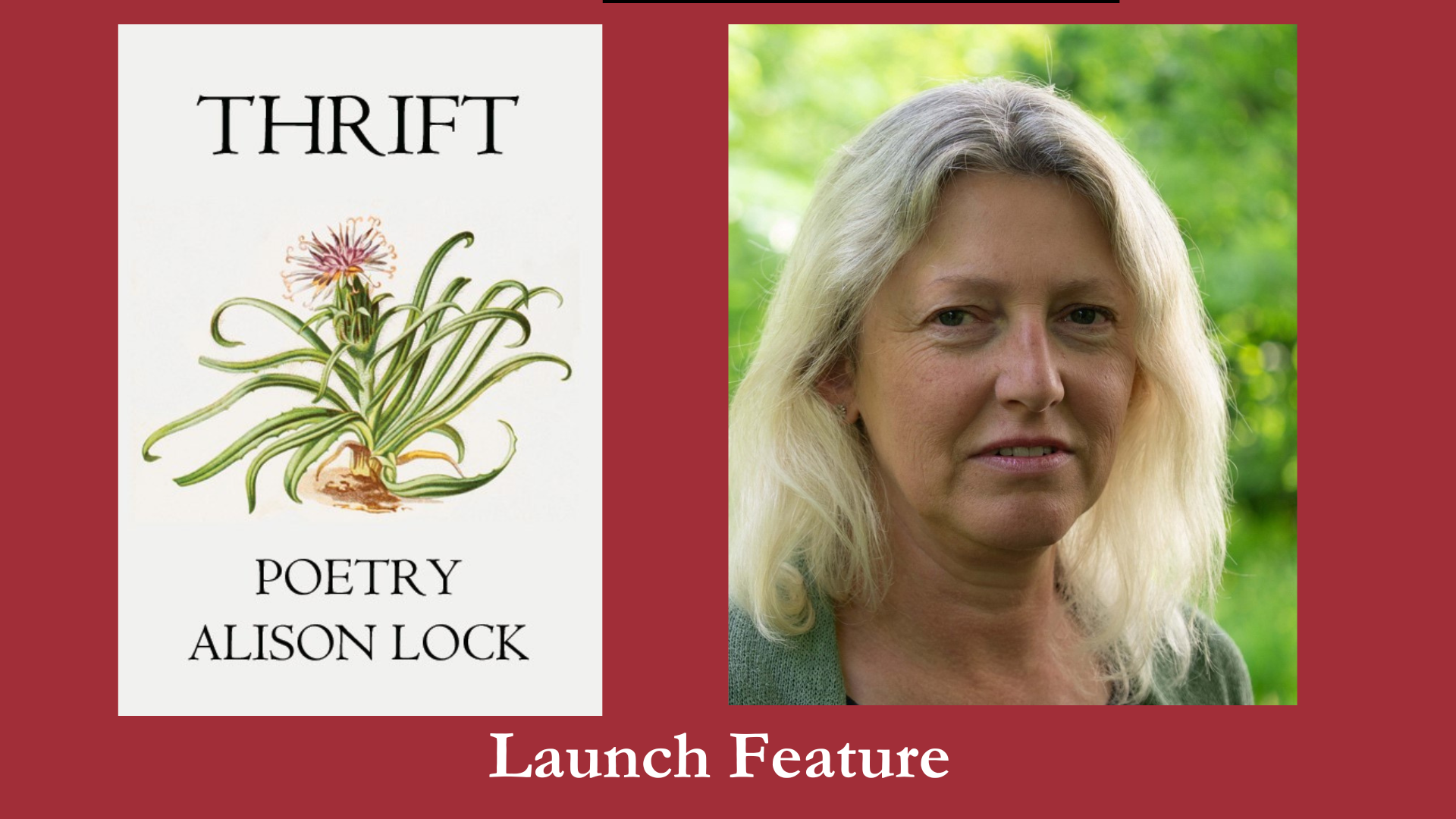
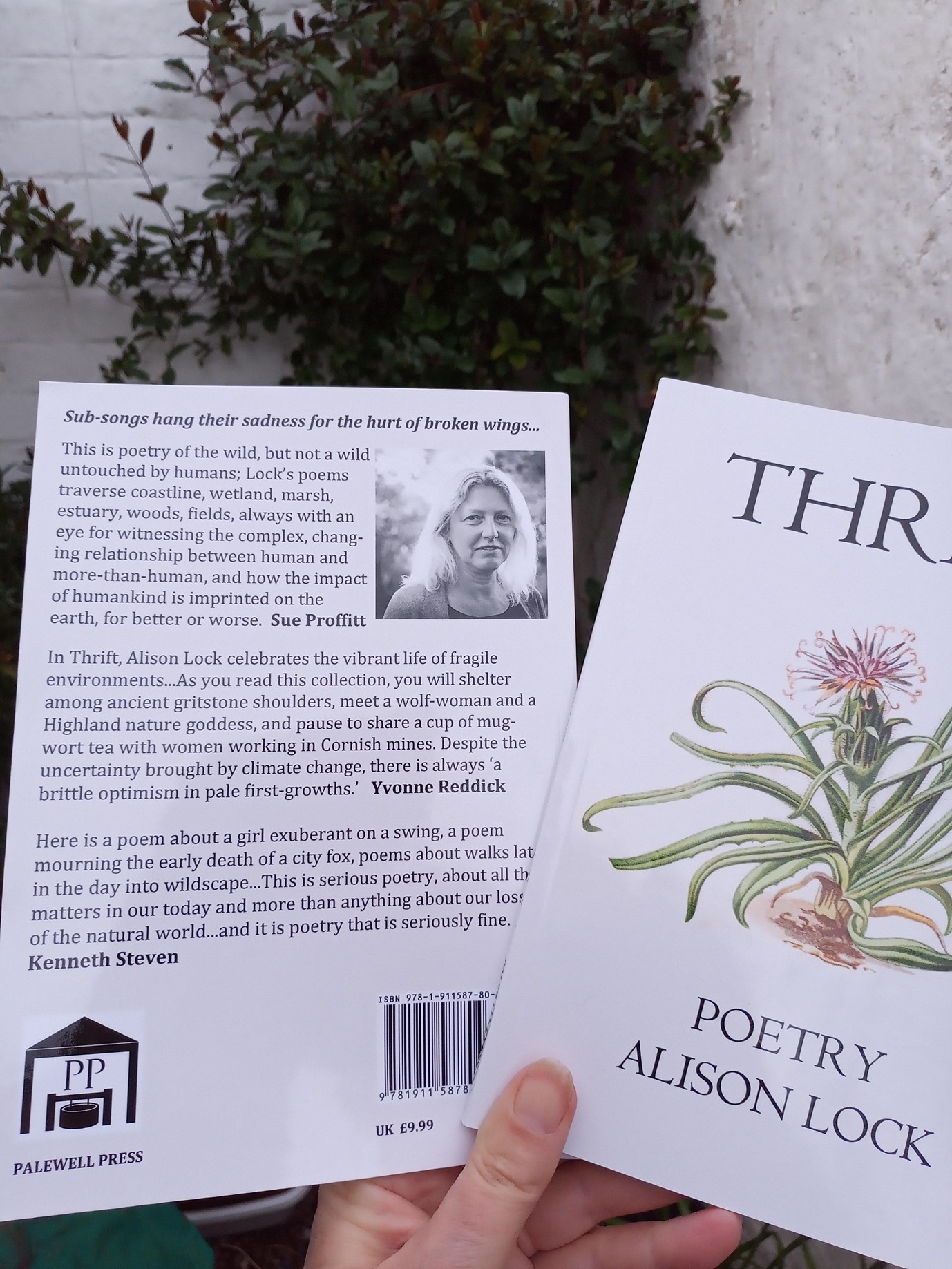
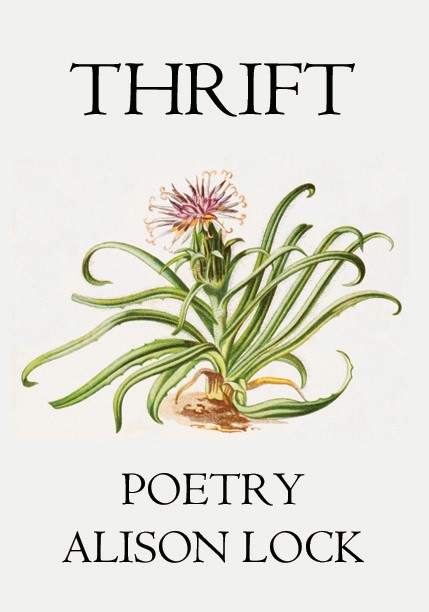
Please join me in congratulating poet, Alison Lock, on the launch of her new poetry collection Thrift published by Palewell Press.
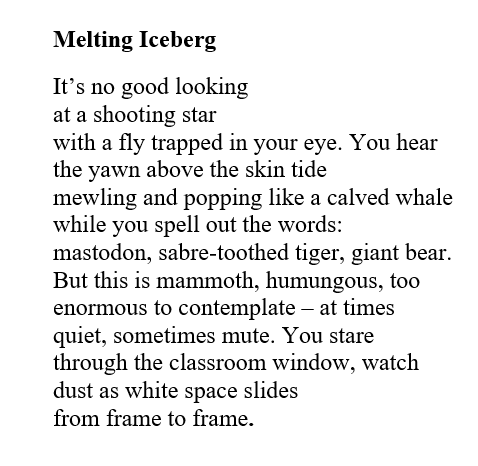
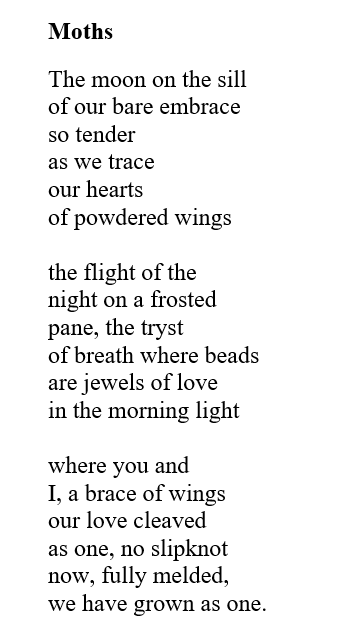
Melting Iceberg is included in Thrift
Alison Lock’s new collection, Thrift, grows out of a ‘communing in slow grief’ for the Earth and its vanishing creatures – an experience as painful as any personal bereavement. The collection’s poems are grouped into three sections: Rue, Thrift and Sage – herbal names that lead readers on a spiritual journey from despair through learning to be more frugal and sustainable to a new wisdom and potentially more hopeful future.
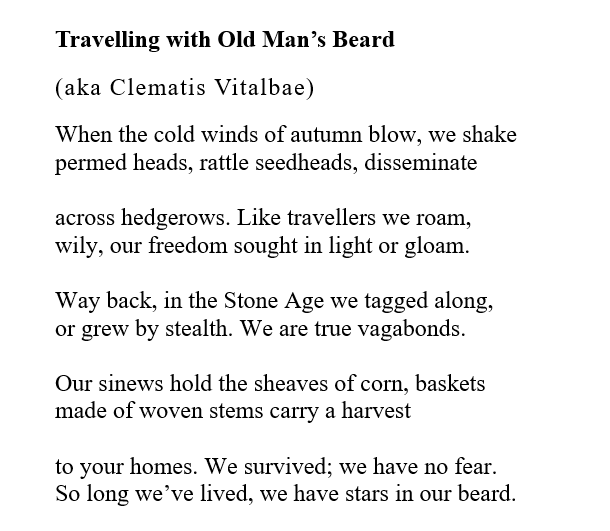
Travelling with Old Man’s Beard is included in Thrift
Please join me in congratulating poet, Paul Brookes, on the launch of his new collection, Wolf Eye Territory.
Wolf Eye Territory is about dispossession. How we become dispossessed of employment, livelihood, identity, nature, landscape and our own history. This is viewed through various means of seeing, and how our own actions, and those done to us change the world around us.
And here’s a little teaser from Wolf Eye Territory to get you in the mood
I’m delighted to introduce poet, Jane Dougherty, to Patricia’s Pen. Jane has recently published night horses. Find out more about Jane’s poetry and her latest collection.
night horses
Jane Dougherty
First I’d like to thank Patricia for inviting me to write something about what I do and why I do it. The occasion is the publication of my third poetry collection, night horses.
My first published poem, a poem about fog, was in the school magazine when I was eleven. I still remember the opening, and being irritated that the word ‘footfall’ had been changed to ‘football’ by some sixth form editor with the poetic sensitivity of a clam. I have never stopped writing poetry. My dad was a poet, published in literary journals, but essentially a poet who wrote, read his poems aloud to whoever wanted to listen, and didn’t care about finding an audience. I grew up with the idea that poetry, writing in general, was something that everyone did, just because. I still do really.
Six years ago we moved from the centre of Bordeaux to a very old, very uncomfortable tenant farmer’s cottage in a rural region of the south west. It sits on the side of a valley in two hectares of meadow that used to be pasture for four cows, with a vine, vegetable garden, fruit trees and a few pigs. After the last couple to live here grew too old to cope with livestock, the place gradually went back to nature. The proximity of nature and what it does if it’s left alone has been a revelation to me, given me a different and deeper perspective on my place in the world and the long path from past to future, where I come from. The quiet, the birds, trees, little rivers, the Garonne over the hill, have become my very circumscribed world, but far richer than anything I knew in the city.
In my poetry, I try to describe what I see and hear, to put it in the context of the bigger picture of destruction of the environment, changing weather patterns, fluctuations in the wild populations. It’s sensorial, emotional, and I hope, limpid. The quality I most value in poetry is beauty, words strung together to create something simply beautiful and beautifully simple. For me, a poem with no pearl at its heart is an unreconstructed clam.
The leitmotif for this collection is the night, terrible and tender, its voices and its silences, the remnants that linger in deep pools and dark places, the hush that follows the ferment of daylight, and the horses that gallop and graze the great starry plain that stretches from dusk to dawn.
I write ferociously, and as well as a mountain of unpublished poems, I have an even bigger mountain of unpublished novels. I have one coming out with Northodox Press next year, but that’s another story.
About Jane Dougherty
Pushcart Prize nominee, Jane Dougherty’s poetry has appeared in publications including Gleam, Ogham Stone, Black Bough Poetry and The Storms Journal. Her short stories have been published in Heroic Fantasy Quarterly, Prairie Fire, Lucent Dreaming among others, and her first adult novel will be published in 2025 by Northodox Press. She lives in southwest France and has published three collections of poetry, thicker than water,birds and other feathers and night horses.
Patricia’s Pen has great pleasure to welcome its first photography feature with Michael Q Powell. I became acquainted with Michael’s work via Twitter when I immediately followed his blog to ensure I didn’t miss out on a single shot. His photographs have inspired me to write many poems. Below Michael shares his journey through photography.
My Journey through Photography
Michael Q Powell
I’m a photographer, so what am I doing on a blog about writing? As I started to contemplate this conundrum, I realized that I am a writer. The Latin root words for photography literally mean “light writing.” While poets write with words, I write with light, a light that can be broken up into many colors and can illuminate or hide, a light that at times can be controlled, but is often untamable.
I’m an amateur wildlife and nature photographer. My primary motivation is love, not monetary gains or even personal fame. It sounds a little selfish, but I take pictures primarily for myself, though I post the ones I like in a daily blog and in various social media channels.
Visible song
I’m convinced that beauty is everywhere, and my main goal is to increase my sensitivity to that beauty, to develop a mindfulness and heightened awareness of that beauty. Sometimes it seems that I discover beauty in unexpected places and surprising ways, but more often than not, I realize that I’m merely uncovering a beauty that was always there.
Dorothea Lang, a famous American photographer, is reported to have said, “A camera is an instrument that teaches people to see without a camera.” Even when I don’t have a camera in my hand, I feel like I am experiencing the world in a different, deeper way.
Sometimes my friends will visit the same locations as I do and are astonished to see the variety of subjects that I’ve photographed. They ask me, “How is it that you see so much?” and I often respond to their queries with my own Zen-like question, “How is it that you do not see?”
What is the secret to my photography? Many people think that I have expensive gear. It frustrates me a bit when someone looks at one of my images and exclaims, “That’s a great photo—you must have a fancy camera.” I try to bite my tongue and not respond flippantly that it is a great photo because of me, not because of my camera.
fox on ice
I’m very patient and persistent—that is the simple secret. Most of us live our lives at a high speed and we miss so much because we’re unable to slow down.
Solitary silence is also a key component to my success and photography has become almost a meditative practice for me. Our lives are full of distractions and long walks with my camera help to still my soul and bring me closer to my subjects.
I’m an opportunistic photographer, which means that most of the time I walk about and react to a situation that presents itself. Knowledge and research have helped me decide when and where to walk and countless hours of practice have honed my reflexes so that I am ready to react quickly and accurately. Luck may provide an opportunity, but skill helps me to take advantage of it.
What about creativity? Some people think that photographers merely record and document “reality,” but is there actually an objective reality. Every time that I take a photograph, I make a series of creative choices. I choose camera settings, the angle of view, and the actual framing of each shot to capture my personal perspective, i.e. the world as I see it.
bluefacemeadow hawk
Like other writers, I seek to share my unique perspective. Sometimes I will focus on the “big picture” or zoom in on tiny details. At other times I may try to capture the mood of a moment or a particular emotion. It is a bit of a cliché that “a picture is worth a thousand words,” but sometimes I use my photos for storytelling.
When possible, I try to capture key moments of action, what French photographer Henri Cartier-Bresson called “the decisive moment.” As he said in the interview with the Washington Post in 1957, “Your eye must see a composition or an expression that life itself offers you, and you must know with intuition when to click the camera. That is the moment the photographer is creative.”
Visible sound
Creativity is still a new, largely unexplored world for me. I used to look at “creative” and “analytical” as being polar opposites, but increasingly have to come to realize that this two traits can actually be complementary, particularly if used in a constant internal dialogue as I try to cultivate a greater consciousness of what I’m thinking and feeling.
About Michael Q Powell
Mike Powell is a former U.S. Army military officer and government foreign policy analyst who rediscovered his passion for photography twelve years. He focuses much of his energy on capturing the beauty that he encounters, primarily in wildlife refuges and nature preserves in the Washington D.C. area. He features his photos, observations, and musings in a daily blog at michaelqpowell.com. Two of his images were included in the inaugural edition of The Storms, a journal of poetry, prose, and visual arts and his photograph of a Migrant Hawker dragonfly was the cover image for Take Flight 2023, A Selection of Poems published in FLIGHTS e-journal issues five to eight.
Patricia’s Pen recently welcomed poet, Gill McEvoy, to celebrate the launch of her new collection Selected Poems published by The Hedgehog Poetry Press. Today she blogs about the collection. Without further ado, it’s over to Gill.
Selected Poems
Gill McEvoy
It is always a great feeling when another of your books comes to life! And whether it’s a pamphlet or a collection a good deal of hard work goes into preparing it. My inspiration comes from many sources: nature, especially birds and trees; family; trauma (my husband’s illness and death; my own struggle with ovarian cancer), and things I observe. Keeping your ears and eyes open is so important: a chance phrase overheard, a small incident noticed, all can lead to poems. In this particular selection I have used childhood memories of country life including its cruelties like skinning rabbits, slaughtering your much-loved pig etc. I have drawn on family, uncles, aunts and grandparents; and creatures – bats, bees, fish; other poets; and ending with my favourite – birds.
I try always to form my work into some kind of rough arc shape so that poems flow from one to the other without the reader noticing. So in this ‘Selection’ I have not gathered them in order of collections published but have taken from previous work poems that can sit side by side comfortably. First I write down the titles of all the poems I think might fit in a collection, then I try to group them into subject matter before laying the printed poems out either on the floor or clipped in a folder and then reading aloud to see how they work together. Then I weed out anything that doesn’t feel right.
With my earlier collection Are You Listening? (Hedgehog Press,2020) which was about the loss of my husband, I decided to begin with the actual burial and work backwards from there, through his illness to happier times, and coming at last to forgiveness. That collection was also punctuated with other poems that felt right, poems about Derek Jarman, the war photographer George Rodgers, a poem about an encounter with a gravedigger. No face-to-face in Lockdown so that collection never had a launch!
But this new book is going to be launched at least twice, and I hope to do readings from it as often as I can to make up for that!
About Gill McEvoy
Gill McEvoy began publishing poetry in the 2000’s, previously wrote fiction. Three pamphlets from Happenstance Press, the third of which “The First Telling” won the Michael Marks Award for pamphlet poetry. Two collections from Cinnamon Press: “The Plucking Shed” 2010; “Rise”, 2013. And from Hedgehog Press “Are You Listening?” 2020) and Selected Poems (2024). Gill’s interests apart from writing are wildlife: she is an active member of a local group, Bee-Wild, which works round her neighbourhood, planting flowers and trees, to encourage insect and bird life. She runs a well-supported monthly poetry reading group to encourage others to enjoy poetry.
To order your signed limited edition you can message Gill via Twitter
Watch out for March guests which includes Patricia Pen’s first photography feature
***
Book News
House of Grace is seven years old on 8th March 2024. To celebrate this, the price on Amazon Kindle ONLY has been reduced to £1.99 for the rest of March. Watch out also for reductions for The Coal Miner’s Son fourth birthday on the 9th March 2024 and The Granville Legacy’s third on 17th March 2024. These reductions will be for one week only.
To order on Kindle go HERE – Also available to download if you’re enrolled in Kindle Unlimited.
Please join me in congratulating, poet, A R Williams, as he celebrates the launch of his new poetry collection, A Funeral in the Wild. He has come along to Patricia’s Pen to share his creative journey, so without further ado it’s over to A R Williams.
My Creative Journey
A R Williams
My creative journey began in early childhood with a paintbrush in hand, quickly turning drawing and painting into my first loves. Yet, as I grew, so did my interests, evolving into a keen fascination with music. By my middle school years, I learned to play drums, and before long, I picked up the guitar too. This musical passion led me to join various alternative rock bands in high school, marking a significant development in my creative path.
Transitioning from high school, I immersed myself in academia, eventually earning a PhD from Bangor University in Wales. It was during this intense period of study that I found myself yearning for a more creative outlet in writing, beyond the confines of merely academic writing. Taking a leap into poetry, I discovered a new direction for my creativity that would forever change its trajectory.
In recent years, I’ve taken on the role of editing the East Ridge Review, focusing on showcasing monthly features of poets and their latest poetry books. My goal has been to spotlight fresh, deserving work from incredibly talented writers. This journey into the world of poetry editing has been deeply rewarding, connecting me with some truly remarkable poets.
The most recent milestone in my writing is the publication of my debut chapbook, Funeral in the Wild. This collection, centered around memory, relationships, and a sense of place, varies in tone from gentle musings to deep inquiries and moments of vulnerability. Publishing this chapbook with Kelsay Books has been a highlight of my journey, and I’m deeply proud of the work.
In terms of style, I gravitate towards crafting concise, imagery-laden lyric poems, blending imagism with lyricism. Inspired by literary giants like Robert Bly, Jane Kenyon, William Stafford, and James Wright, I strive for simplicity and clarity in language that captures emotional depth and reveals the extraordinary in everyday life.
About A R Williams
A.R. Williams is a poet from Virginia’s Shenandoah Valley (USA). His poetry has been published widely in various journals and magazines and is the author of Funeral in the Wild (Kelsay Books, 2024). He is also the editor of East Ridge Review.
Find out more about A R Williams and his writing on the following links.