Nothing Adds up – Mark Anthony Smith

In place of my usual Tuesday Guest Feature, I have invited Mark Anthony Smith to return and share his flash fiction story ‘Nothing Adds Up.’ Enjoy.

Nothing Adds up (1)

When Chris Johnson enters the shop, he’s, unaware of the body up the road being rinsed by young lads as they rifle through its pockets.            

A lad of around fourteen ambles into the convenience store. He gives a thumbs up in the window to his three mates waiting outside. He hasn’t come in to spend so stuffs the stolen wallet into his pocket then checks the staff behind the till and positioning of the CCTV.

Chris is browsing the aisles when he overhears the manager say to his assistant, ‘What are you doing?’

The woman behind the counter laughs.

‘Gosh. I haven’t seen anyone add up like that for years,’ he adds.

She taps her pen on the writing pad and replies, ‘No, I know. People tend to use calculators nowadays but I like the old ways.’

Chris, now down the cleaning products aisle, is pre-occupied worrying about his direct debits. It’s only the 20th of the month and he needs to stretch his pennies but the kitchen sink’s blocked and it stinks.

The lad, in an orange jacket, scoops up six bottles of washing detergent and charges out of the shop.

‘Oi you,’ shouts the manager, but the teenager has scarpered.

Chris is sure he’s seen him before. He was in a group, selling stuff to customers at the burger restaurant a few evenings ago. Chris chooses a bottle of foaming sink un-blocker that promises ‘the Earth’ on its label, before grabbing a packet of biscuits off the shelf and joining the queue.

‘Have you phoned the Police?’ someone asks.

‘The manager nods. ‘They can’t do anything though because they’re underage.’

A customer snorts. ‘They don’t do anything anyway. Too many cutbacks.’

Chris checks his watch while he waits. He needs to get back by one to record his television programme. ‘I can’t believe lads are robbing in broad daylight. My Dad would have killed me.’

Someone else mutters, looking down at the floor.

Chris thinks nothing adds up nowadays. The world’s going crazy. He pays for the cleaning materials and chocolate biscuits.

The manager waves a calculator at the female shop assistant.

Chris chuckles as he thinks about his video recorder. ‘I still record on videotapes.’ He laughs. ‘I don’t like change.’

The manager reminds him that it’s 2020.

Chris shrugs. ‘I like that change though,’ he says taking the coins. As he leaves the shop he passes a homeless man sitting on a sheet of cardboard. Chris bungs the guy a few quid, even though he can’t really afford to help others until he gets paid.

He walks past a photo shop, butchers, and a charity shop, barely acknowledging anything.

Chris is comfortable where he lives on Balfour Street. Nothing ever happens. He doesn’t like changes in his life. That’s why he’s worked at the aerosol factory on Stoneferry since leaving school. It’s hassle-free.

The bin lorry pulls up. Chris doesn’t see the body lying on the pavement.

He thinks, nothing adds up nowadays.

*

Well I don’t think I fancy living on Balfour Street where nothing ever happens! What I really loved about Mark’s story is the way his character Chris was oblivious to everything going on in the street, but he not only noticed the homeless man, but gave generously knowing that he’d be short of money himself.

*

Let’s find out a little more about Mark.

12187964_1678170172470238_7433656794220133453_o

Mark Anthony Smith was born in Hull. He’s been an avid reader from an early age. After leaving the army he studied English to AS Level at Suffolk College and later started an English Degree at Hull University. His writing career began after winning ‘Star Letter’ with Writing Magazine. Later that same year he was commended by Writers’ Forum magazine for his Haiku, ‘Hearts of the matter.’ This encouraged Mark to publish a book of the same name.

Further successes followed with an Anthology and CD for Homelessness. But things spiralled once he took to Twitter. Since joining Twitter, he’s been published in Spelk and Truly U and has poems or short stories appearing in The Cabinet of HeedDetritusNymphs and Pink Plastic House. If he gets stuck for ideas, he binge reads to start an internal hum of creativity.

51i3MdlUirL

You can purchase Mark’s ‘Hearts of the Matter’ on Kindle and paperback from Amazon

You can find Mark on social media by clicking on the following links.

Facebook

Twitter

*

We should all be aware of the homeless. You can find links to donate here.

The Coal Miner’s Son – Book 2

CoalMinersSon KDP_V4pic (002)

You can purchase a copy of The Coal Miner’s Son, A Family Saga, via Amazon or order from any good bookstore. And don’t forget to use your library. If your library doesn’t stock a copy, then ask them to order it in. Quote ISBN 9780995710719.

Signed discounted paperback copies available (UK only) – contact direct via the online contact form for details of price plus P&P.

The Coal Miner’s Son is Book 2 in the House of Grace trilogy. Read a sneaky preview below.

*

The Coal Miner’s Son

A Family Saga

Patricia M Osborne

Chapter 1

George

Shuffling feet, giggles and chatter filled the school corridor. Ben pushed me into the cluttered coats making me land on my bum. Luckily for me Miss Jones wasn’t around yet. We charged into the classroom and raced to our seats at the back. I won cos my legs were longer. Mam said I was like a stick. Eight of us sat round two tables squashed together as boy-girl-boy-girl. I shifted away from my neighbour, Susie Smith, a small girl with ginger frizzy hair and blotchy skin. Ben sat opposite her. Miss Jones strode into the room clapping her hands. Forty chairs scraped across the floor as everyone stood to attention and our rickety seats squeaked like mice when we sat back down.

Miss Jones wrote 11th June 1962 on the blackboard. ‘Open your exercise books and practise the “Seven Times Table” in your heads. I shall test you after break.’

Paper rustled as pages turned. I got to four times seven when I heard the usual trickling. I bent down and found pee running close to my feet. Not again. I looked up towards Ben and rolled my eyes. He sniggered. I put up my hand.

‘What is it, George?’ Miss Jones said.

I signalled to Susie.

‘Oh dear. Would you mind fetching the mop, George? Susan, you go too and find Nurse.’

I dragged my chair back to stand up and the whole class turned to watch as I strode out of the room with Smelly Susie wriggling behind me. Why hadn’t she put up her hand to ask to go? No wonder no one wanted to play with her.

Humping the mop and bucket round to my table, I soaked up the puddle. The stink made me want to spew like when Mam asked me to put our Beth’s smelly nappy in the bucket.

Miss Jones patted me on the shoulder. ‘Thank you, George.’

I turned around and looked up into her light blue eyes. My heart banged like a drum. One day I was going to marry Miss Jones.

On my way back to the classroom the bell rang so I ran to catch up with Ben who was already nearly out of the door. We whispered and giggled.

‘George, can you wait behind please?’ asked Miss Jones.

She must’ve heard us laughing at Smelly Susie. Now Mam would find out, she’d tell Da and it’d be the slipper for me. But it wasn’t fair, why didn’t Ben have to stay behind too?

‘Sit down, George.’ Miss Jones pointed to the wooden chair next to her desk as she crossed her long legs. She looked like Marilyn Monroe with her blonde wavy hair. Da was always saying Marilyn Monroe was the most beautiful woman in the world, next to Mam and our Alice of course. I hadn’t known what Marilyn Monroe looked like so Ben had showed me a picture in a magazine.

I crept towards the chair.

‘Don’t look so worried. I just want a quick word.’ She flipped through the pages of my exercise book. ‘Look at all these red ticks.’

I gawked at the pages.

‘There’s not one sum wrong,’ she carried on. ‘You’re a bright boy. What would you like to be when you grow up?’

I shrugged my shoulders. Ben reckoned he was going to live with his aunty in America when he grew up. He wasn’t going down the mine. It wasn’t fair. ‘Dunno, same as Da and his da, I s’pose.’

‘That would be a waste. You could go to grammar school and get a good job. You’re bright enough to do your eleven plus early. I could help.’

‘But Miss, I’m only just nine.’

‘Yes, George.’ She smiled. ‘But you’re as bright as any ten-year-old. I’d like to speak to your mother. Is she home tomorrow morning?’

‘Think so.’

‘I also wanted to thank you for clearing up after Susan every day. You’re a good boy, George Gilmore. I can’t understand why Mr Mason complains about you.’

I shrugged my shoulders to pretend I didn’t know why Sir used Percy Pump on me. I was never naughty for Miss Jones cos she was lovely and that’s why I cleared up Susie’s pee.

Miss Jones passed me the biscuit box that sometimes came out at break time. ‘Take two.’

I sank my teeth into a melting chocolate finger, it was scrummy. I saved the other one for Ben.

*

‘George Gilmore.’ Mr Mason slashed a ruler down on my table. ‘Dreaming again, boy? Stand up and spell Encyclopaedia.’

I nearly jumped off my chair and quickly covered my exercise book. I didn’t want him to see the George and Janet heart I’d drawn on the back cover. I didn’t know Miss Jones’s first name but she looked like a Janet to me.

‘Come on boy.’ Mr Mason smirked.

He thought I didn’t know how to spell it, but I did. The funny ‘ae’ in the middle helped me remember. I didn’t want it to look too easy though as some of the lads already teased me cos I was clever and cos I helped Miss Jones. I took a deep breath. ‘E N C err Y? C L O P E, oh no I mean A, E D A, sorry Sir I mean, I A.’

Sir’s eyeballs bulged like frogs’ eyes. He moved his speckled beard closer to my face. ‘Excellent, Gilmore.’ His sour breath made me gag. ‘Does everyone else know how to spell it?’ he asked, breathing all over me.

The class kept their heads down.

‘Gilmore, write it on the blackboard. Class, watch carefully.’

Thank goodness, my chance to get away from the giant with bad breath. I stopped pretending I wasn’t clever and bolted up to the blackboard. I picked up the white chalk and made it squeak as I wrote ENCYCLOPAEDIA in big letters under the date.

The bell rang. I escaped into fresh air.

Ben nudged me. ‘Come on Brain Box.’

We skedaddled out to the playground pushing each other.

*

Mam was on the couch with her face hiding in Mrs Deane’s chest. Why was she even here? She didn’t even like Mam, she thought Mam was too posh. Our headmaster had sent everyone home early today because there’d been an accident at the mine. The road to the pit was blocked and bobbies were all over the place, dust flying everywhere. I tried to push through the barriers to find Da but the policeman wouldn’t let me through, said it was off limits so I asked him about Jack Gilmore but he just told us to get on our way and ‘straight home, mind.’ Alice pestered me all the way back to our house, questions like, what’s going on and is Daddy all right. ‘Yes of course he’s all right,’ I told her. I hoped I was right.

Mrs Deane eased Mam away from her. ‘Now that the bairns are home, Mrs Gilmore, I need to get next door to check on Nancy. And that little one needs feeding.’ She pointed to Beth lying in her cot. Mrs Deane stood up and patted Mam on the arm. On her way out she tapped me on the head. ‘Look after your Mam, there’s a good lad.’ She waddled over to the door and closed it behind her.

‘Mam, what’s happened? I asked.

She covered her face with her hands.

‘Is Da alright? Alice, get Mam a cup of water.’ My chest started thumping.

Alice passed me a chipped mug. ‘What’s wrong with Mammy?’

‘Here, Mam, drink this.’

Beth started howling so I strode over to the yellow carrycot and picked her up. She stopped crying when I rocked her in my arms. ‘Mam, I think she’s hungry.’

Mam took Beth, unbuttoned her blouse and stuck the baby on her bosom. Beth made smacking sounds as she sucked.

‘What did Mrs Deane want?’ I looked round, there was no pan on the stove. ‘What’s for tea? Da will be home soon.’

Mam just stared into space.

‘Shall I peel some spuds?’ If I got grub ready, Da would walk through the door. Mam always said he could smell food a mile off.

Mam’s face was white. ‘George, come and sit down, you too Alice.’ She patted the couch next to her, still holding the baby. Alice and I snuggled up to Mam and Beth, making the springs ping. I placed my arm around Mam’s neck. My throat closed up.

‘How much did your headmaster tell you?’

‘Something about an accident at the mine,’ I said.

‘You know your father loved us all very much, don’t you?’

‘Yeah.’ My chest thumped faster.

‘Your fa…’ She sobbed making her body shake. ‘Your fa…’

‘No, not Da.’ I squeezed my eyes.

‘I’m sorry my darlings. I’m sorry but your fa…. A policewoman came around earlier to tell me that your father… he was in the mining accident.’

‘But he’s going to be all right, isn’t he?’ I clung to Mam.

‘I’m sorry George, but no. No, he’s not. I’m sorry but Dad’s gone to Heaven. They said he wouldn’t have been in pain. He didn’t want to leave us. He couldn’t help it.’ She squeezed us both tight, so tight, I couldn’t breathe. Her tears wet my cheeks.

‘No, you’re wrong. Daddy’s coming home in a minute.’ Alice broke away and shrieked, ‘George said so.’

I wanted to believe Alice was right but I said under my breath, ‘He’s dead.’

Alice punched me. ‘Stop it, stop saying things like that. I hate you.’ She ran upstairs bawling.

I peered around the room. Da’s best boots stood by the door. His clean white shirt hung from the pulley and his pipe lay in the ashtray.

Chapter 2

Elizabeth

I opened the solid oak wardrobe door and stared at the two dresses adjacent to each other. The first, a white lace gown with a broderie-anglaise bodice boasting tiny silk roses, and the second, an elegant black satin frock draped just below the knee. Neither reflected the right emotions.

It seemed a lifetime ago, much more than nine years, since I stepped into the wedding dress, experiencing only sadness, nerves and loneliness. I ran my fingers over it. If only things had been different, Grace would have been my bridesmaid. How we used to giggle as girls growing up together, chatting about our wedding days.

My mind slipped back to walking down the aisle at Loxhurst Cathedral, my arm hooked into Father’s. Our feet paced in rhythm to Richard Wagner’s bridal march, Here Comes the Bride. Faces I didn’t recognise squinted their eyes to capture a view of me, the teenage bride, in my crisp silk-laced gown, trailing six-foot on the ground. I cuffed a bouquet of red roses dressed with gypsophila tightly between my fists. Strangers, daughters of Father’s business acquaintances, tailed behind as bridesmaids in lemon, clasping baskets of mix-coloured chrysanthemums. I turned around to see the three-year-old twins, posing as pageboys, chasing behind in green plaid kilts. Martha, our housekeeper, her grey hair piled into a bun, pointed a stern finger at them. She mouthed towards me, face the front, where the large-framed man in his fifties, barely any hair on his round head, stood at the end of the first pew waiting eagerly for his prize.

I fingered the black, silky folds of the second dress. I flushed, remembering how I stood over his grave, in the pouring rain, with false tears, unable to mourn this man, my mind blank as the coffin was lowered. I’d shivered in the wet weather, and cringed as, one by one, I shook the hands of Father’s and Gregory’s business acquaintances while they offered their condolences.

How foolish I’d been to think my problems had been over. Two weeks after the funeral I was weeding the spring flowerbeds, enjoying the daffodils and red tulips dancing in the light breeze, when Winnie, the new maid, hurried into the garden. Why had Gregory employed her? His explanation to take the burden off me, somehow didn’t ring true.

‘It’s the solicitor, Ma’am. He’s waiting for you in the library.’

Finally, I was free. With renewed energy, I strode into the house.

‘Mr Simpson.’ I took his hand to shake. ‘What’s the news?’

He shook his head. ‘It’s not good, Lady Giles, I’m afraid there’s very little left.’

‘What do you mean?’

‘Too many creditors, I’m afraid.’

I blacked out, opening my eyes to Winnie holding a glass of water under my nose. ‘Here, Ma’am. Drink this.’

The solicitor was fidgeting with his hat. ‘Are you all right, Lady Giles? Perhaps I should return another time?’

‘No, no, I’m fine now. Please continue.’

‘I’m sorry to be the bearer of such bad news.’ The solicitor rustled his papers. ‘Might it help if I notified Lord Granville, and filled him in with the details?’

As usual I’d need to rely on Father because I had no idea what to do. ‘Thank you, Mr Simpson. Yes please if you don’t mind.’

‘Certainly, Lady Giles.’ He shook my hand again. ‘Good day to you.’

I clenched my fists, stormed out into the garden, knelt on the grass, and yanked a big bunch of buttercups, hidden under the crimson azaleas, from their roots. And then buried my face in my hands to weep.

Within a month, Father had taken over. Dealt with the death certificate, bribing the doctor and creditors. I begged him not to compromise the doctor but I didn’t stand a chance.

‘Elizabeth, the Granville reputation can’t afford to let the Press get hold of your husband’s drunken lifestyle. Myocardial infarction sits much better on the death certificate. I can’t understand why you didn’t come to me earlier.’

It was becoming clear why Grace left all those years ago. Father understood very little about me. His only interest was his reputation. I certainly wouldn’t be wearing this dress again. I threw it on the bed in a heap along with the wedding dress.

Mother walked into the room. She didn’t look any older than when I’d left the house nine years ago except her dark hair was now shorter and set in a wave just below her ears.

‘How are you getting on? she asked. Are you sure you wouldn’t like Martha or one of the girls to assist you?’

‘I’m almost finished, Mother.’

‘Elizabeth, what are these dresses doing here?’ She picked up the wedding dress, cradling it in her arms. ‘These beautiful gowns deserve to be treated with dignity.’

‘I won’t wear them again, Mother. We should give them away to a charitable cause.’

‘Nonsense, dear child. This is all you have left. You need to hold on to your memories.’ She draped the dresses over coat-hangers and hung them back in the wardrobe. ‘Now let’s not have any more talk about parting with them. Dinner is in fifteen minutes. If you can’t sort this out’ – she waved her hands around – ‘I’ll send one of the maids in to finish for you.’

‘I’ll do it, Mother. I’ll be down in time.’

She left the room huffing and puffing. I pushed the bedroom door closed.

I slumped down onto the bed, in the same bedroom I’d slept in for my first sixteen years. Nothing had changed. And I was supposed to be grateful. Arching my back, I got up and smoothed down my straight skirt. Well I was no longer that naive young girl, but I needed to find strength to stand up to the great Lord Granville.

Chapter 3

George

After crawling out of bed I put on my Sunday best. I didn’t want to wear these posh clothes and I didn’t want to bury Da.

I took down the National Dried Milk from the shelf and scooped powder out of the blue and white drum, added boiling water and stood the bottle in cold water to cool. When it was ready I tipped it onto the back of my hand to test the temperature like Mam showed me. Warm milk trickled from the teat. Mam went to the baby clinic to get the powdered milk after she had to stop feeding Beth with her bosoms, and they gave her some bottles of thick orange juice and tasty rosehip syrup too. I picked Beth out of the cot and sat down on the couch to feed her. She guzzled, sucking on the teat. It was a good job the lads at school didn’t see me, they’d have called me a cissy but I just wanted to help Mam cos she was sad. I didn’t want to play footie now anyway and cuddling our Beth made me forget Da was dead. Mrs Deane would be here to take her soon.

‘When’s Mammy going to make breakfast?’ asked Alice.

‘Mam’s getting ready. Stick a slice of bread under the grill and do one for me too.’

I lifted Beth towards my face. ‘Pooh.’ I laid her on the floor to change her nappy and managed to pin the new one together without stabbing her. Mam said I was a quick learner. I slipped a yellow frock that smelled of flowers over Beth’s almost bald head. Mam said Beth was going to be blonde like me and Alice. Beth wriggled making her silky skin slippery, so I put her down in the huge pram in case I dropped her.

Mam was still upstairs, crying. She was always crying since the accident, but I wasn’t supposed to know. Alice was sitting on the floor staring at the telly as no one was there to say she shouldn’t, and I couldn’t be bothered. There was nothing on anyway, she was just staring at the test card that looked like a Ludo board.

Mrs Deane tapped on the back door before striding in. ‘Morning lad, where’s ya Mam?’

‘Upstairs gettin ready. I’ll tell her you’re ere.’ I tiptoed upstairs and found Mam just sitting, glaring into the mirror, holding her lippie.

‘Mam, Mrs Deane’s here.’

‘Thank you, Sweetheart.’ Mam smiled and brushed her wet face against my cheek before dropping a net veil from the black hat, hiding her eyes. I wished I had a veil to hide behind.

*

Mam clenched my hand tight. Her wedding ring dug into my fingers. Aunty Nancy, our neighbour, stepped out of her door as we were leaving. She stuck close to Mam and took Alice’s hand. We walked sadly in the direction of the church. Ben went to Sunday school there every week, but Da said Sundays were for footie or picnics in the park. Red and yellow roses stood like soldiers as we passed by window boxes on the cobbled street. Crows flew on and off house roofs squawking. When we reached the church, Mam stopped and backed away. Nancy took her arm and led us into the dark building. We sat down in line on the hard, brown benches. The vicar opened his book and started to speak, his mouth moved but my ears had gone deaf. Mam stared into space, gripping my hand so tight it made my bones crunch. Alice’s eyes were like pennies. She still thought Da was coming home. I tried to tell her he wasn’t, but every time I did she threw a tantrum, punching me in the chest and belly, her long spiral curls buried into my chest.

Da’s miner friends were dressed up in white shirts and dark suits. Six of them went up to the coffin and whispered. They moved around the coffin and then swapped over, still whispering between themselves. With three men on each side, they nodded, took a deep breath and heaved Da up onto their shoulders. One of the men sneezed, the coffin slipped. They were going to drop him.

Aunty Nancy leant over and patted my knee. ‘It’s all right, luvvie.’

The miners nodded again and started moving slowly out of church carrying Da. We followed behind while the other people carried on singing.

Aunty Nancy said the coloured flowers in the round shapes were called wreaths. She reached into her bag and passed a white rose to me and one to Alice. It made me sneeze like those in the boxes outside the houses. Why did Da get killed? Uncle John, Aunty Nancy’s husband, got killed too, so there was no grown-up person left to play footie with Ben and me.

They put the wooden coffin down the huge hole. I didn’t want them to put Da in the ground. The vicar waved his hand to tell us to throw in our flowers. Mam screamed, dropped to her knees on the grass and tried to climb in the hole with Da. I wanted to scream too but I didn’t because big boys don’t. Da said so. I wanted to run away and hide so I could blubber without anyone hearing. Mam was frightening me. She was frightening our Alice too.

Like what you’ve read?

for social media(002)

You can purchase a copy of The Coal Miner’s Son via this link

Elaine 2 review


Tuesday Guest Feature – Fin C Gray

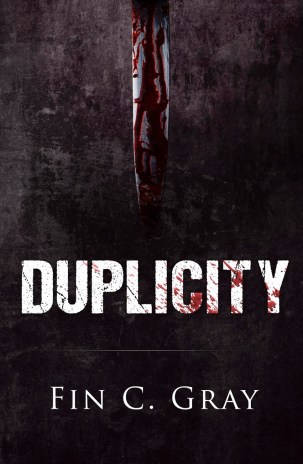
Today’s guest is a very talented writer who I met at my first residential writing course back in 2012. Fin C. Gray has recently published his debut novel, Duplicity, and has come along to share his experience about writing and publication. Without further ado, let’s go over to Fin.

Untitled design (41)

Duplicity 

Fin C Gray 

I started writing Duplicity as the required submission for my Creative Writing MA at Manchester Metropolitan University. It was one of the reasons I chose to do the degree: I finally wanted to force myself to finish and commit to a novel. I finished the book in late 2016 and graduated with Merit in 2017. I spent the following year polishing and proofreading Duplicity (which at that time was titled Bad Religion – I changed it because many people thought that title was too provocative).

When I was satisfied that the manuscript was in good shape, I began to submit three-chapter samples to various publishing houses that seemed to fit my brief, mainly finding them from Artists and Writers Yearbook. That’s when the waiting game seemed to begin, although I found later the REAL waiting game starts after you sign your publication contract. After a month or two, after hearing nothing from anyone I had approached, I got an email professing interest and asking me to submit the full novel. This was a great surprise to me, especially since I had received no rejections thus far. A week or two later, I received a second request from a New York-based publisher.

A short time after, both publishing houses offered me a contract, and I felt like I was in a uniquely luxurious situation, given the considerable expectation of rejection I had galvanised my emotions with. I got The Society of Authors to vet the contracts for me as I felt like a fish out of water, and I knew that they offered this service to their members. Ultimately, I went with the London based house who had first requested my manuscript. I signed the contract with them on November 7th, 2018. My book was eventually released on November 28th, 2019. That’s what I mean by the waiting game starting after signing the contract.

In the two months since publication, I’ve busied myself promoting the book on various social media platforms, and I have also begun work on my second novel. For this, I wanted to try something completely different, and I have turned to an idea that I first had for a book over twenty-five years ago. It occurred to me that I maybe should have attempted this for my MA course, but as it is a work of Young Adult fiction, I might have subsequently doubted my ability to make any mark in the adult fiction market. So, in a way, I’m glad I have taken the route I have. It may prove to be a mistake to hop genres at this early stage of my writing career, but I feel I need to get this out of my system. I think it might be fun to write something less dark and challenging than the first. I also want to force myself to tighten up on my writing timescales. Three years seems too long for one book, in retrospect, especially since you can expect to tack on another year for the publication process, as it turns out.

*

Thank you, Fin, for sharing your experience of writing and publishing Duplicity, and congratulations on the MA. Do come back and visit ‘Patricia’s Pen’ once you’ve finished novel number 2. It sounds very exciting.

*

Let’s find out a little more about Fin.

About Fin C Gray

Fin C Gray Duplicity photo for website (002)

Fin C Gray was born in Central Scotland but has spent his time between London and New York for the last twenty years. Now semi-retired, he invests in theatre and film. An avid traveller, Fin enjoys making trips abroad learning about cultures and customs. He is a graduate of the Manchester Metropolitan University where he was awarded an MA in Creative writing with Merit in 2017. This book was the result of this degree. He is now working on his second novel and hopes to write full time in the future.

*

Fancy a taster of Duplicity? Read the opening of the first chapter below.

Duplicity Final Cover No spine 2 (002)

Duplicity 

Chapter 1 

Then 

Daniel wasn’t set to go home yet. Jenny would be there already, and Mum wouldn’t be back for at least an hour. He ducked down as he passed the house. No way was he going to let Jenny tag along and spoil this for him. Dad would kill him if he knew – and if Jenny knew, Dad would know too. There was nothing surer than that.

‘Don’t ever let me catch you going to that lorry park, son. Right? I’ll whack your arse if I ever hear that you’ve gone there.’

When he’d asked Dad what was wrong with the lorry park, all he’d said was, ‘Just do what I tell you, OK?’ What could be so bad about it? OK, it was dusty, and his school uniform would get all dirty, but he could shake it off in their back yard, in the wind. Nobody would know. The dust blew over the road onto their house nearly every day, anyway. It could just have got on his blazer from the wind, couldn’t it, if anyone asked? If Mum asked. Probably there was a lot more of it in the actual park, mind, so he’d more than likely have to shake it off.

Mum and Dad seemed to love moaning about the park. Dad even spoke to Black Jash, the owner of the café, about it and got angry with him. He was shouting a lot, something about it being the café’s responsibility and that he should pay to get it tarmacked. Black Jash had shouted back at Dad. He’d got very red in the face. Daniel hoped that Black Jash would get the lorry park tarred over. Because then the tar lorries would come. Nothing smelled better than hot tar, and Daniel loved to step on it while it was still sticky. Not sticky enough to dirty up his shoes, mind. That had happened once when he was much smaller, and Mum had been mad at him. She said she couldn’t afford any new shoes and that he’d have to go to school in bare feet. She was joking, but he had believed her.

Better than the tar itself were the big black lorries that poured the thick, black, lumpy stuff out. What a roar they made. And the roar would turn into a grindy, scrapy noise when the back started to rise and the tail-gate opened up. Oh, how he would love to pull the lever that tipped the tar out of the back. He’d jump out of the lorry as it tipped and watch the tar spill out the back, like some big metal robot mouth throwing up black sick.

And then there’d be road rollers. Rollers, with their hissing and banging, were probably even better than the tar lorries. Yeah, he’d rather have a go on a road roller than a tar lorry, any day. He could pull the thing that made the smoke whistle out of the chimney at the side of the cab and watch the roller flatten out the mounds of tar as flat and black as liquorice toffee.

*

Hooked? Want to know where to buy? 

Publisher’s website

Amazon 

Waterstones (UK)

Barnes and Noble (US and Worldwide)

To find out more about Fin and his writing please click on the links below

website

Twitter

Instagram

Duplicity


Story Challenge

Josie Gilbert’s response to the challenge to write a story in UNDER one hundred works comes in the form of  ‘Cairngorms.’

Cairngorms

Tonight, would be a night of firsts – her first time glamping and her first visit to the Cairngorms. It was February and already dark when she arrived. She unpacked, cooked a meal, and then stepped outside into the cold night air, cradling a mug of hot chocolate.

A fox barked in the distance, but otherwise – silence. Gazing up she saw a myriad of stars, sparkling in an inky, blue-black sky. A flicker of green appeared on the horizon and gradually grew. The Northern Lights, or Merrie Dancers, dancing across the heavens. Another first.

94 words

*

What a first. To see the Northern Lights, Josie, is on my to-do list.


Tuesday Guest Feature – Michael Sanchez

My Tuesday guest this week is writer Michael Sanchez. Michael has been on ‘Patricia’s Pen’ in the past with his response from the story challenge ‘What Lies You Tell’. Today however, he has come to chat about his writing. Without further ado, let’s go over to Michael.


About My Writing

Michael Sanchez

When I was growing up in New Jersey at about eight or nine years old, I use to watch World War I and World War II history documentaries on the PBS channel, and would try to write down everything that the narrator was saying in a composition book. I enjoyed doing that and did it for about a year but soon moved on to other things like other kids of that age. Little did I know at the time that many years later I’d write and publish my first book Vine Street. I guess the skill was always in me, I just didn’t know it.

I was always fascinated with the movies from Hammer Film Productions, Alfred Hitchcock, and Stephen King, but one day I saw a movie that particularly inspired me directed by John Carpenter. That movie was Halloween which prompted an idea for my first book, but it then took another 35 years to get started and almost another three with it just sitting on the shelf. I’d intended to trash it and give up on the writing.

However, one day a stranger overhead a conversation I was having with someone who’d approached me. The stranger said he could tell how passionate I was about my writing and disappointed that I was going to trash my work. He then went on to say,  ‘Don’t do it. Give it a chance.’

I’m glad I listened to that stranger and went on to publish my debut novel. I am now excited to complete the manuscript for my second book and get that published too. The genre is suspense, thriller, and a little horror in-between, but hopefully my readers will enjoy it.

*

Thank you for sharing that with us, Michael. I think all writers doubt themselves sometimes and we just need that one person to believe in us. Good luck with the second book and do come back and tell us when you’re ready for publication.

*

Let’s find out a little more about Michael.

trWZfefG_400x400

About Michael Sanchez 

Michael Sanchez grew up in South Jersey, where he completed his education in Woodrow Wilson High School. He continued his education many years later at the age of 39 when he decided to attend college. He completed his education and obtained an MBA, Bachelor of Science in Management, and AA in Criminal Justice. His goal is to continue writing stories that will entice readers to use their imagination.

Click on the links to purchase Michael Sanchez’s novel, Vine Street

Amazon.co.uk

Amazon.com

41JEzSWg1BL

You can find Michael Sanchez on Twitter


Tuesday Guest Feature – Madalyn Morgan

It gives me great pleasure to welcome author, Madalyn Morgan, to ‘Patricia’s Pen’. Madalyn has come along to talk about her writing and in particular ‘The Dudley Sisters.’ Without further ado, let’s go over to Madalyn.

Madalyn Morgan (1)

The Dudley Sisters

Madalyn Morgan

Several things happened while I was doing a creative writing course with the Writers Bureau in Manchester. I have always been fascinated by the achievements of women in the Twentieth Century – especially in WW1 and WW2. My mother used to tell me about her life in the second world war; the work she did, the dances she went to, and the many letters she wrote to servicemen overseas. (She had a Polish penfriend called Vanda, which is my middle name.) My mum had a fascinating life, so when it came to the biography module, I wrote about her. My tutor liked the work but said, as mum and I were both unknown, I should turn it into a fiction.

At the same time, mum wanted to give back a brass aeroplane; a Wellington Bomber that had been made for her by a Polish airman in 1940. He had died, but I found his son who was delighted with the plane. It was then that I decided to set my novels in WW2. I had too many ideas for one book, so I plotted four. Four sisters, four wartime careers and four loves became The Dudley Sisters’ Saga. I still have my mum’s biography. One day I will turn it into fiction.


In Foxden Acres we meet all the Dudley sisters. As the first novel in the saga, it is predominantly Bess’s story.  Bess is the oldest daughter of the Foxden Estate’s head groom. A scholarship girl, she becomes a teacher in London. When war breaks out and the schoolchildren are evacuated, Bess returns to Foxden and, with a troop of Land Girls, turns the Foxden Estate into arable land.

Traditional barriers come crashing down when Flying Officer James Foxden, heir to the Foxden Estate, and Bess fall in love. Bess’s story is one of friendships and loyalty, of strength, love and loss, and learning to love again.

Applause is Margot, the second Dudley sisters’ story. Margot marries her childhood sweetheart and moves to London. She is fiercely ambitious and works her way from being an usherette in a West End theatre to being the leading lady of the show. However, she becomes caught up in a web of deceit, black-market racketeers, Nazis, drugs and alcohol.

Book three, China Blue, is Claire Dudley’s story. Claire joins the WAAF. She excels in languages and is recruited by the Special Operations Executive to work in German-occupied France. While working with the French Resistance, Claire falls in love. The affair has to be kept secret. When her lover is captured by the SS Claire uses her training to find him.

Ena Dudley, the youngest sister, works in an engineering factory making small dials and disks. When Coventry is bombed, she has to take this vital equipment to Bletchley Park. Travelling on the 9:45 To Bletchley train Ena is drugged and robbed. She is accused of being involved in sabotage and while trying to clear her name discovers the thief is a spy. With the help of military intelligence, Ena traps the spy and falls in love.

*

The first four books are set during WW2, I tried to vary the genres – land army, show business, SOE agent and spy thriller.

*

Book five, Foxden Hotel, is a murder mystery and stand-alone sequel to Foxden Acres that brings the sisters together again. The book opens during the New Year’s Eve party of 1948 when Bess is threatened by someone from her and Margot’s past.

Chasing Ghosts, a stand-alone sequel to China Blue, is a psychological thriller. In 1949, after having treatment for shell-shock in Canada, Claire’s husband is accused of treason. He goes missing and Claire travels to Canada and France to find him and prove his innocence – and to expose the real traitor.

There Is No Going Home – a spy thriller set in 1958 England and 1936 Berlin. Ena sees a spy whose funeral she attended ten years before, but no one believes her. While investigating the woman, Ena’s colleague and a friend at MI5 are murdered. Ena doesn’t know who she can trust. Threats and car accidents only make her more determined to find the truth

I am halfway through writing my eighth novel. Framed – a sequel to There Is No Going Home – is a murder mystery and cold war spy thriller. Ena’s assignment was to expose the mole at M15, but someone got to the mole before her and made sure there would be no investigation, except into Ena’s husband who has been framed for killing the mole.

*

Thank you, Madalyn. You have written a great collection of books. For anyone that hasn’t read any of Madalyn’s books then I suggest you should as they will have you turning the page. Links to where you can purchase them will be supplied at the end of the blog.

I hope you manage to get your Mother’s bio done, Madalyn, in the near future and good luck with Framed, the new novel. Once again thank you for coming along today.

Let’s find out a little more about Madalyn 

Photo Madalyn 2018 (002)

About Madalyn Morgan 

Madalyn Morgan was bought up in a pub in the market town of Lutterworth. Her dream was to be an actress but her mother wanted her to have a ‘proper’ job so she became a hairdresser. Eight years later, at the age of twenty-four, she gave up a successful hairdressing salon and wig-hire business for a place at Drama College and a career as an actress.

In 2010, after living in London for thirty-six years, she moved back to Lutterworth, swapping two window boxes and a mortgage for a garden and the freedom to write. She is currently writing her eighth novel, as well as a collection of short stories, articles, poems, photographs and character breakdowns, written when she was acting. She is a member of the RNA, Society of Authors and Equity.

You can find Madalyn Morgan on the following links.

Twitter

Facebook

Instagram

Pinterest

Blog 

You can purchase Madalyn Morgan’s books on Amazon in all formats on the following links.

Foxden Acres    Applause    China Blue

The 9:45 To Bletchley    Foxden Hotel

Chasing Ghosts    There Is No Going Home


Challenge – Story in LESS than 100 words

Thank you to Phil Clinker for responding to the challenge to write a story in LESS than 100 words. His response comes in the form of A Game of Cluedo which you can read below.

A Game of Cluedo

Gerald is Colonel Mustard. Abigail is Miss Scarlett. Uncle Barry is the Reverend Green. Auntie Jenny is Mrs White. Grandad is Professor Plum. I am Mrs Peacock. And my cheating husband is Doctor Black, and he’s lying in the Hall with the Rope round his neck.
Game over.

48 words

*

Oh dear, Mrs Peacock!

What a great story from Phil Clinker. Do you reckon you could write a story in LESS than one hundred words? See full guidelines and online submission form HERE.