Guest Feature – Joseph Carrabis

I’m pleased to welcome author Joseph Carrabis to ‘Patricia’s Pen.’ Joseph has come along to talk about his writing so without further ado, it’s over to him.
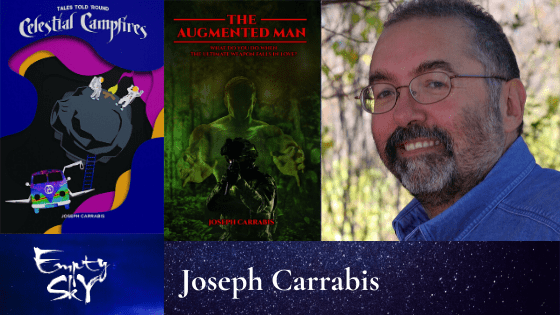
Joseph Carrabis


Word by Word

Joseph Carrabis

I woke up last night with a line running through my head — ‘Truth is like wine. A few sips and you’re okay. Too much and you get a headache’ — for a current work-in-progress. It’s spoken by a grandfather to his child-grandson:

“People will come to you, asking you questions. Be careful what you tell them.”

“You said to always tell the truth.”

“To us. To me. To others…”

He let it hang and I was unsure. “Do you want me to lie to them?”

“No, Gio. Never that. Truth is like wine; a few sips and you smile and nod. Too much and you get a headache and your dinner goes plah on the floor.”

He made a funny face and I laughed. He lifted me and held me close.

“You must tell the truth, Gio, but listen to them. Pay attention when you answer. They will let you know when they’ve had enough truth, then you stop.”

“How will they tell me they’ve had enough?”

“A look. A sigh. Sometimes they’ll nod and turn away. They’ll fidget. Watch if they start rubbing their hands, tapping their fingers. Or their face will go cold, hollow, where before it was warm and full. Or their face will go like this.” He made different expressions.

“And listen to their breaths. There are many ways to tell. You don’t need to know them all right now. There’s time to learn. But each different way means something different about the truth bothers them, makes them stop listening, makes them want you to stop answering. Sometimes too much truth saddens them, sometimes it angers them.

“Most people don’t want all the truth, Gio. They only want enough to believe they’re right, they’re doing the right thing, they’re being a good person. Tell them more than they need and they hate you.”

“But you don’t hate me, Buppa, and I tell you the truth.”

“I’m not afraid of the truth and I know when your truth is not my truth.”

“We have different truths?”

He pointed to a rose. “That flower’s truth is it’s a rose.” He pointed to a morning glory. “That flower’s truth is it’s a morning glory. These are different truths. Both share a truth that they’re both flowers. Both share a truth that they grow in the earth.” He pointed to the trees edging the garden. “They share that truth with the willow, oak, and elm. Go far enough and you find one truth that’s true for everything, every person, every car, every plant, everything.”

My eyes grew wide. “What truth is that, Buppa?”

He kissed my head as he lowered me to the ground and handed me my toy spade. “I don’t know. I haven’t learned it yet.”

~

The above is the entirety of a chapter I spent most of yesterday struggling with. This entire story has been an ongoing education to me. Ideally, every story I write is.

It took me a week if not more to get the narrator’s voice correct. I rarely edit onscreen and printed out 20-30 versions of the opening scene, each time knowing the voice, the tone, lacked something and not sure what. I resorted to my tried-and-true method for fixing things, something I learned as a mathematician. One of my professors — who was a mentor in more than mathematics — told me, “For god’s sake, if you make a mistake, make it at the beginning. That way you’ll be able to find it quickly and fix it.

writing-828911_1280

Apply that to my writing: Go back to the last place where the story “worked” and go forward slowly, page by page, paragraph by paragraph, sentence by sentence, word by word if you have to, until you understand where the problem is. You may not know what the problem is but knowing where, is a good start. This applies to characters, plots, mood, settings, atmosphere, all the story elements.

chess-2730034_1920

Okay, strategy’s in place. Now do it! Backup! Rethink!

smiley-2979107_1920

Character. What are the main character’s goals?

Too easy, too simple, and too obvious. Nothing spectacular there.

What’s getting in his way?

Nothing, really.

Really? Oh, great! No conflict, no story!

But I know he has a story and that it’s worth telling. The character’s interesting, I wasn’t showing “he’s interesting” to the reader…

Wait. Backup again. What am I not showing?

Ah…Not “what’s getting in his way?” but “who’s getting in his way?”

Simple; he is.

aHA! Man versus Self. Classic.

Why is he in conflict with himself? Because he’s been trained to do amazing things but is forbidden to tell people because of the same training. Imagine being a thoroughbred racer and being held to a walk all your life!

aHA^2! Not all your life, only when others can see you!

Shabang Shaboomie! You must live your life in the shadows even though you’ve done nothing wrong, nothing illegal. You must hide in plain sight.

Time to employ another tool: I learned: Write a one to two-line teaser for the story. Character, setting, and conflict together as quickly as you can. That’s your story. Your finished work may be 100,000 words long, but that one line teaser’s got to sum up your story for readers, editors, publishers, and/or agents.

Okay. Say it like a teaser. “What if you’re a modern man, trained in ways so old, so ancient, you can’t even say what you do for fear the spirits which empower you might abandon you?”

egg-583163_1920

Ah…We have conflict. The main character has a secret. But who doesn’t?

Up the ante; he met his spirit guides, totems and teachers as a child and they are as real if not more real to him than people he meets on the street.

Up the ante; he falls in love. Does he share what he can do? Imagine Lois Lane marrying Clark Kent and wondering about those strange tights in his closet. How does he reveal himself to her without frightening her away? Or does he trust her love enough to reveal himself completely to her? Ooh! Ooh! He must reveal himself in order to save her.

Up the ante; our superman must support himself but the ancient teachings forbid his charging directly for his services, and modern people have lost the concept of fair-exchange. How does he pay his bills? He gets a “day job.” Does he exercise his gifts on his day job? Does he get a day job that allows him to exercise his gifts? Or does he use them without letting his co-workers and superiors know? How do you alter reality without alerting people? Imagine the emotional cost of being able to see the future and not being able to alert people! You can’t play the market for big gains, but what if something happens and you have to?

Up the ante again; He senses people’s thoughts and knows some will exploit him if given the chance. Is he tired of running and agrees to be exploited? But that means his lifelong ethereal friends may abandon him and that’s the equivalent of going deaf, blind, et cetera, because he relies on those abilities to navigate his world just as we rely on our senses to navigate ours.

Whoa! Talk about a conflicted character!

I’d changed the name of the story daily. Ten chapters written and I hadn’t come up with a name that stuck because I didn’t understand the main character. Now I had a strong main character, a conflict, a goal, passion, emotion, and I realized the story’s name; Shaman Story.

————————————————————————————

Writing, to me, is all about character. Publishers call my work science fiction, fantasy,  horror, magic realism, and the like. Rita Mae Brown says the difference between literature and genre is literature is about character and genre is about plot. Pick up any fiction and, knowing nothing else, you can tell if it’s genre or not often with the first sentence, usually with the first paragraph, and always within the first page or two.

The problem I have with most literature is that nothing happens. Great characters, amazing imagery, boring as hell.

The best writing, to me, is where literature and genre blend seamlessly, where great characters are surrounded by amazing imagery and do something interesting! Examples include Michael Crichton’s The Andromeda Strain and The Terminal Man, H.G. Wells’ The Time Machine, Stanislaw Lem’s Eden and Solaris, George Stewart’s Earth Abides, Kirsten Bakis’ Lives of the Monster Dogs, anything by Alice Sheldon, Pat Frank’s Alas, Babylon, and Walter Miller’s A Canticle for Leibowitz.

The story I was writing had a great character moving through some amazing imagery.

But until that great character did something interesting in that amazing imagery, he bored me. And if he bored me, I couldn’t imagine a reader being interested. I had a bunch of separately interesting vignettes (ten, to be exact) and I didn’t have a story. What connected these separate vignettes into an interesting story?

The main character’s conflicted life. Each vignette had to be tied to its predecessor and successor by the main character’s desire to be loved and accepted for what he is fighting against his belief he can’t reveal what he is or he’ll stop being what he is. You can’t claim to leap tall buildings in a single bound and then trip stepping over curbs.

The story’s climax occurs when the main character confronts that duality and either destroys it or is destroyed by it.

And I’m not going to tell you which way it goes.

But I will tell you it’s exciting…

Thank you, Joseph, that was really interesting and I’m sure our readers will find it is too. I hope you’ll come back to ‘Patricia’s Pen’ once the Work in Progress has been published.

~

Links provided below where you can purchase Joseph’s books but firstly, let’s find out a little more about him.

About Joseph Carrabis 

jdc friendly 1000 dpi (002)

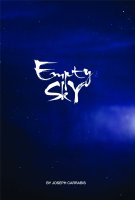
Joseph Carrabis’s short fiction has been nominated for both Nebula (Cymodoce, May ‘95 Tomorrow Magazine) and Pushcart (The Weight, Nov ‘95 The Granite Review) and has recently appeared in Across the Margin, The New Accelerator, Allegory, parAbnormal, serialized in The Piker Press, and HDP V1, 3. 5, and 6. His first indie novel, The Augmented Man, is getting 4 and 5 star reviews on Amazon, Goodreads, Barnes&Noble, and others. His two self-pubbed books, Empty Sky and Tales Told ‘Round Celestial Campfires, are getting 5 star reviews (and he has more books in the works). Joseph Carrabis holds patents covering mathematics, anthropology, neuroscience, and linguistics. When not writing, he spends time loving his wife, playing with his dog and cat, flying kites bigger than most cars, cooking for friends and family, playing and listening to music, and studying anything and everything he believes will help his writing.

Links to Joseph’s books:
Augmented Man frontcover 190605 (002)

The Augmented Man

empty sky front cover full size (002)

Empty Sky

TalesToldRoundCelestialCampfires frontcover (002)

Tales Told ‘Round Celestial Campfires

Links to Joseph Carrabis on social media 

Twitter, FaceBook, LinkedIn, Goodreads, Pinterest, Instagram, BookBub


Sunday Writing Challenge

Sunday Writing Challenge on Patricia's Pen

Lila kicks of the new challenge on ‘Patricia’s Pen’ with her beautiful poem, ‘Salted.’ Enjoy.

Salted wave-3473335_1920

Salted 

Sometimes the sea is a Labrador,
with a sloppy tongue

Sometimes a dying swan
at the feet of a lover, unsung

Today she undressed
wearing linen and lace

Kissing salted rainwater
from my heart and my face.


Sunrise Concertante

I thought I’d share one of my favourite poems to help lift our spirits. This poem, Sunrise Concertante was first published in Sarasvati Magazine (Indigo Dreams Publishing) in 2017. Enjoy.

Picture from Pixabay.

photo-1553871717-0cb0157ee403

Sunrise Concertante

Burnt golden rays break
the night-time sky,
beating on the Ouse’s slow crawl.

Air-warmed sweet-grasses
fan fragrance into the wind:
marsh marigolds shine.

A blackbird’s
chromatic glissando sweeps

towards the riverbank.

Swanking his red tuxedo, a robin
trills to join the recital

as elm silhouettes dance,
watching their mirror image.

The mistle thrush flaunts
his speckled belly. He takes his turn
to chant – introduces

hedge sparrows who chatter,
boast brown suits.

A cadenza call governs the concerto—
plump skylark makes his solo in the skies.

Shades of light peep,
geese chevron across the blue,
noses down, necks stretched, wings

spread wide. Honking their signal sound,
they climb the horizon and sky-fall
on to daylight’s iridescent waves.

Tuesday Guest Feature – Craig Jordan-Baker

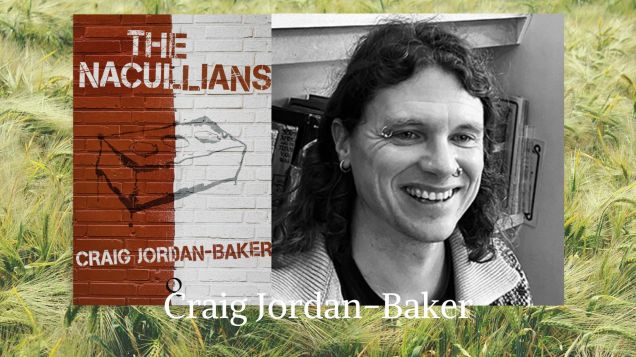
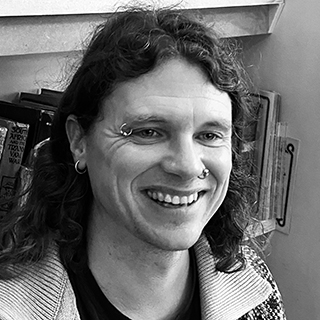
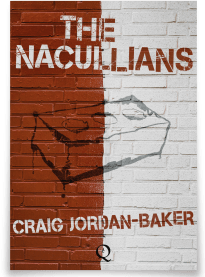
It gives me great delight to introduce Craig Jordan-Baker, who is not only a talented writer but a brilliant tutor too. Craig’s debut novel, The Nacullians, is due to be released on the 21st May 2020. I’m confident this will be a great story and can’t wait to read it. Today Craig has come to share what he calls ‘The Literature of the Fleshflower’. Without further ado, let’s go over to Craig.

Untitled design (40)


The Literature of the Fleshflower

Craig Jordan-Baker

When I was a plucky undergraduate, I vividly remember reading a part of Ulysses where the vaccination mark on a prostitute’s arm is described by Joyce as a ‘fleshflower’. I recall marvelling at this claiming of something superficially ugly for the realms of beauty. I felt too that the prostitute, Zoe, had been humanised by the description, because attention was being paid to her as someone with a history, rather than as an immediate sexual object. Such descriptive fillips are difficult to do because they work against our standard frameworks of meaning and expectation: Sunrises are already beautiful, farts are already comic, etc, etc. These expectations are so often our starting points when we engage with literature, because so much has been seemingly decided before we even pick up the book. Whether they like it or not, writers must acknowledge this, just as we must acknowledge the grammars of the languages we write in. What is interesting is that the constraints of expectation and convention mean that not everything is equally easy to describe. And those things that are not easy to describe but are nevertheless attempted, we might call the literature of the fleshflower.

This relates to some of my own considerations in writing my debut novel The Nacullians. The book follows three generations of a working-class family and while the book is short of sunrises and flatulence (maybe I missed a trick there), there were challenges in writing about economically and educationally disadvantaged people who are often violent, ignorant and repressed. Readers are used to having highhanded pity for lives marked by struggle and suffering and they are equally familiar with a salacious voyeurism in regarding the gritty depravities of the ‘lower orders’. I did not wish to pursue either of these options, but there was a challenge of being unsentimental about misery without being callous and of being humane to characters without being particularly sympathetic to them. Here is something of a fleshflower problem.

What’s more interesting for me as a writer though is the question of how we can read and write the kind of literature that can take farts, like vaccination marks, and use them to work against those expectations and conventions most readily available to us. This is the literature of the fleshflower. It will always attempt something unusual, and will usually fail. Is The Nacullians an example of such literature, failed or otherwise? I’m not sure, but I’m looking forward to see how readers will respond and react.

Well, Craig, that was fascinating. I can’t wait to read The Nacullians.

*


The link to order a copy will be supplied below for any readers who fancy grabbing a copy. Before that though, let’s find out a little more about Craig. 


IMG_0317 SC (002)

About Craig Jordan-Baker 

Craig Jordan-Baker has published fiction in New Writing, Text, Firefly Magazine, Potluck and in the époque press ezine. His drama has been widely performed in the UK, including his adaptation of Beowulf and he has had dramatic work commissioned from The National Archives, The Booth Museum of Natural History and the Theatre Royal Brighton. Craig lives in Brighton and is a Senior Lecturer in Creative Writing at the University of Brighton.

Find out more about Craig by clicking on the following links.

Epoquepress

University of Brighton

Twitter

1248549234

Pre-order Craig’s book by clicking here. Delivery from 21st May 2020.

Sunday Writing Challenge

Sunday Writing Challenge on Patricia's Pen

With the world as it is today, I’ve decided to extend the writing challenge on Patricia’s Pen to include flash fiction up to 500 words and poems up to 40 lines.

However there are a couple of rules to note.

Upbeat writing only – I think we all need uplifting things to read.

Poetry should be nature themed – what better time when the birds are so active and gardens filling up with flowers.

That means NO Covid-19 stories or poems.

Fancy having a go? Check the guidelines and submit. Happy writing!

I’ll start the challenge off with a poem I wrote back 2017 as part of my project when I was Poet in Residence at Worth Park.

Poetry in the Park Patricia M Osborne

Poetry in the Park

Pulham fountain flows,
children clamber
on stained Jersey cows,

finches flit from tree to tree.
ducks dive,
coots and moorhens chug.

Yarn bombs cuddle bark,
kiss orange fiery branches
under liquid amber’s umbrella.

First Published in Reach Magazine (Indigo Publishing)

Guest Feature – Elizabeth Gates

My guest this Tuesday is author, Elizabeth Gates, who has come along to talk about her writing. So without further ado, let’s go over to Elizabeth.

Untitled design (21)


How do Tales of derring-do draw us in?

Elizabeth Gates 

I live on the Wirral, between the two great cultural and historical centres of Liverpool and Chester but I’m also surrounded by countryside. My own little patch includes a garden, marsh and beach on the Wirral coast, famed for its wild birds. I’m usually followed by a trail of happy humans, cats and labradors.

Although I’ve lived here for decades, I’ve also lived abroad in Belgium, Germany and France as well as other parts of the United Kingdom. For example, I picked up a Bachelors’ degree at Bedford College, University of London, and a Masters at the University of Essex in Colchester. At the same time, I’ve been teaching – at home and abroad – English Literature and Creative Writing at colleges and universities.

In addition to this, my own writing career is well-established. For twenty-five years (1985-2010) I worked as a freelance journalist, mostly on Public Health issues. These ranged from mental health among members of the armed forces returning from Afghanistan to suicides among farmers. I even interviewed Phillipino mariners – waiting for a passage home, trapped in Liverpool docks.

So how did these widely different experiences lead to my tales of derring-do in 18th Century Scotland and Revolutionary Paris? I’m not sure, but it was such a time of change. That’s probably why I love it. Ideas were burgeoning all over Europe and everyone was touched by them – whether the most remote – such as the Norse Gaels on the Scottish Isles – or the roughest Paris lowlifes. And even if you’re starting a revolution, you have to have lunch. People live their lives – ‘anyway’ not ‘because of… the tides in the affairs of men’. These are largely stories of everyday folk doing the best they can.

But certain individuals of magical quality will always stand out. There will always be heroes and heroines and we will always search for them. That’s how tales of derring-do draw us in.

Any idea to sustain a trilogy must be strong and its story must be told through the eyes of strong characters. Since the Laird Malcolm Craig Lowrie met French Versailles denizen Adelaide de Fontenoy under the evil eye of lawyer Sir William Robinson, it’s certainly been a roller-coaster ride. And I can’t wait to see where we go next.

51WWLSPBtsL._SX323_BO1,204,203,200_

This mystery of magic has sustained me through a trilogy. My debut novel, The Wolf of Dalriada, came out in 2016 and is available directly through my website, in Ebook form from Amazon or the publishers, Troubador. The second in the trilogy will be available later this year and I am currently writing the third.

~

About Elizabeth Gates 

0

Between reading English Language & Literature at Bedford College, University of London, and acquiring an MA in Linguistics at the University of Essex, Elizabeth explored Europe as a teacher of English and Creative Writing. Later she worked as a freelance journalist – published for over twenty-five years, in national, regional and local magazines and newspapers, specialising in Public Health issues such as post-traumatic stress disorder in the armed forces and suicide among our farmers and the health of foreign seamen trapped on ships held in British ports. Elizabeth’s return to fiction has resulted in The Wolf of Dalriada, her debut novel,  published in 2016 and the second in the series, Staining the Soul, will come out later this year.

Click on the links below to purchase a copy of The Wolf of Dalriada

51WWLSPBtsL._SX323_BO1,204,203,200_

Signed Paperback 

Ebook (Amazon) 

Ebook (Troubadour)

Links to where you can find Elizabeth Gates on Social Media

Twitter

Facebook

Website 


One became two

DSCF0908 (2)

Today, 9th May, 2020, is my late sister’s birthday. Heather would have been 64,  just fourteen months younger than me and we grew up like twins. In 2009 she was taken from this world following a battle with throat cancer.
Before I discovered fiction I used to do a lot of life writing. These days however, I write fiction and use my characters to pass on my pain. It really is great therapy. You should try it.
Anyway, because it is Heather’s birthday, I thought I’d share a sonnet I wrote a few years ago.

One became Two

First there was one and then one became two,
the day you arrived was Bobbsey for me.
From that day on we were inseparable,
two girls dressed the same, as twins like to be.
We’d sing to vinyl forty-fives and step
sideways in routine, both arms wide up high,
drink tea and trick Pisha Pashya with decks
of cards or flirt with boys making them shy.

As we grew taller and ripened in years,
the time came to go our separate ways,
you soared over wild waves high in the air,
to fulfil your dream, gone were jester days.
Malignancy struck, you fought a fierce war,
battled and lost, leaving one – as before.


House of Grace – VE Day Kindle Deal

VE DAY Special

As part of the VE Day celebrations, the price of House of Grace on Amazon Kindle has been slashed to 99p /99c for a few days ONLY.

If you haven’t read House of Grace –  this low price could be the ideal time to get acquainted with the Granvilles and Gilmores in this riches to rags family saga set in the 50s and 60s.

Click here do download for 99p/99c

Don’t forget you can read House of Grace and The Coal Miner’s Son for FREE with Kindle Unlimited.

Happy reading…

Guest Feature – Alison Chisholm

This week for my Tuesday guest feature we are sticking with poetry. I’m pleased to welcome Alison Chisholm, talented poet and tutor, to ‘Patricia’s Pen.’

I first met Alison at Swanwick Writers’ Summer School in 2016 and not only did I enjoy her poetry course but also benefited from her one to one feedback sessions.

Alison Chisholm_Poet

Alison is here to talk about my favourite love, poetry, so without further ado, it’s over to Alison.

Poetry and Me

Alison Chisholm 

Strange how you fall into poetry.  It isn’t an obvious career choice.  I was hooked pre-school when my uncle gave me a copy of Robert Louis Stevenson’s The Child’s Garden of Verses.  I already loved stories, but poetry … WOW!  Here was a complete story and something to make you think in just a few words that sang with all the mystery and excitement of a magic spell.  A few years later, no great shakes academically, I discovered the joys of reading poetry aloud in elocution classes, sharing those magical words with the world.  At seventeen, I qualified to teach elocution, and a few years later realised that writing my own poetry brought even more wonder than reading other people’s.

The greatest joy, of course, is that a poet is one of the few professions in which it is a huge advantage to grow old.  You have so much more to write about, and have lived through such fascinating changes in the poetry world, most notably seeing how a quirky minority interest for a few eccentrics has within a fairly short time become a way of life, a solace and a strengthener for so many of us.

Writing poetry helps to put things in order.  Its balance and control counter the chaos of other aspects of life.  It’s the best way to celebrate anniversaries, losing a stone, the birth of a baby, the fact that it’s Tuesday.  It’s the best way to come to terms with the first broken love affair, losing your Dad, crashing the car, burning the Yorkshire puddings.  Writing poetry helps to make sense of the things life does to you.

As I write this, the world is in the grip of what feels like the greatest change in society since we came down from the trees.  Donne might have told us that no man is an island but today every one of us is an island, floating tantalisingly far from all the other islands in seas of sickness and fear.  Poetry has never been more important.  Reading it transports us into other, less terrifying worlds.  It reminds us that we are human.  It reminds us that we can dream.  Writing it does the same, with the added advantage that it whiles away the odd hour that might otherwise have been surrendered to daytime TV.  Both reading and writing poetry can be achieved with a nice gin and tonic in the other hand.  Life could be worse.

*

Thank you, Alison, that was both informative and enjoyable to read and I’m sure my readers will agree. No wonder you fell in love with poetry after getting that copy of Robert Louis Stevenson’s The Child’s Garden of Verses. What a beautiful book. All children should have a copy.

Links of where to purchase Alison Chisholm’s books will be listed below but first let’s find out a little more about her.

About Alison Chisholm

CF029931 (2) (002)

Alison Chisholm was born in Liverpool and has lived in Southport most of her life, with a brief foray in the North East to collect a career, a husband and the first of her two daughters.  She has two and a half grandchildren, two cats and a mildly dysfunctional tortoise.

She has written twelve collections of poetry and various textbooks on the craft of writing, and co-written books on public speaking, competitions and autobiography.  She wrote the poetry correspondence course of the Writers Bureau, Manchester, and is a columnist on Writing Magazine. She gives talks, readings, workshops and courses, and adjudicates competitions.

IMG_0450 (002)

You can find Alison on Facebook and her recent books on Amazon, Lulu or contact Alison via Private Message on Facebook for signed copies.


Reading and Writing in Isolation

Patricia M Osborne Poet_Author (3)latest

Today Georgia Conlon kindly invited me over to her blog ‘The Isolation Book Club’ to discuss my reading and writing in isolation.

Reading and writing are both great escapes from reality. You can read my blog on Georgia’s site by clicking here.

~

A note for your diaries – Poet, Alison Chisholm is my guest on Tuesday 5th May 2020 – a blog not to be missed.